When I Say “White Privilege” Do You . . .

. . . roll your eyes?

. . . feel ashamed?

. . . get angry?

. . . want to talk about it?

800px-Flesh

I write this as a privileged white person living in the USA.   I have orthodontally straightened teeth, a driver’s license and car with new tires, a house with a big yard in a safe neighborhood, medical and dental insurance, three higher education degrees, annual paid vacations, a cell phone, a Kindle, an iPad, a laptop, reliable electricity and plumbing, central heating and air conditioning, regular hair cuts, occasional pedicures, a Starbucks gold card, cable television, streaming television, a dishwasher, a microwave, a double-wide fridge with ice maker and water purifier, one and a half bathrooms, memory foam mattresses, access to public transportation, occasional meals out, and (until they died) a mother and father with exceptional capacity to parent me.  I am rich.  I am profoundly privileged.

Talking about white privilege makes many of us defensive and snarky.  The White Privilege Conference in March 2015  provoked this response from one news organization.  News reports that mock their subjects is not real news.  (True for both Fox and MSNBC.)

As long as we who are white and privileged see ourselves as the default race and culture, we will not be able to connect with The Other as Jesus did.  This is totally about Jesus for me.

Not only did God put on skin and move into the neighborhood (as Eugene Peterson famously transliterated) but then Jesus moved out of the neighborhood into Samaria, across the Jordan, in Tyre and Sidon.  He crossed gender, class, and religious borders.

As long as these stats continue to be the truth about our future, we who have been the majority will need to adapt and try to understand what has been our privilege based on the light color of our skin.  My own denominational middle judicatories will be making a concerted effort to send as many people as we can to the White Privilege Conference in 2016 in Philadelphia.  I hope to see you there. We have some things to learn.

Some of us will be old enough to remember when the “flesh” colored Crayola crayon was “white.”  This image makes more sense.

Nobody Does It Better

In these days of struggling denominational middle judicatories, this post offers a h/t and thankStronghold Castel you to The Synod of Lincoln Trails who sponsors (what I think is the only remaining) New Pastors program in our denomination. I’m with NP23 this week which is why the posts will be few and far between.

When I was a New Pastor, there was a denominational program that brought together the newly ordained for a three year cohort to discuss everything from the grief of losing our civilian lives to the discernment of our second call.  The program was eliminated for financial reasons.  But my Synod still does this for our own eight Presbyteries in Illinois and Indiana.

Where else can new pastors (and I include those in specialized ministry as pastors as well) talk freely about Crucial Conversations, Personal Boundaries, Personal Finance and other delicate issues without fear?  Clergy colleagues are essential in this life and we are creating strong bonds with every campfire.

Short post today because I get to be with these colleagues in a few minutes. Nobody does New Pastors better than my Synod.  Grateful.

Image of Stronghold Castle where NP23 is meeting for the 4th (out of 6) retreats.

Girl Groups in the Age of Gender Fluidity

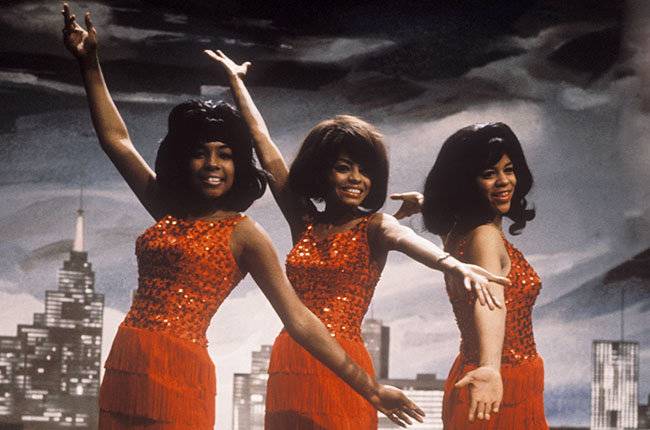
Photo of Diana ROSS and Florence BALLARD and Mary WILSON and SUPREMESApparently Bruce Jenner is transgender.  This was The Biggest News over the weekend during the same news cycle when over 2400 souls perished in Nepal.

Yes, it’s certainly big news when a male Olympic Gold Medalist announces that he is transitioning/has transitioned into she.  But it feels a little icky when this story is impacted more by the fact that she is part of a family famous for being famous than the fact that she is an accomplished person in her own right.

In pondering this post during a long drive half-way across the country, I tried the count the number of girl groups I’ve been a part of.  I came up with seven:  high school cheerleaders, Young Life girl’s small group, Capitol Hill clergywomen’s group, Lex Girls, Writing Revs, Preaching Roundtable, and RevGalBlogPals (whose book you can order right here.)  Note:  Both men and women are part of RevGalBlogPals but we are described as “a supportive community for clergywomen since 2005.”

Within those groups, there were both gay and straight friends who ran the gamut of traditionally feminine characteristics.  Genetically we are all female, but there are variations on how some of us self-identify.

So, what’s the future of “girl groups” in this time of gender fluidity? I’m a big fan of being with people who have similar experiences for support and truth-sharing (e.g. clergywomen who’ve been The First Woman Somebody’s Ever Known.)  I love the pep talks of encouragement between women.  I love the “heads up” moments.

But I also recognize that there are male colleagues who are excellent supporters and they get it.  There are also women with whom I have zero in common except for our chromosomes.  Are we (slowly) moving into a time when we will connect with each other based on something deeper than gender?

I frankly don’t know.  But I’d love your insights.

Image source.

There’s a Woman in the Pulpit

There's a woman in the pulpitI never saw a woman preaching in a church pulpit until my first month into seminary.  I’m not sure what I was thinking – a 20-something woman taking required preaching courses who had never laid eyes on, much less heard, a woman preacher before.  But there I was.

“My first” was another student – MH – who was clear and strong and smart.  I’ve never forgotten that moment of witnessing her in the pulpit.  She – who would eventually receive the senior award for Best Preacher – delivered the sermon with confidence and grace.

Years later, after I’d preached countless sermons myself, a couple visiting Washington, DC on vacation came to worship in the church I was serving.  On the way out of the sanctuary, the gentleman said to me, “I was very surprised when you stood in the pulpit.  You seem to be a woman.”

Why, yes I was and still am.

It used to be considered odd and unusual to find a woman in the pulpit, and in certain denominations, it still is.  But there are quite a few of us now.

I remember when all the clergywomen in my Presbytery could fit around a dinner table for six or eight.  A few years later, there were enough of us to fill a whole fellowship hall.  And now we number in the thousands.

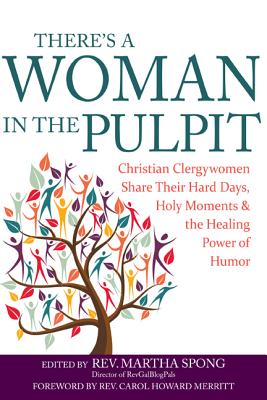
There’s a Woman in the Pulpit tells stories about the experiences of these clergywomen.  And it’s a great read.

This book is for everyone who seeks beauty in both the common and uncommon. There’s the story about the woman who baptized her own mother.  There’s the story about the pastor who sat at the death bed of a frail man who loved to put puzzles together.  There’s the story about the woman adorning her hair in preparation for standing in a sanctuary full of wedding guests – but she is the officiant, not the bride.

Most parishioners have no idea what their pastor does all week.  There is no one watching us visit the sick, writing our sermons, preparing for meetings, making choices that impact our personal lives and our ecclesiastical lives.

If you’re interested, this lovely collection explains it beautifully.  It will change the way you see your pastor and your own ministry.

(Note: In the interest of full disclosure, I have a story in this collection too.)

No Crying in Baseball, No Sabermetrics in Church

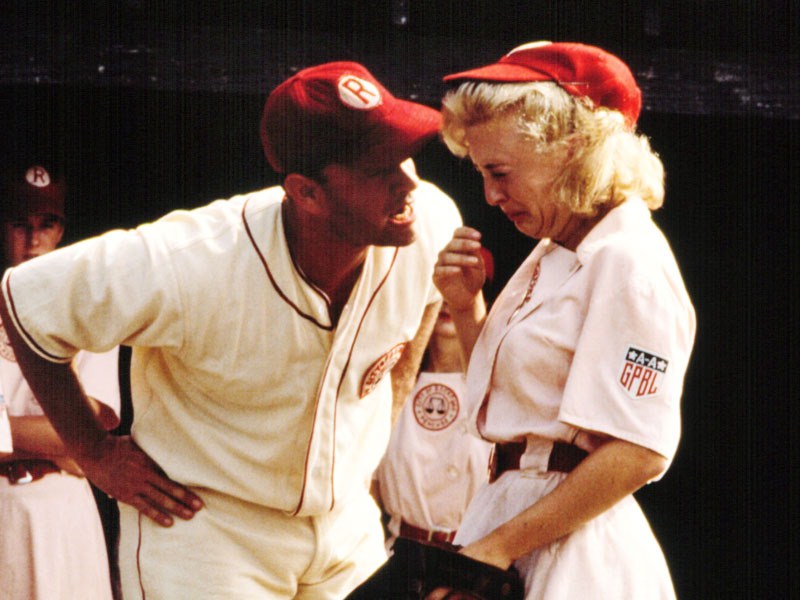
I don’t get baseball and the only reason I go to games is for the ambiance and theNo Crying in Baseball singing. I don’t understand sabermetrics and specifically I don’t want to understand W.A.R. (Wins Above Replacement.) Too much math.

But this article struck my fancy recently, especially in regards to assessing our leadership skills.

In a recent conversation with one of my extraordinary colleagues about closing/shifting/creating congregations he asked: Do we have any leaders who could pull this off?

We have challenging congregations out there needing skilled pastors. And we have lots and lots of pastors out there looking for work/a new call.

But do we have leaders who are skilled at guiding our challenging congregations?

How do we learn skilled leadership? It doesn’t seem to be taught in seminary. Maybe it can be absorbed by osmosis in field education (and that’s assuming the field education supervisor is skilled.) But most of our best leaders tweak and fine tune and assess and develop their skills on the job, bolstered by effective evaluation, coaching, and mentoring.

From Marty Fukuda’s article cited above, these are great questions for reflection:

  • Is your leadership making your team and everyone on it better?
  • Do your leadership and personal actions strengthen your organization’s culture?
  • How would you evaluate the strategic decisions you’ve made for your organization over the past year?
  • How do you rank against the average worker when it comes to overcoming obstacles and adversity?

That last question is the kicker and it seems especially connected to our spiritual depth. Do we trust God in times of uncertainty? Are we the kind of leaders whose first response to conflict is self-protection? Is this ministry first and foremost about me?

We cannot measure church leadership like statisticians measure baseball performance. But, thank God, there’s crying in church. And thank God that we can learn more skilled leadership for these days.

Image source.

Just for Presbyterians: You are (Probably) Not a Lay Leader

priesthood of all believersProof that I care about things that nobody else in the world cares about except for an infinitesimal slice of people in my small but rocking denomination:

You will not find the word “laity” in any part of the Constitution of the Presbyterian Church USA. It’s not in there. As well, the word “lay” as in “lay leader” is only included to explain that we don’t use that word.

Please stop calling yourself “just a lay person” (or any kind of lay person) if you have ever been ordained in the PCUSA. Stop it.

This is not about proper word use. It’s about sound theology.

We Presbyterians ordain teaching elders (aka ministers of the Word and Sacrament), ruling elders (aka those who govern on boards called Sessions) and deacons (aka those who tend to those in need.) Let me repeat this: we are ordained. This means that – by virtue of our ordination – not one of us is any longer a lay person. We are not “laity.” We are not “laywomen” or “laymen.”

The word “laity” was first used in the 15th Century which makes sense in terms of how the clergy were elevated regarding power and authority. The church that the New Testament describes sets people aside for leadership, but “the priesthood of all believers” makes it clear that everyone who follows Jesus is called to serve in Christ’s name. Everyone.

Theologically speaking, as long as we consider the leader with the seminary degree to be The Real Minister, we will be an ineffective church.

To consider church members to be “lay” members assumes and accepts that those without seminary degrees are ill-equipped to serve. The truth however is that God has called all of us to serve. Some – ruling and teaching elders and deacons – are called to be leaders. Others are called to lead in everything from music to administration to education to hospitality.

If you are dorky enough to read this blog, you are probably not a lay leader. I’m looking at you, ordained ruling elders and deacons.

This post is dedicated to CJB.

The Whole Entitlement Thing

The more we know about ourselves, the less we make it about ourselves.*

Queen of Bavaria's CrownProfessional ministry may no longer be the respected vocation it once was. Between catastrophic disappointment in our clergy and the general end of Christendom, we pastors and priests no longer wield the immediate respect we once enjoyed.

And yet entitlement is alive and well among me and my clergy colleagues. I’m trying to get my head around this.

We are called to Servant Leadership. We teach Jesus’ message that the last shall be first and the first shall be last. And yet I observe a healthy (or not-so-healthy) dose of entitlement in professional ministry.

Can someone wiser than I speak to this?

I occasionally observe new pastors who are bright and amazing, but they expect the salary, benefits and responsibilities of seasoned pastors. I occasionally observe experienced pastors who are wise and gifted, but they expect people to defer to them because of their tenure. Is there a loving way to say, “You are clearly called to this ministry, but it’s not about you”?

All of us make things about us from time to time. I need to pray often: “forgive me for making this about me” because I am insecure enough to want that – sometimes unconsciously. But what if we work with colleagues who seem to be unaware that they are making everything about them?

It’s not a good way to live. It’s definitely not a good way to be a pastor. Any wisdom out there about this?

*This quote comes from a wise colleague.

Image of the crown of the Queens of Bavaria.

I Heart Weekends

brunch ny timesI have a very clear memory of My Last Weekend As a Church Civilian.

I was 24 years old.  It was the weekend before I started as the Student Pastor in my seminary field education congregation.  I was sitting in a Greek restaurant outside Boston with a friend blissfully consuming my spinach & feta omelet and the Sunday New York Times when it hit me:  this is the last weekend of my life when I will not have Professional Church Responsibilities, required by either my seminary or my future congregation.  Honestly this stark realization almost knocked the wind out of me.

So here I am 35 years later and I still miss weekends.  Sure, there have been vacations, study leave, a sabbatical, sick days, and several months between positions.  But I have worked most weekends for a long time.

Yes, there are many professions that require weekend work from fry cooks to brain surgeons.  And there are the jokes about pastors working only an hour a week and it happens to be Sundays.

But the unrelenting weekend work of pastors is unlike other work.  Even as a Middle Judicatory Staffer (a description of ministry which makes me sound like someone you would never invite to a party) I work weekends.  The wonderful thing is that I can control this in a way that a parish pastor cannot.

I’m coming off of a four-church weekend if you count an all day Presbytery Assembly on Saturday.  But occasionally, there is a weekend when nobody is being ordained or installed, nobody’s retiring, no church is having a congregational meeting or an anniversary, and no pastor is ill.  Those weekends are precious in a way that’s different from a vacation weekend.

Most parish pastors do not have those opportunities.  They are in worship Every Weekend except for – in my denomination – 6 Sundays a year (2 for Continuing Education and 4 for vacation.)

I also know some parish pastors between church calls who come to enjoy their “free weekends” so much that it’s almost painful to go back to working 46 weekends each year.

Everybody needs that soul-refreshing break every week when we can read Every Single Page Of The Sunday Paper if we wish.  Clearly most people on the planet do not get this, but that doesn’t mean we don’t need it.

What would it look like if all pastors got a real weekend at least once a month? I’m imagining a Sunday each month when other leaders (who never went to seminary) were set free to lead worship without the supervision of The Pastor. I’m imagining the resting pastor visiting another congregation to worship without any leadership duties.  I’m imagining equipped volunteers.   I’m imagining pastors picking up interesting ideas from other congregations.  I’m imagining refreshed leaders.

I wish for you and all of us nourishing weekends.  Imagine.

The Need to be Needed (& How It’s Hurting the Church)

One of the worst kept secrets of pastors is that we very much need to be needed. spotlightWe like the attention that comes with a pulpit and a microphone.  It’s fun to be beloved.  We like to fix things or at least we like to believe we can.

Okay that’s actually four secrets.  And what’s also true is that some congregations 1) do not think they need their pastor, 2) mess with the sound system (Note: this is a metaphor), 3) Do not love their pastor, and 4) are beyond anybody’s ability to be fixed.

Sometimes we pastors make ministry about us.  And it’s hurting the church we love.

Among the behaviors that are wrecking things:

  • The pastors who “love us so much” that they not only sit in the surgical waiting room for hours with the parishioner’s family, but they also go with us to our annual exams, x-ray appointments, mammograms, dental surgeries, and colonoscopies.
  • The retired pastors who still live in the town of their former church and meet their longtime friends (aka former parishioners) for coffee every Tuesday.
  • The pastors who insist on attending every church meeting.  (Or the congregation that requires that pastors attend every church meeting.)
  • The pastors who don’t take at least one full day off each week.
  • The pastors who don’t take all their vacation.
  • The pastors who don’t take all their study leave time or spend their continuing education money.
  • The pastors who boast about working 60 hour weeks.
  • The pastors who insist on having everything run by them before being purchased, printed, ordered, assigned, or instituted.

A thriving 21st Century Church is all about giving permission, setting  free, minimizing the hoops to jump through, and teaching the faithful how to pray, lead, serve, and love their neighbors without constant pastoral supervision.

As long as we make our people dependent on us, we might feel important but our congregants will feel spiritually disempowered.  If we love the church we serve, we can’t make it about us.

Free Range

kids playing

I’m thinking that most of us – Democrats and Republicans, Progressives and Conservatives, Denominational People and Non-Denominational People – can agree on the issue of free range children – at least to a point.

I’m not talking about allowing our preschoolers to wander home alone from the library at 9 pm.  I’m talking about kids who who know how to look both ways before crossing the street who need to run and skip and catch guppies and climb trees – sometimes without the watchful eye of adults.

I’m not talking about abandoned kids whose parents drop them off at the zoo to go to work.  (Sadly, that probably happens.)  I’m talking about two siblings – ages ten and six, walking several blocks home after playing in a park on a sunny Sunday afternoon.

All of us of a certain age can recall stories from our childhood of summer days when we left home in the morning and returned in time for dinner having played with our pals all day long.  We rode bikes. We collected rocks.  But then Etan Patz‘ photograph was printed on the side of our milk cartons and people got scared.  And a couple years later the Center for Missing and Exploited Children was established and names like Elizabeth Smart and Jaycee Dugard became familiar.

If you are a parent who’s lost a child even for a minute in Target, you know that it’s terrifying, even after you’ve found them in the Lego aisle.  We’ve been trained to keep a sharp eye.

So what happens to kids who never wander?  Do we turn into overly cautious adults who are slow to explore?  Are we forever to live by fear instead of faith?

I wonder today about Free Range Adults.  They aren’t many.

I know some adults who take risks and explore the world.  They tend to be fresh out of college, privileged enough to have the resources to travel or move to a new city.  But then we settle down and by the time we are middle aged, we become slower to explore.

So what does all this say about the moving of the Spirit – if anything?  I work with wonderful church people who are usually slow to leave their comfort zones.  Maybe we are afraid of wandering too far from what feels like “home” to us.

We forget that the God who created us also called Abram and Esther and Ruth away from all that was familiar to them.  God moved prophets to speak difficult truths to people who didn’t want to hear them.  God took a holy singular personal risk to make an eternal cosmic point.

And so living Free Range with our ears perked up towards the heavens seems like the least we can do.  I believe God is calling us to something that will stretch us beyond our wildest imagination, but we need to be willing to wander a bit.