The Children

HH and I have been watching one of those semi-mindless streaming dramas involving crime and secrecy. You know the shows. We are watching one now involving two grown men befriending each other in prison. Both of them had traumatic childhoods that impacted their adulthood. Both tell the other that things were pretty great, that their parents were loving, that they have mostly good memories.

But we also see the characters’ backstories and the truth is horrible. Parents who swore at them, left them alone for long hours, hit them, emotionally devastated them, used them. As a pastor of almost 40 years, I have met these children. They come from all kinds of backgrounds. Their families might have no money or lots of money. I’ve seen countless examples of parents whose first concern has been themselves instead of their children. They make decisions based on what’s best for themselves sometimes because of addiction and sometimes because of their own emotional immaturity.

I also know miracle people: those who were unloved as children, castigated – even by their families – for being different, for being born. And yet, they had at least one person who loved them unconditionally along the way. A teacher. A pastor. A neighbor. A sibling.

They still bear scars and unhealed wounds. But they are also capable of showing unconditional love. And they are remarkable friends and parents themselves.

I think about all these things as our political leaders declare that bodily autonomy is not a given. You can carry a child without consent. Even birth control to prevent unwanted pregnancies is being questioned.

For all the pro-life talk, the truth is that we are not a nation of pro-lifers by any definition of that term. We – as a nation – do not value school teachers, do not offer equitable health care, do not treasure undocumented children, do not treasure queer children. This is the most heinous of sins – especially if we call ourselves pro-life.

I’m talking to both “liberal” and “conservative” grown ups here. What child will we tutor? What child will we house? What child will we feed? What child will we send to college – who is not our own? What child will we welcome into our lives who is not already part of our family/community/house of worship?

This is for all of us – especially if we believe there should be no abortion and no birth control. And the irony is that most of the people of faith I know who believe abortion should be an option and birth control should be a given are already committed to loving – unconditionally – children who are not “their own.”

This is about human lives. Who are we really loving out there?

Thank You for Everything RevGals

I knew them first as Cheesehead in Paradise, Clever Title Here, Listing Straight, and St Casserole. I was inspired by Reverend Mother and Spooky Rach and NotShyChiRev. Although I wasn’t a founding member, I joined RevGalBlogPals in 2005 and I’m still here writing because of these colleagues.

The board of RevGalBlogPals will be winding down the life of this non-profit on August 31, 2022 after 17 years of offering support and resources for clergywomen and people who support clergywomen. It’s been lovely.

From churches to colleges to small non-profits like the RevGals, sometimes it’s most faithful to close shop and allow for new endeavors to be born. RevGalBlogPals was once the blogging ring for several dozen clergy and it grew to several hundreds. We wrote a book together. We went on trips. I was privileged to be one of the speakers a while back – my first and only cruise.

Thank you for everything. Some of you who read this blog have never heard of them and others of you are my good friends because of them. Thanks especially to leaders Jemma Allen, Julia Seymour, Teri Peterson, Marilyn Pagán-Banks, Libby Spence, Jennifer Garrison Brownell, Rebecca Holland, Sarah Howe Miller, Jia Starr Brown, Angela Shannon, Mary Austin and Martha Spong. You have blessed us.

You changed my life.

You can continue to check out RevGalBlogPals through August 31, 2022 here.

Be Somebody for Somebody Today

The world is a hot mess and everybody seems ticked off. And it’s steamy outside. And politics are making us a little insane. What can be done to bring a splash of relief?

I got to be a “Very Important Reader” recently at one of Charlotte’s Freedom Schools and it was a 30 minute long responsibility. (Note: all it takes to be a VIR is a book and the ability to read it out loud.)

I read Horace and Morris But Mostly Delores to a group of about 40 children and they responded with Freedom School choreographed cheers and songs. I’ve never been welcomed, introduced, and thanked with songs before and it was lovely. They were special, lighthearted somebodies for me on an otherwise heavy day. I needed them.

Today you will come in contact with somebody who needs somebody. Maybe they need somebody to notice them and say ‘hi.’ Maybe they will need somebody to offer friendship for a few minutes. Maybe they will need somebody to help them in some small way.

Or maybe we are the ones who will need somebody to notice us or sit with us or check in with us.

These encounters are holy and when the world is a hot mess, these encounters are life-giving. We can’t solve the world’s complicated divisions and troubles, but we can be somebody for somebody today.

Have a wonderful Thursday.

Art That Disturbs (Sometimes We Need It)

Art has the power to calm us, inspire us, and in some cases disturb us. After writing a more poignant post yesterday referring to God’s Creative Hand – among other things – today’s post is more upsetting.

Artist Manuel Oliver is the father of Joaquin Oliver who was murdered at Marjorie Stoneman Douglas High School in 2008 along with 3 staff members and 13 other students. This week Oliver created the art installation above near the home of Senator Ted Cruz. You can read about it here. He calls it NRA Children’s Museum.

From the painter Edvard Munch’s The Scream to the photographer Nick Ut’s Napalm Girl (her name is Kim Phuc) to the Holocaust survivor Samuel Willenberg’s sculpture of 19 year old Rut Dorfman before she was murdered at Treblinka, art can be hard to look at. Some art is meant to be provocative.

What does it take to change a culture from being cruel to becoming less cruel? How many children and other innocent people will die before we shift from a gun culture that’s okay with civilians carrying automatic weapons to a gun culture that’s content with selling and buying only hunting and self-defense weaponry. (I’m not naive enough to believe the United States will ever be a culture that gets rid of The Second Amendment.)

I have questioned why we don’t allow images of shooting victims publically believing that – if people saw what an AK-15 did to a human body – we would surely ban them. The families of victims rightly remind me that sharing these images re-traumatizes them and infringes on their tender privacy. Please read this. And the truth is that legislators have already seen images and it hasn’t made a difference.

So maybe art will influence us. Consider the Creative Hand of God once again. If we take in the colors and textures and brilliance of God’s handiwork, it changes how we see the world.

The art of humans can anger us or make us turn our eyes away. But if we look closely and consider the details imagined by human beings, we might indeed be changed.

Again, please read about the NRA Children’s Museum here. The details are important.

Have a peaceful weekend, everybody.

Staring Into a Nebula

My friend M lay dying of cancer in 2006 and in one of the many conversations we had at that time, I remember her telling me some of the things she would miss the most. Yes, she would miss meeting her future grandchildren. Yes, she would miss being with so many friends over holidays and other milestones. And she was angry that she would miss finding out what happened to Harry Potter.

M was a librarian and The Deathly Hallows would not be published for another year.

The Southern Nebula Ring as seen via the James Webb Telescope this week

I love the word “nebulous” because it describes so much of human life. Yes, many things are certain. Many things are clear. But many more things are hazy and ill-defined. Nebulous.

My friend M increasingly embraced randomness in her last months in a way that disturbed me. As a person of faith, certainty is supposed to be my modus operandi but M – as a person of faith – was increasingly okay with randomness. She was going to die too young – or at least too young for us. But she had been blessed with a wonderful life, she said. And she was okay with not knowing exactly what would happen next. She continued to believe in God. Sometimes a lot. Sometimes a little.

This week I have wept four times.

As someone who oversees 92 congregations and about 28,000 souls, my life intersects with so many lives and this is a tremendous gift. But two young people I know only as treasured parts of The Body of Christ died suddenly this week. They died too young – at least for us. One was in his twenties. One was a child. I have cried over these losses and my heart breaks especially for their mothers.

I also wept after a conversation with a pastor who’s recently endured a double lung transplant. He is alive and laughing and talking and eating and (sometimes when possible) sleeping and it thoroughly takes my breath away. How is this resurrected life possible?

And finally I wept when I saw the first images of the James Webb Telescope. There are no words to fully capture their majesty, but I’ll attempt a few. The image of the Southern Nebula Ring looks like a glimpse into another world. A heavenly world.

I don’t know exactly what happens after this life, but I am going to continue hoping that it’s at least as extraordinary as an organ transplant or a distant nebula.

For now we see in a mirror dimly, but then face to face. I Corinthians 13:12

It’s God who opens worlds and shines light. It’s God who gives us breath. It’s God who is with us when everything falls apart. It’s God. Sometimes we have a hard time believing. Sometimes we believe a little. Sometimes we believe a lot.

And just as God is with us, God asks us to be with each other in these nebulous times. God asks us to sit with each other when we believe and when we don’t. When we grieve what we will miss and when we remember with gratitude what we have experienced.

I’ve also found that it helps to stop and stare at that amazing photograph of The Southern Nebula.

How Do We Meet our Neighbors in 2022?

Many of you preached or heard sermons last Sunday asking the question “And who is my neighbor?” – at least if the lectionary lesson for the day was preached. If you know this parable by Jesus, you also know that neighbors are not merely those who live on our street and they could even be our enemies (like that vile-but-turned-out-to-be-good Samaritan.)

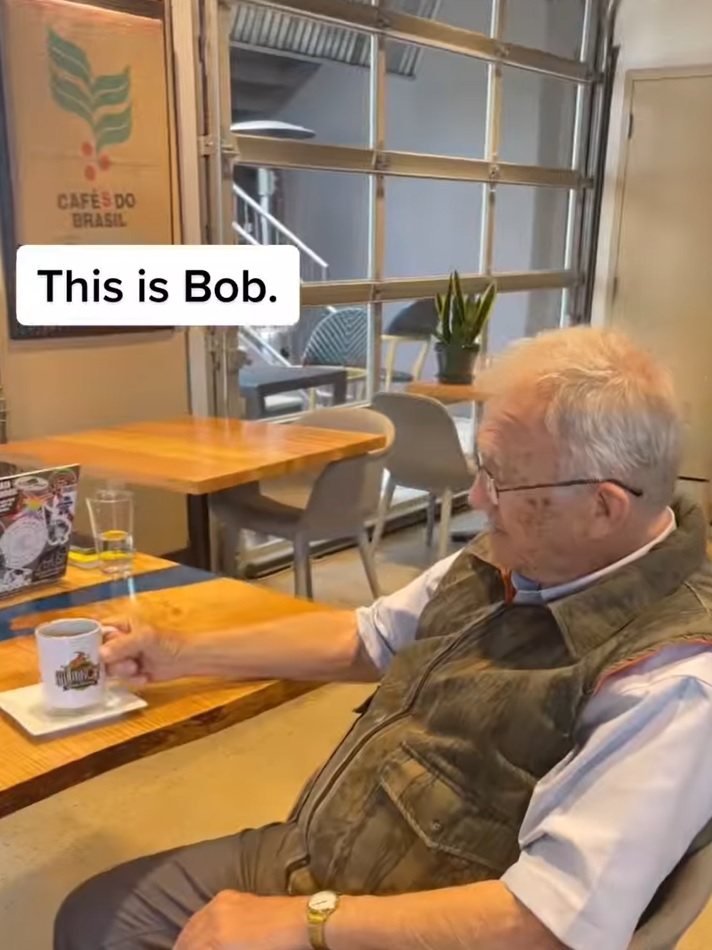
Bob is my neighbor.

True Confessions: I do not know all my geographically closeby neighbors and the way I know them is nominal. We live in a three story apartment building with lots of young adults who are cooler than we are.

There’s “Josh”* next door and I only know his name because I read the label on a package at his door to find out his name. When we pass in the hall or on a sidewalk, he never looks us in the eye when we say, “Hi.”

We know the first names of three other neighbors because we know their dogs. We met Bernie, Hops, Fifi, and Denver before we met their parents, and now we do know three of their four parents’ first names.

My neighbors also include Bob (if you live or work in the Plaza Midwood neighborhood of Charlotte, you know Bob) who is seen every day drinking coffee in one of several restaurants. And we know the first names of servers and baristas and cashiers although there’s quite a bit of turnover.

Church people often ask me, “How do we meet our neighbors?” and I follow up with “Why do you want to know?

  • Do we want to “attract young families” in hopes they will join/become involved/pledge money?
  • Do we want to figure out our neighbors’ needs so we might offer support?
  • Do we simply want to be friendly and build community?

If we – as followers of Christ – want to “reach out” into the neighborhood, there are ways to do this depending on your context. For example, if you are in a rural community it’s not the same as if you are in a suburban or urban community. But – assuming you want to get to know your neighbors for the sake of loving and serving them (and not targeting them), you can try these things:

  • Get to know people you meet in passing. Do you know the names of the servers in the local diner? Do you know the name of the maintenance people in your apartment building? Do you know your barista enough to greet them by their first names? Developing friendly relationships is community-building.
  • Invite the sheriff, the school principal, the county social worker, the high school guidance counselor to come to your church in order to get to know them and learn what they do all day. What needs do they see in the community? How might the church help with those needs?
  • Offer resources based on what community leaders tell you about local needs: If there is need for reading tutors, set up a team to volunteer. If there are parents with LGBTQA+ kids who want to support their kids and don’t know how, offer space for them to gather. If there are lots of kids who go home to empty houses, consider an after school program. Reminder: this isn’t about getting new members; it’s about loving people where they are.

Living an authentic Jesus-following life is the best way to meet the neighbors. See The Gospels for examples: What do we do if we see people hurt on the side of the road? What do we do if we meet parents with sick children? What do we do when we come in contact with women being shamed? The examples are endless.

Being a good neighbor often means paying attention. Who do we see every day whom we ignore?

*Names have been changed except for Bob and all the dogs.

What Are the Heavens Telling Us?

 The heavens are telling the glory of God;  and the firmament proclaims God’s handiwork. Psalm 19:1

First image from the James Webb Telescope shared by NASA yesterday. More images coming today.

I understand why some people no longer watch the news.

Much of the news reported today is pessimistic, painful, hyperbolizing, divisive, cruel, and untrue. It’s too much.

We can become overwhelmed by the vast sorrow and unspeakable grief of daily human life. Layer upon layer of trauma is piled upon us as gun deaths soar and no one seems to care, as war continues and no one seems to care, as hunger and disease continue to ravage children and no one seems to care.

I mentioned to friends yesterday that I was excited to see the images from the James Webb Telescope this week and they had no idea what I was talking about. They are bright, college-educated professionals who simply don’t read the news. They think most of it’s only half true.

They know that the January 6 hearings are happening and they know that gas prices are higher but getting lower. They know that there’s a war in Ukraine and they heard Prime Ministry Abe was killed.

Again, the news tells us what’s going on in the world. Or not.

I believe that we who are people of faith need to know that people in Japan are grieving and neighbors in Highland Park are in shock and families close to home are unable to pay for medical procedures. We who are called to serve need to know things in order to care for God’s people. We can’t serve people if we don’t know what’s going on in their lives.

But the news doesn’t tell us everything.

The 19th Psalm declares that the heavens tell us things too. They speak of the majesty of God in ways that defy all words. Because God has allowed certain people to have the vision and gifts to build a miraculous tool for conducting infrared astronomy, we are about to see – with our own eyes – new images of the Glory of God.

We need these images.

Just as we need to stare deeply into the stamen of a cone flower and the iris of a dog’s eye and the folds of a baby’s finger to find wonder in these days, we can find unfathomable wonder in studying images from deepest space never seen before.

These images aren’t merely news; they are evidence of something more mysterious than we can possibly comprehend. I call that mystery God and God continues to be with us in the thick of things.

Writing Policy is Ministry (And not for the Fainthearted)

Just like shifting church culture is not for the faintedhearted, writing policy for The Church is not for the fainthearted either. I don’t love writing policy (or writing anything by committee) but I spend my life trying to shift church culture. It occurs to me that the policies of any organization are – by definition – instrumental in shifting that organization’s culture. And writing policy is ministry.

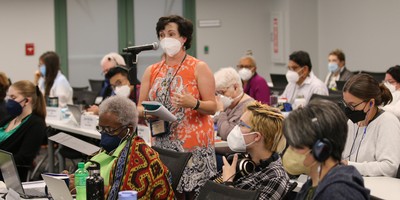
Does this image make you excited or tired?

Examples of how policy impacts culture:

  • A nation’s policies on immigrants define how that nation views immigrants
  • A corporation’s policies on employee benefits define how that corporation values its employees.
  • A denomination’s policies on everything from family leave to investments to the very structure of the denomination define that denomination’s culture regarding how they value pastors and other church employees, how they discern what is financially just and unjust, and how flat or hierarchical their organization will be for the sake of their mission.

If you are yawning right now, I’m with you. I would be bored out of my mind writing legislation. But it matters. And our policies – like our budgets – reveal our true priorities.

For where your treasure is, there your heart will be also. Matthew 6:21

There is no integrity in saying that we – as a Church – trust women only to have policies that take agency away from women. I can’t take a Church seriously that says we value the voices of the vulnerable or disenfranchised only to exclude those voices in the work of the Church.

The 225th General Assembly of the Presbyterian Church USA (my denomination) just completed it’s meeting over the weekend and the leaders who did the work are exhausted, exhiliarated, frustrated, proud, and in need of a deluxe foot massage. Thank you delegates, commissioners, committee/task force/commission members, and staff. Thank you. Thank you. Thank you. What you’ve done is ministry.

There were missteps, mistakes and victories depending on your perspective. Church culture was shifted if only by inches. But the point of it all is that the results will bring us closer to the Reign of God – on earth as it is in heaven.

Image is from one of the committee reports in Louisville at GA225. Thanks to all photographers and videographers serving the Office of the General Assembly over the past several weeks.

Books I’m Loving This Summer

I’m a non-fiction reader (obsessed with connections to Church World) but I’ve picked up a collection of short stories as well. These are my all-around favorites so far this summer for what it’s worth:

There are many things to protest this summer. Let’s do more than shake our fists says the extraordinary Eboo Patel. Why this book can change the culture: we need to build a future that looks like the wildly diverse reign of God.
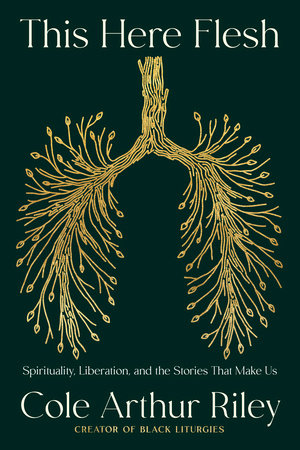
Order this gorgeous book immediately. Cole Arthur Riley is unspeakably gifted in storytelling and liturgical reflection. Why this book can change the culture: among other things it reminds white people about the utter depth of our white supremacy DNA.
I rarely do this, but I asked someone working in an independent bookstore in Charlotte what he was reading and he took this book by Yoon Choi off the shelf and said, “You must read this.” He was right. Brilliant short stories so well written and poignant. Why this book can change the culture: for white people like me, it opens up the work of immigrants who are so essential in being the community God’s created us to be.
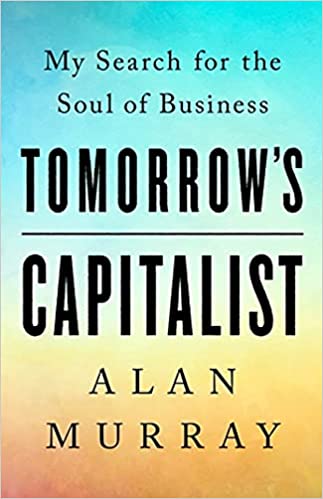
Alan is a college friend and he knows the corporate world well. This book reminds me a bit of Yancey Strickler’s book I read last summer, although Alan’s book is coming from the perspective of a business journalist. Why this book can change the culture: we in the non-profit religious world need to partner with our business leaders for the benefit of everyone even if business leaders don’t realize that yet. Tomorrow’s capitalist will not thrive without concern for community stakeholders and there is no better partner to address the needs of community stakeholders than The Church.
I would like to hang out with Leidy Klotz all day long and hear him share subtraction stories at Mudhouse Coffee in Charlottesville (where he teaches.) Why this book can change the culture: We in the Church (and world) have been taught that being better means adding things. Sometimes we are better when we subtract things.

This is just a start. What books are you reading?

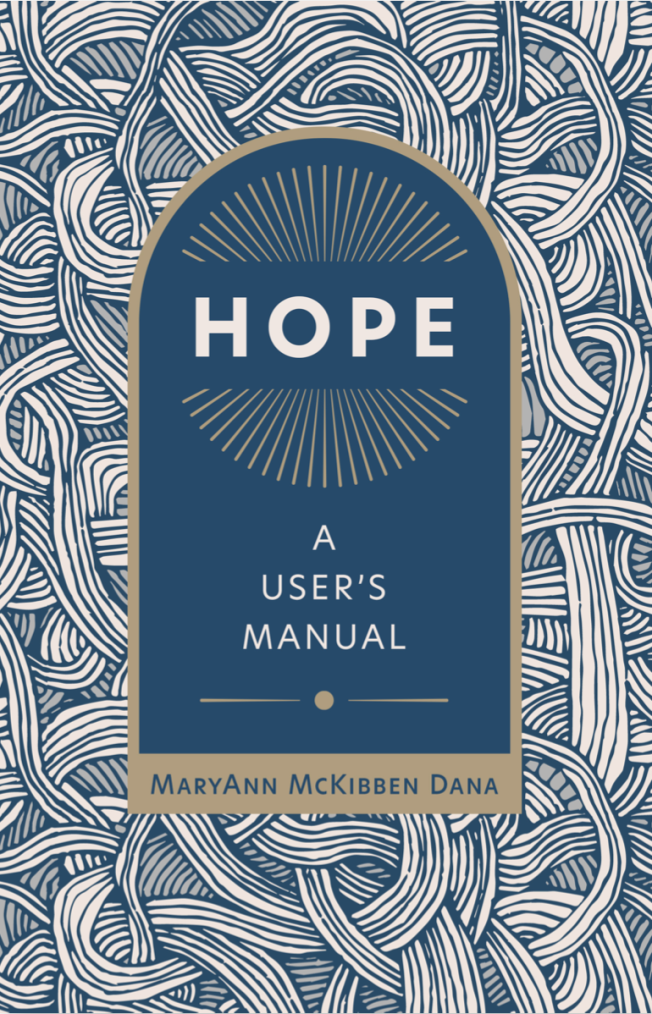
Can’t wait to get MaryAnn McKibben Dana’s new book in the coming weeks.

Order MAMD’s book here.

Sharing

We teach children to share their stuff, but truthfully, there are several things most adults don’t like to share: toothbrushes, credit card statements, pastors. Seriously, congregations seem to dislike the idea of sharing a pastor with another congregation at least as much as they dislike sharing a toothbrush.

When we have a bivocational pastor (one who serves part-time as a pastor and part-time as a teacher/administrator/banker/dog groomer) we can assume that our pastor is generally “ours” on the weekend for Saturday activities and Sunday worship.

When we share a pastor with another congregation, that pastor is not solely “ours” on Sunday. They also spend time with another church which limits their availability to us.

Important shift in church culture in the 21st Century: Your pastor is not available 24/7.

Sure, if a life-shattering emergency happens during the pastor’s day off, that pastor will probably attend to it. But today, pastors are not (or should not be) expected to cancel vacations, cut short a day off, or miss their child’s birthday party because you can’t find your baptismal certificate.

There are safeguards that pastors can take to ensure time for sabbath rest:

  • Get a dog. (“Sorry, I need to leave now to go feed my dog.”)
  • Get a family. (“I can’t meet that afternoon because I have a Parent-Teacher Conference.“)
  • Get a backbone. (“No I can’t that day/time/week.”)

Sharing a pastor with anyone – the pastor’s family, another job, another congregation – forces us to keep healthy boundaries.

But the #1 reason why we need to get over our refusal to share a pastor with another church is because many – if not most- congregations cannot afford a fulltime pastor, especially when health and retirement benefits are part of the package. And very few pastors can support themselves on a part-time salary.

And gone are the days when you can expect full time service from a part time pastor. (Don’t even try. It’s fundamentally greedy.)

What would it take for our congregations (with 50 or fewer members) to partner with a neighboring congregation for the sake of having pastoral leadership? Why can’t we share?

  • Is it ego? We want the community to believe we are wealthier than we are?
  • Is it denial? If we call a PT Pastor, we’re admitting that we aren’t as strong as we once were?
  • Is it competition? We don’t want the Christians down the road to see us struggling?

The future for many small congregations will be Pastor-Sharing. This is actually a wonderful opportunity to broaden our ministry and make connections that benefit the whole community. Congregations are better together.

If we will only consider it.

Would you rather your congregation close in 2-3 years? Or share a pastor and continue ministry in a new way for many years to come?