We Could Just Go Home and Lock the Doors. Or . . .

And having been warned in a dream not to return to Herod, they left for their own country by another road. Matthew 2:12

I’m moved by Shannon Weston’s post about Epiphany from a few years back. Her point is that it’s curious that the Wise Men – after bringing gifts to the baby Jesus and being warned in a dream not to report back to Herod  – chose to leave “for their own country by another road.”  James Taylor even wrote a song about this detail.

It’s curious because the Magi could have made other choices:

  • They could have helped the Holy Family escape, perhaps to their own home countries.
  • They could have gone to to Rome and reported the truth about Herod. Yes, he builds things, but he’s a bloodthirsty ruler.
  • They could have returned to Herod but thrown him off track. “Your Majesty, they’ve headed north to Phoenicia!”

But instead they went home by another way.  In other words they took the easy way out.

What happened next?  The Holy Family became refugees in Egypt.  All Israelite boys under age two were slaughtered throughout Palestine.  This could have been avoided if the Magi had taken responsibility to serve their neighbors, if they had been brave.

As a theologian, I can make the case that God’s plan involved the escape to Egypt and the fulfillment of Jeremiah 31:15.  God clearly works even (and especially?) when human beings are on the wrong side of history.

But on Epiphany 2021 when there are still people fleeing for their lives, when there are still innocents being sacrificed, imagine what it might look like if we could be brave.  Instead of returning home after coming face to face with evil, after learning that people are in danger, imagine if we stepped up and helped them.  We don’t merely return to our homes and lock the doors.  We serve those in need as if they were the Holy Family.

Imagine.  Imagine being not only wise, but also being faithful in 2021.

Image is The Wise Men by JC Leyendecker (1874-1951)

What Happens Next?

We don’t know what’s going to happen this week, next week, or by this time next year.  Sometimes this is for the best because we couldn’t take it, or it would be distracting. Sometimes it feels terrible to imagine what could happen, and so we don’t think about it unless we are Walking Stress Storms.

In my first parish, the local funeral director made a habit of phoning me at the beginning of the new year and asking me to bet him on his predictions about who would die that year. You read that correctly.

He called and literally said, “Here’s the list of who I think will die this year. Are you in?”

I was not in.

This is the same funeral director who would call me after a member passed and say, “Guess who died?” I did not want to guess. “You won’t believe it,” he would continue. “Just guess.

It must be hard to be a funeral director in a tiny town.

As a pastor to pastors in 2021, I am trying to imagine what this year will bring to our congregations, especially if the pandemic ends.  It’s quite possible that in January 2022 we will still be standing in line for vaccines.  Or maybe we will need new vaccines for new strains of COVID-21.  Assuming we will be able to meet face-to-face safely again, I’m venturing to guess that:

  • Congregations will offer both in-person and virtual gatherings ffor the rest of our lives.
  • About half of our pre-2020 in-person participants will “return” to worship and other events.
  • Those who found community in other congregations besides their own during Covid will continue to engage with those other congregations while staying with their “home church.”
  • Lots of churches will close, especially if they could not bring themselves to become 21st Century churches by 2020 (which is already 1/5 of the way through the 21st Century.)
  • Churches will call pastors who look nothing like all the other pastors before them in appearances or skill sets.

I could be wrong here, of course.  

Stepping out in faith is scary.  But what if we embraced the adventure of it?  What if we ventured out – socially distanced, of course – expecting God to show us something we need to see?

In the meantime, please pray with me regarding what’s going to happen in our country this week and next week and this time next year.  There will surprises and I trust God that each surprise will bring something good, at least in the long run. 

The Last Thank You Note

I figured out long ago that resolutions do not work for me. (And neither do “Star Words.” Sorry – creative colleagues.)

Instead of writing resolutions, I write/re-write my funeral plans on the first couple days of each new year. It’s under “If I Die Today” on my computer. HH knows the password.

My plans change from year to year depending on what’s going on and what happened over the previous months, but I want to be ready. I am semi-obsessed with death having officiated at hundreds of funerals, memorial services, and graveside events and having experienced death in my own family. I am surprised that I am still alive, if you want to know the truth. I expected to die of cancer in my mid-50s or – if lucky – by 60. But here I am and life is sweet and I have a lot to be grateful for.

And so part of my funeral planning is writing The Last Thank You Note. It can be read at my memorial service, if someone wants to take that on, but it’s basically a brief thank you to God for my life. It’s only by grace that I’ve enjoyed the life I’ve had and I am especially cognizant of this when I look at the lives of those friends of mine who – from the get go – never had what I had from birth: attentive parents, a roof over my head, enough food to eat, good health, good education. Oh, and pale pigmentation.

Have you ever been to A Great Funeral that made you want to be a better person? Those testimonies of well-lived lives that were about serving others, having bravery in the face of danger, rising from the ashes of tragedy? I have been privileged to bury some of my favorite people and it’s made me want to be better myself. World War II heroes. Single parents who raised amazing kids in difficult circumstances. Farmers who kept everything going. Immigrants who took menial jobs so that their kids could go to college. Brave children. Brave teenagers. Brave young adults. I’ve buried at least one spy. (The government eulogist said, “He always made sure the women and children were safe” and I thought that guy had been a professor.)

Great funerals are inspiring. But the best are like thank you notes. They point not to the ives of the dead but to what made them truly alive.

This is how I start out 2021 in hopes that I live to see 2022 and 2023 and as many years as I’m given. Happy New Year. It is a gift from God.

“Of course, giving is down.”

As I check in with pastors and other church leaders at the end of 2020, I often hear this phrase when I ask how things are going: “Of course, giving is down.” Let’s unpack that on this penultimate day of a difficult year.

  • Of course. We often assume that when things are difficult certain things are destined to happen in response.  Of course we are low-energy considering the holidays are over.  Of course we are sad because of the pandemic losses.  Of course our congregations are responding negatively after ___ happens.  Imagine – though – if our sacred assumptions in the throes of loss and pain is that we are overwhelmed with an awareness of our blessings.  The tragedies that could have happened, but didn’t.  The times cuts healed and aches subsided. The moments we noticed that God is still with us.
  • Giving.  We have countless opportunities to give something of ourselves every day.  A kindness.  A smile – even behind a facemask. An encouraging word. A decision to share a portion of our time or money.  There is no excuse to refrain from giving as long as we have breath.
  • Is down.  There is no reason for “down” to be the only direction things are going.  We continue to sing Hallelujah – even in hell. We continue to look up to the One whom we call Immanuel. It’s quite possible that what we truly need increases in these days.

For what it’s worth, giving is going up in some of our congregations.  Expecting God to help us rise even from death is what we fundamentally believe as followers of Jesus.  

May our souls sing “Of course giving is up!” in a variety of ways. Happy New Year!

2020: Helpful Things We Learned

Yes, it was a rough year. Excruciating actually. You don’t need me to remind you why and how.

But we’ve learned quite a bit in this year of pandemic/election craziness/bitter divisions. Here are a couple things:

  1. Good leaders are good leaders – no matter what’s going on. They know how to pivot when plans need to be changed. They know to accept failures as their own and to acknowledge others for successes. They do not withhold important information from colleagues in order to hoard power. They are permission-giving within the parameters of The Big Picture (which for congregations is to expand the reign of God on earth as it is in heaven.) Good leaders ponder how “the worst thing that could happen” might actually open doors for better things (e.g. Moving from 100% in-person Church to a blend of in-person and virtual Church.)  Good leaders are both vulnerable and hopeful.
  2. Proximity determines our truth. Brian Stevenson talks about the importance of proximity in terms of loving our neighbors as ourselves. If we and our neighbors remained employed, well-fed, healthy, and comfortable during these Covid Months, then 2020 was not so bad. And so maybe we didn’t believe that the virus was as deadly as the media said. Maybe we didn’t pay much attention to relief packages debated by our Congress. Maybe we loved these months of working from home. This is the definition of privilege: if it doesn’t impact us, we don’t believe there’s a problem.
  3. Crisis reveals what we value.  Do we hunker down with a year’s supply of toilet paper?  Or do we step up in our charitable giving?  I know people who’ve lost their jobs and are still serving as generously as they are able.
  4. Crisis reveals our politics.  Do we believe that bolstering the financial power of corporations will help our country more than bolstering the financial power of families? Or the other way around?

Special note to Pastor Nominating Committees: if your congregation is seeking new leadership in 2021, please keep what we’ve learned in mind:

  • Please call a leader to be your next pastor – not someone you can control, not someone who will never offend anyone, not someone who fears the congregation more than they fear God.
  • Please call a leader who encourages authentic relationships with a wide variety of God’s children both within and outside the church walls.  The congregation will not impact the community if the pastor has no interest in the community.
  • Please call a leader who knows that the Church is not the building.  The building is merely one tool for ministry and if it’s not being used as often as possible as a tool for ministry, then it’s probably an idol.
  • The Bible is an equal opportunity offender in terms of politics.  If we try to live our lives through the lens of Scripture, each of us will see that we have all fallen short of the glory of God.  We can all do better.

Full disclosure: I am personally convicted by the number of verses about caring for the poor (more than 2000) over the number of verses about building up our own power/coffers/self-interests.  Does your voting record reflect this?

Great things can happen 2021, if we have learned anything from 2020.  

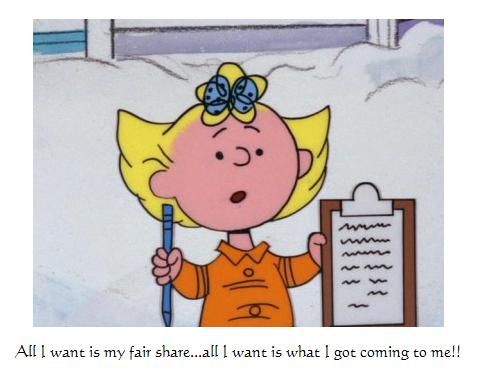
All I Want Is What’s Coming to Me

Believing that each of us falls (monumentally) short of the glory of God, it’s an excellent thing that – actually we do not get what’s coming to us.  What we “deserve” is probably not pretty.  Consider the fact that Jesus came in the form of a human baby not because we had been “such good boys and girls” ourselves, but because we had not.

We do not get what we deserve in this world. 

This is true for those who us who receive much comfort and joy in life and those of us who don’t.  This is true for those of us whose lives have been beset by poverty, illness, and abandonment and those of us whose lives have been blessed by wealth, health, and trusting relationships.

When billionaire Robert F. Smith spoke to the 2019 graduates of Morehouse College, he shocked the room by announcing that he was covering the college debts of any student  graduating with debt.  I remember asking a friend whose nephew was in that 2019 class at Morehouse if her nephew felt cheated because he had worked hard to get through college with no debt. She immediately replied, “No. He was happy for his classmates who were – by grace- given a gift that set them free.”

What gifts will we receive and what gifts will we give this week?

To be perfectly honest, all of us receive more than we deserve.  I did nothing to find myself born into a white family who valued education and could afford summer vacations.  I also had student debt that I didn’t pay off until I was 35 years old.  

The national student loan debt in the United States reached $1.6 trillion in June 2019 according to this report.

Do I begrudge people whose parents paid 100% of their college expenses?  I’m a little jealous – for sure – but good for them.  Some of my friends in college had been blessed with savings accounts from grandparents or full scholarships based on merit.  They are very fortunate.

Everyone I know who currently has or once had student debt worked in college to help cover expenses.  They worked before college.  And God knows they have worked after college and find themselves still struggling to pay off those student loans because the interest is killing them.

What if – in 2021 – all student debt was forgiven in this country?  Or what if $10,000 of each person’s student debt was forgiven? Or what if the interest on each person’s debt was forgiven?

  • Some will say, “This isn’t fair.  I (or somebody in my family) worked hard to foot the bill for my college.”
  • Some will say, “This will help the economy because young adults will finally be able to buy a home or save for their own children’s college.”
  • Some will say, “Those students should pay the price for being irresponsible (or having irresponsible parents) who had to borrow money in the first place.

Again, the truth is that none of us get what we deserve in terms of benefits or disadvantages in life.  I did nothing to deserve to be born into a family with health insurance.  My friend M didn’t deserve being born into a family that never took her to the doctor or dentist because they were both neglectful and had no health insurance.

Do we begrudge people for receiving blessings they did not earn?  I hope not because this is called Grace and all of us need it.  And all of us have it by virtue of the Incarnation of God which we celebrate on Christmas Day.

God didn’t come to earth because we were so good.  God came to earth because God is good.  And merciful.  And gracious.

Merry Christmas Everyone.

Image of Sally from A Charlie Brown Christmas (1965)

Hallelujahs in Hell

I had never heard the term “hallelujahs in hell” until yesterday. Apparently that term is used in a Kiss song (which is actually “Hell or Hallelujah“), a semi-famous church video on the topic of eternal damnation, and numerous Good Friday sermon titles.

Yesterday I read it on Twitter.

Eight years ago today, an unspeakable horror occurred in Newtown, Connecticut. I don’t need to share more details here and you can look it up if you don’t know the story. But what happened rocked our nation – only not enough for us to change gun laws on semi-automatic weapons.  

My friend Cindy had just died of cancer two days before and so I was foggy when I first heard the story on the radio. Did I really hear what I think I heard?

I have come to know one of the moms who lost her child that day and she inspires me daily.  I knew of her from the first day because her brother-in-law is a friend of a friend.  And I have been praying for her for a long time. 

She is a Christian.  She is the kind of Christian who feels like my sister.  She is the kind of Christian who understands that being wrapped in grief doesn’t mean we have no faith.  She is the kind of Christian who can experience the depths of hell and still whisper, “God be praised.”  She is the kind of Christian who knows that God’s finger is not on every steering wheel, every weapon, every threat.  She knows that we worship a God who weeps, a God who knows what it’s like to lose a child.

Over the weekend she wrote:

It’s a hell’s hallelujah – that which we live. It includes patterns of holding, maintaining and thriving.

20 children.  6 adults.  All have family who survive them.  All have family who will grieve forever.

I believe that one of the highest examples of faith is when we can dwell in the deepest, ugliest, most excruciating hell and still somehow believe that God is with us.  

If you are struggling today: If you are a pastor wondering what all this is doing to your congregation, if you are a health care provider on your last ounce of energy, if you are a small business owner watching your investment slip away, if you are an unemployed person on the cusp of eviction, if you are a person grieving the loss of a loved one from COVID-19 or violence or any malady that destroys the body . . . maybe someone can whisper hallelujah for you today if you can’t say it yourself.

I tweeted Nelba Marquez-Greene a while back:

Strangers in Charlotte are praying you feel especially loved in these days. You continue to be a good Mom.

And she tweeted back:

I’m going to follow you so we’re not strangers anymore.

She and her family established The Ana Grace Foundation for the purpose of “promoting love, connection, and community for every child and family.” She and many others are grieving today and everyday.  And still we cry “hallelujah.”

Image source here.  Please stop whatever you are doing right now and click the link.  And then click the names of those children and teachers and read about them.  And then pray for those for whom today is terrible.

And For My Next Self-Care Trick . . .

I read somewhere yesterday that a pastor who had been leading Zoom calls for her congregation to offer tricks on ensuring personal self-care had a Eureka moment: she decided to cancel the Zoom calls for the sake of her own self care.

Well done, Pastor.

I am taking a little Advent break from writing so that I, too, can honor my need for self care. I encourage you to do what you need to do: cancel the meeting, set aside the unnecessary, add a long walk, limit the phone calls.

Prepare ye the way of the LORD.

When It Hits You

You never know when it will hit you – that sobbing fit or that overwhelming desire to take a nap or that huge craving for a phone call with a friend who will surely say all the right things.

I remember when my Mom died decades ago, I found myself in the fetal position sobbing on a random Tuesday about six months after her death. You never know when it will hit.

My father-in-law died on Wednesday after a long illness. He was blessed with 86 years on this earth – 65 of which he was married to “his best catch.” (He was also an avid fisherman.) The loss starts as a relief but there will be heaving sobs that show up on a random morning, just as there will be foggy afternoons when only a nap with a cozy blanket will help.

It’s hitting some of us that this could be our first Christmas without “everyone.” Clergy, medical professionals, and others are used to spending holidays at work. But even we get to see our loved ones around a big table eventually – in the general vicinity of the holiday.  Many of us spent Thanksgiving with smaller gatherings.  But Christmas feels like it will be harder.

The only Christmas of my life I didn’t spend with my Mom was her last Christmas.  I was a pastor.  My husband was a pastor.  We had a baby and lived five states away.  It was just too hard.

This Christmas will be the first for many of us without someone who has always been there, either because of death or quarantine.  It will be hard.  But it won’t be forever.

In life and in death, we belong to God.

Please. Drop The Ball.

Our Committee on Ministry met earlier this week and I actually asked them to let some balls drop. Let some things go.

Ordinarily I would have given a pep talk to keep up their responsibilities as church liaisons.  Get your paperwork in.  Check in with churches in transition.

Not this month.  It’s time to drop a ball or two for the love of God.

Who among us hasn’t missed a Zoom meeting because it didn’t make it onto our calendars?  Or we needed an afternoon nap on a random Tuesday?  Or we had a to-do list and checked off  fewer items than we might have checked off a year ago.

And perhaps more importantly, can we be gracious when our pastors, elders, or volunteers drop a ball these days?  Can we give them a break?  Can we encourage people to take it a little easier?

It’s okay.  There’s a lot going on.  Drop a ball or two.

Image source.