Have We Noticed Their Faces?

Have we noticed the faces of the nurses, doctors, and respiratory therapists dealing with the COVID-19 situation?

As I watch these overworked professionals interviewed about their experiences on television and other media, I’ve noticed that they represent the variety of cultures and demographics in the United States.  Take notice next time you watch or read the news and notice the faces of those directly dealing with COVID-19 in this country.

They are not all white, my friends. Our hospital staffs throughout the United States look like the world.  Many of our medical professionals are immigrants or first generation Americans – and we would be a poorer nation without them.

(Note: So imagine what are we missing by refusing to welcome new immigrants to our country – but that’s for another post.)

It reminds me of something Eboo Patel wrote about here.

In an American hospital, a Jewish internist may be working with a Baha’i anesthesiologist to treat a Buddhist patient. They may be supported by a Muslim nurse, in a room cleaned by a Baptist custodian, at a hospital started by a Catholic religious order and run by a culturally Hindu CEO who does not believe in God.

If that Buddhist patient approaches the end of her life, it is very likely that the person offering comfort would be a chaplain trained at a mainline Protestant seminary.

COVID-19 has collapsed the lungs of tribalism.

I would like to believe that this is true: that tribalism has been zapped away by this pandemic.  But I sense that many white people still believe that “they don’t see color” and so we miss this great truth:

People of every religion, skin color, and heritage are serving sacrificially in these days of the novel coronavirus.  Have we noticed this?

We are not a “white nation.”  We white people might think we are a white nation and we might not realize the enormous privilege based solely on our pale skin color,  but actually the whole world is blessed because we are not all white.

Have we noticed the faces of the helpers?  They look like the Kingdom/Kindom of God.

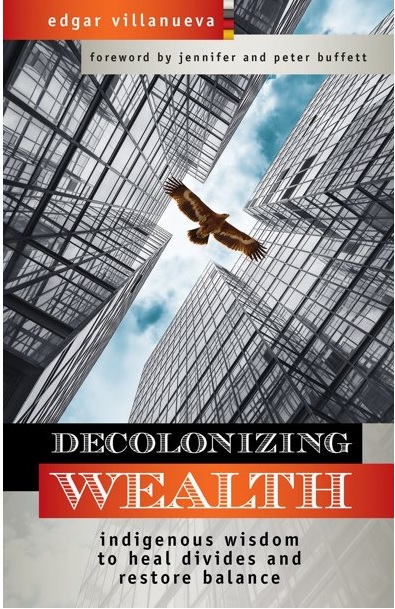
The medical professions above were all interviewed in the past week about their work with COVID-19 patients in a variety of venues.  They are – from the top left going clockwise – Dr. Mafuzur Rahman, Dr. Taison Bell, Dr. Lisa Cooper, Dr. Ayman Fanous, Dr. Octavia Pickett Blakely, Dr. Thomas Oxley, Dr. Winston Wong, Dr. Ahmed Hozain, and (in the center) Dr. Althea Maybank.  Also, would someone please give Eboo Patel the Nobel Peace Prize?  And finally, if you live in a rural area that’s predominantly white, read this book.

What Does Winning Look Like?

What it means to be “a winner in this world has always been interesting.  I have a college friend who’s “done very well” since our college days and at this point, he is a multimillionaire.  I asked him once why he continued to want to make more and more money and he said something about it being a game that he’s still trying to win – and win definitively.

Good for him.

During these pandemic days “winning” has special significance.

  • Are we winning when we have the Personal Protection Equipment we need in hospitals and other venues?
  • Are we winning when we land the last roll of toilet paper in the store?
  • Are we winning when we’ve finally come up with a schedule for computer use for our school-aged kids and their working-from-home parents?
  • Are we winning when we find a wine store that delivers?

I could make a case that Jesus tried to make losing the new winning.  But more than that, Jesus was all about vulnerable people winning.  (Note The Sermon on the Mount.)  And this is our calling as human beings – and especially as people who claim to follow Jesus. We want love to win.  We want resurrection to win.

We want “the least of these” to win.

Winning churches – if we can use that term – are congregations with a positive impact on their communities in the name of Jesus Christ.  Winning churches are the ones that:

  • Feed the poor AND also work to eradicate systemic poverty so the poor can feed themselves.
  • Include the ignored, the vulnerable, the unseen AND also work to dismantle racism, sexism, ageism, and every other kind of ism that negates someone’s inherent worth.
  • Build vital community AND promote relationships that nourish souls.

Winning in the 21st Century Church is not about church size or bank account size.  It’s about the size of our imaginations and our willingness to let God’s Spirit direct us.

A lot of us are tired.  Those organizing virtual church are working behind the scenes way beyond their job descriptions.  But there is renewed energy in knowing that we are making a life-giving impact.

Final thought:  Spiritual Winning is never about getting our way to fulfill our own agendas.  Take note church leaders.

Image of church backpack program to feed food insecure children.

My Fourth Marriage

My colleague JC (Joe not Jesus) told me once that he’s been married multiple times to the same woman.  As life has transitioned, so has the marriage.

With that in mind, HH and I begin our fourth marriage today – to each other.

First Marriage: Three Churches. A Birth. A Death. An Eventful Move.

Second Marriage: Two More Births. Two Miscarriages. Three More Deaths. Co-Pastoring. Not Co-Pastoring. 16 years of Public Schools.  Two Dogs. Lifelong Friends. Soccer Fields. Lacrosse Fields. Field Hockey Fields.

Third Marriage: Empty Nest. Central Time Zone. One Church/92 Churches. That PCUSA Thing. Two Years of Breakfast with Faces.

Fourth Marriage: Downsizing. Freedom. Old Dog. New Adventures.

Life together changes with the years and the seasons.  There are joys and there is brokenness and there is a lot in between.  I love what Brene Brown says about the myth of the 50-50 relationship.  (It’s definitely a myth.)

A lot about marriage involves luck and grace and God and magic and miracles.  We happen to make it to this point for some reason and it doesn’t make us better or smarter.  But the truth is that life often involves multiple marriages – sometimes to the same person.

Old coffee cups. New venue.

Is Everything Suddenly (Or Not So Suddenly) Outdated?

This will be my last post of the week since I lose internet tomorrow with the final chapter of our move from Illinois to NC.  Moving during a pandemic has some interesting challenges.

Over the past ten days of endless packing, I’ve found sermons that won’t preach in a post-pandemic church.  I’ve come across articles that I wrote in the early 2000s that sound completely out of touch in the year of COVID 19.  I’ve re-read pieces I saved because they sounded so on track just a few years ago but today they sound ridiculous.  For example, the Ten Ideas That Are Changing Our Lives on the March 2012 cover of Time Magazine includes these “ideas”:

  • Living Alone Is the New Norm
  • Food That Lasts Forever
  • High Status Stress

So, here’s the thing:  people might want to live alone but they can’t afford to do it.  Fresh food (and “farm to table” restaurants) are much preferred – especially by those who live in food deserts.  And “high status” people might find it super stressful to have to cancel their vacations this summer, but the most stressed out people I know have lost their jobs during this pandemic and the government checks are not going to help much if they help at all.

As a person who serves in the Mid-Council level of Church World, I’m trying to get my head around what the Post-Pandemic Church will look like.  It’s about more than how we celebrate communion once we can get back together again.  (It probably won’t involve a common cup or tearing chunks of bread from a common loaf but that’s obvious.)

I wonder about seminary training: will there be classes taught on preaching to a screen?

I wonder about worship: will people become used to staying home Sunday mornings where they can sip coffee and wear their pjs during the service?

I wonder about meetings: will people prefer online meetings so that they don’t need to hire a babysitter or drive at night?

I wonder about pastoral care: will we visit face to face AND Zoom?

I wonder about The Connectional Church: will we “attend” a virtual Bible study at First Church of the City and then “attend” worship with Second Church of the Burbs and then “attend” the board meeting with our “home church” working to provide resources for Third Church of the Hills because their food pantry needs to be re-stocked?  Note:  This kind of connectionalism is exciting and it also begs many questions like . . .

  • Who’s paying for the preacher in that virtual service that thousands are watching?
  • Will people from my church divide up their financial support between three or more congregations?
  • What do we do about the buildings we’ve been keeping up for decades?

And what about the churches who have essentially shut down during the pandemic because their parishioners don’t have smart phones much less computer notebooks?  What if they continue to shun online giving and virtual gatherings? Do we let them go?  Do we let them die?

I remember my grandmother telling me about her friend who “didn’t believe in” telephones when phones were the new thing.  She openly castigated the whole concept of talking through a machine as opposed to visiting people face to face.  The time came when she was the only person without a phone and she missed out on so much information that – towards the end of her life – she broke down and got a phone. But she never liked it.  She never embraced the positives of connecting with people by phone.

For decades, I’ve been writing and speaking about shifts between the 20th and 21st Century Church.  People have often listened politely and then continued to do what they’ve always done in the ways they’ve always done them.

But now, we are newly forced to consider that 21st Century technology is a requirement for 21st Century Church.  21st Century culture shifts are no longer an option; they are a prerequisite for being a thriving congregation post-pandemic.

Is it possible that everything will go back to the way they once were prior to Mid-March?  It’s possible.  But I think things have changed forever.

(Note: this is not a bad thing.)

Image from a New Jersey highway from the front lawn of a church building.


Whatever Happened to Thomas’ Twin? (We May Never Know)

I had forgotten that “Doubting Thomas” was a twin until I re-heard yesterday’s scripture lesson which is the usual passage following Easter Sunday.  We don’t hear much about the disciple Thomas except that he was a twin.  I’m assuming his twin was male considering the fact that females were often ignored in First Century Palestine.  But of course, the twin could have been a fraternal sister.  I’d never thought about it much until yesterday.

Did Thomas and his sibling share a fun twin language?  Did the twin die young?  Was the twin living in Galilee down the road?  Was the twin a follower of Jesus?

There was a Newsweek cover story in 2011 with Princess Diana on the cover imagining what she would have looked like if she’d lived to the age of 50.  This article made me crazy because  1. this was not news, and 2. We have no way of knowing what she would have looked like or been like.  Why go there if you are a news magazine?  Or any media outlet?

I could sit at my desk all day long and imagine what Thomas’ twin might have been like.  But it doesn’t really matter.  It’s not cosmically important to for us to know about the twin and – if it works this way – we can keep a long list of questions we’d like to ask God in the afterlife along with “who was behind the grassy knoll?”

If we need to know, we’ll know.

Human life includes unanswered questions:

  • Why did my father have to die the week of my wedding?*
  • What possible good could come from my husband dying when our baby was only six months old?
  • Why did I survive the accident and my sister didn’t?
  • Why didn’t I get into that college when I spent my entire life doing everything I was told to do to get in?
  • Why didn’t he love me?

Sometimes, as time progresses, we can look back and see the hand of God and the reason why something happened or didn’t happen.  And sometimes we never find out the why.

Can we be okay with never knowing?  

Deep faith is more than relinquishing our lives and brains to an unseen God who directs us like helpless puppets.  Deep faith involves trusting that we are seen and loved even when life feels random and meaningless.  I don’t have the power to give someone faith.  I can only point in that direction. I can be a storyteller sharing what I’ve noticed.  I can be a tour guide pointing out interesting details that might have been overlooked.

It would be cool to know that Thomas had a sister with a successful sewing business or an olive farm.  It would be interesting to know that Thomas had a twin brother who was a mapmaker or a boat builder.  But we don’t know.  We will probably never know.

Thomas and the remaining ten disciples experienced a deep unknown after Jesus was crucified – even after Jesus appeared to them again.  It’s hard for us to get our heads around this because the story is so familiar.  But it must have been terrifying.

The earth and all of us who dwell here are facing an unknown that will continue to alter our lives well into the coming months and years.

But we who live in hope believe that love will win.  And we believe that – if we need to know – one day we will know.

*These are all questions I’ve literally been asked as a pastor.  What we can’t understand can feel crushing. Sitting with each other in the unknown helps.

I Used to be That Mom

When I first moved to Illinois, all three of our kids were in college and we were experiencing our first Empty Nest Experience.  I was just coming off a couple decades of driving kids to events and making birthday cakes that resembled the plane crash scene in Lost. I brought with me every kind of cookie decorating sprinkle, paper cupcake holders for every holiday, and lots of sports trophies.  But it was clear that – in a place that had never known me as the mother of three – I was simply a middle-aged woman with a career.

I never once used those sprinkles or cupcake holders.  My college students who became young professionals were no longer interested.  And neither was I.

And so yesterday, I packed these fun baking items up or threw them out in the ongoing adventure of moving back to N.C.  There might be a future when I make cookies with children again, but it won’t be anytime soon.  There go the sprinkles.

When you move from one house to another,  the reality that we are also moving from one chapter of life to another becomes very clear.  People who live in the same house throughout their lives are blessed in many ways.  There is comfort and security in knowing that your former life is still all around you.  Or at least it’s in the attic or basement.

And it’s also true that when you never have to move to a different house, it feels softer when you move through the different seasons of life.  We can put that the stroller and toddler chair in the attic if we can’t bear to part with it.  And then we can put the roller skates up there.  And then we can put the science projects up there.  And then we can put the high school yearbooks up there.  And after 40+ years in the same home, we have an attic full of treasures that someone else will get to deal with after we die or move to a retirement community.  There’s a comfort in not having to part with artifacts that mark the past.

When we move more often, traveling lightly becomes practical and psychologically necessary.  Practically speaking, it’s expensive to keep moving All The Stuff from one place to another.   Psychologically, it helps delineate the changes happening to us.

So, yes my nervous system is on overload this week.  All of our nervous systems are on overload – whether we are moving or missing people or exhausted from home schooling or terrified of surviving financially.

I suggest that we find something in the thick of all this transition that brings relief.  Maybe – at your house – baking cupcakes or cookies would be the perfect comforting activity.  I have plenty of sprinkles and cupcake liners if you need them.

The Crying Pastor

Have you ever seen your pastor cry?

Pastors have lots of reasons to weep and yet we try to control ourselves.  Nobody can fully prepare for the constant good-byes of professional ministry: the families who move away, the families who basically disappear without understanding why they left, the youth who leave for college and never return, the people who die.  Pastors are not supposed to be blubbering messes and yet sometimes we are.

The hardest I’ve wept as a pastor: leaving congregations I’ve loved, burying elders I’ve loved, burying children.  No one prepares us for the layers of losses.

The best pastors I know show their vulnerability.  They share their hot-messedness.  They make it clear that they haven’t cornered the market on God’s Truth.  They authentically apologize when they make mistakes.

All pastors are human.  We cry.

We can only offer sound pastoral care if we serve according to our scars – not our wounds.  There was a time that I got choked up every time I preached and a lot of that had to do with losing my mother.  I didn’t have to be preaching on mothers or even thinking about my mother, but it was a deep, deep wound.

Wounded pastors lose the capacity to serve in healthy ways because we become the pastored rather than the pastor.  #BoundaryProblems

And yet, we also need to share our scars if in no other way than knowing the importance of keeping our mouths shut when other people share their brokenness because we know.  We know the pain.  We know to be present and we also know we can’t possibly fix it.

Some of the best ministers I’ve met have never been to seminary.  They are the neighbors who bring pie and sit in silence.  They are the friends who pray when they say they will.  They are the staff members who wear bow ties to the last staff meeting.

Tears of joy are obviously different from tears of despair.  I’ve experienced both in parish ministry, and if you look at human tears under a microscope, tears literally vary in appearance depending on the reason for the tears.

When was the last time you saw your pastor cry?  The answer reveals some essential information about that person.  Please pray for your pastors this week – both those who went to seminary and those who inherently know how to preach the gospel in the way they live their lives.

It’s quite possible that all of us need a good cry these days.

Image source.


What Have We Learned From This?

What have we learned from the pandemic so far?

I’ve learned that I really like to touch my face.  And eat out.

After living in two different time zones for the past two years, HH and I are in the throes of packing up our home in Illinois and moving everything to North Carolina.  And I’m learning all kinds of things as I go through every piece of paper, every drawer, every cabinet.

I’ve learned what not to do next time as often as I’ve learned what to do in life.

Don’t:

  • Keep mean letters/notes someone might have sent to you.  (Why do that to yourself?)
  • Go cheap when doing home improvement.  (That guy who removed the dead tree had no idea what he was doing.)
  • Keep blurry photographs.  (Why?)
  • Save spices after they’ve lost their flavor.  (Jesus said something about this.)

Do:

  • Keep journals because we forget things and it’s good to look back and remember what we’ve survived.
  • Recycle everything you don’t want to keep.
  • Save a copy of your dog’s adoption papers. (That was a good day.)
  • Expect to find treasures you lost a long time ago.

Moving during a pandemic has its challenges.  Goodwill, Salvation Army and Habitat ReSale stores are all closed.  Realtors can’t show your home to potential buyers.  Good-byes are difficult during social distancing.

But these are the days we also learn gratitude for the friends who send pizza and the moving guys who don’t cancel and the wonderful memories and the unknown joys ahead.

Every Day’s a School Day – especially during a pandemic.  (Thanks AAM.)


Resurrection Happens Even Behind Closed Doors

Like the first disciples of Jesus who remained in hiding after the Resurrection, still living in fear, we continue to be in seclusion behind our own closed doors today.  In addition to the binge baking, HH and I are packing our worldly belongings.  We have about ten days to pack up our home in Illinois to complete our move to North Carolina.

Moving sucks.

Most of us don’t like what it means to move.  It means deciding what to toss and what to keep.  Moving from our first empty nest home where we were custodians of our young adult children’s stuff “until they could take it” means sorting through artwork, trophies, various sizes of ruby slippers, and an arsenal of Nerf weaponry in deep discernment.

Do we take their childhood memorabilia with us? Or do we simply take photos of the memorabilia?

Are we keeping the fine china and crystal?  The kids don’t want it.

And the books.  What does it mean to give away almost all my books for the sake of downsizing?  The writing careers of Anne Lamott and Barbara Brown Taylor are now in boxes in my living room.  Do I keep the Bible commentaries when I do most of my exegesis online now?  Yes, we are keeping the autographed Harry Potters.  No, we are not keeping all the anthologies of short stories.

Traveling lightly is a spiritual practice.  I’ve seen The Darjeeling Limited enough to know this truth.  Also there’s Abraham.

Moving – even behind closed doors – is an act of resurrection.

Christ is risen!  Christ is risen indeed!

And let’s not forget that the risen Christ can enter even through locked doors.  There’s no hiding when God wants us to move forward.

Image of our front door in Illinois on Easter morning.

Why Do You Seek the Living Among the Dead?

Christ is risen! Christ is risen indeed!