I Would Love You Even if What You’re Telling Me Is Not True

People lie to me just as they lie to their own pastors and to their doctors (“I only drink one glass of wine a week“) and to their dentists (“I floss most days.”)  They tell me they are “fine” when they are not fine.  They tell me family stories that are either exaggerated or wholly false.

Sometimes they are also lying to themselves and they’ve told a story so many times, they believe it’s true.

[Just to be clear, I also lie to myself and others to spare me shame or to avoid difficult conversations.  Ask me about that time I told the truth about chopping up our neighbor’s rose bushes as a seven year old and – while I confessed the truth – my siblings who were partners in that crime – lied about it and I was the only one who got disciplined.  I learned that lying = getting off easy.]

Throughout my professional ministry I’ve been told some pathologically interesting stories:

  • The parishioner who told me he grew up in a mansion with gardeners and chauffeurs when the truth was that his father was a prison warden and he grew up on the prison grounds.
  • The parishioner who told me he went to Harvard when actually he signed his war registration documents on the campus of Harvard and never took a class there.
  • The parishioner who told that her successful father was her hero, when actually he had sexually abused her throughout her childhood.

I remember sitting with a woman who was telling me for the umpteenth time that one of her relatives had won the Nobel Prize.  I don’t know whether this was true or not, but God put the following words into my mouth:

You know, I would love you even if what you’re telling me is not true. 

I wasn’t saying that I didn’t believe her.  But she had shared that comment with me so many times, it was clear that it meant a lot to her.  It made her feel important.

But she wasn’t important because of her proximity to the Nobel Prize. I didn’t love her or those others because of who their parents were or what they owned or where they went to college.  I loved them – or tried to – just because.

Loving people – or trying to – is the only way I can get through this life and I’m often not very good at it.  People can be so selfish/obnoxious/narcissistic/cruel and the only possible way I can love them is to remember that God loves them.  I don’t have to like them.  But I’m called to love them because of Jesus.

All of us say things and do things that we think will make others love us.

Sadly, it is true is that some will not love us if we behave a certain way or if we don’t behave a certain way or if we have debt or an addiction disorder or a criminal record or a home in a not-so-great neighborhood.  Some people won’t love us if we fail to live up to their expectations.

Love feels especially conditional these days.  And we could all use some unconditional love.

How can we nurture unconditional love?  Repeat after me:

  • I will love you even if I disagree with your politics.
  • I will love you even if you disappoint me.
  • I will love you even if you don’t take my advice.
  • I will love you.  No matter what.

There is someone in my life who made some poor life choices once upon a time, and now that those poor-choice-days are over, I sometimes remind him: “There’s nothing you could ever do that would make me stop loving you.”

The first time I whispered those words into his ear, it was just a pep talk comment.  But because he told me that it means a lot to him, I say it more often now.  I want it always to be true.

Only God can help us know the truth about ourselves.  And only God can help us love each other unconditionally.

Happy Monday.

Go Into the Weekend with Hope

I’ve spent time this week with several people who see no hope.  No hope for their personal financial situation.  No hope regarding our national divide.  No hope that we’ve seen the worst of the gun violence around us. No hope that their physical pain will subside.

And so – in spite of the hopelessness that deadens us – I’m asking you to share the hope you’ve noticed that enlivens us.  Here’s what I’ve got off the top of my head:

  • All traffic stopped in a busy parking lot yesterday to allow an older man using a walker and the woman at his side to cross – very, very, very slowly.  There was no honking.  There was no shouting from car windows.  People waved and smiled.
  • The farmer’s market nearby was open today and there were tomatoes that taste like heaven.
  • Therapy dogs.

What about you?  What’s giving you hope as we move into the weekend?

Image of Jersey the therapy dog who is comforting an Army Veteran simulating a panic attack.  Good boy, Jersey.  Source.

What Would You Think of Me If I Joined the United Daughters of the Confederacy?

It’s a serious question.

Since moving back to my home state of North Carolina in 2018, I’ve been delving into family history, both as a hobby and as a tool for understanding my own white privilege.

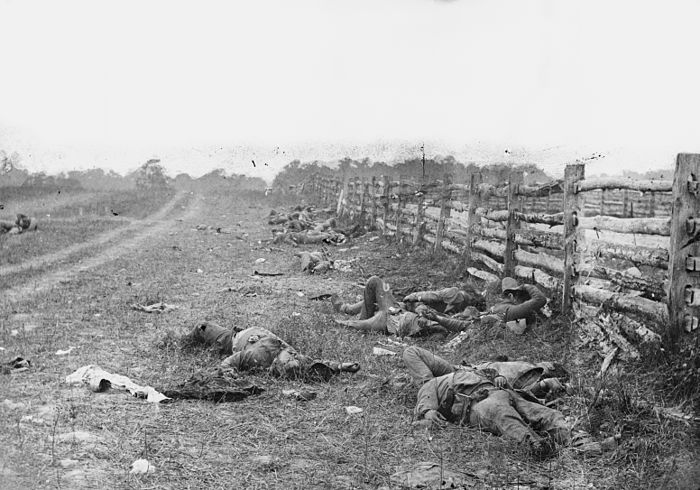
I already knew that my great great grandfather died wearing a Confederate uniform at Antietam in 1862.  But I didn’t know – until I moved back here – about the lynching of three (almost certainly innocent) black men in Rowan County near the birthplace of that great great grandfather in 1906.  This infamous lynching occurred just four years after the lynching of two black boys – one 11 and one 13 – who allegedly killed a young white woman working in a field.

The press reported that 3000 people gathered for that 1906 lynching after midnight on August 7th and it’s possible that my grandfather – who was almost 14 at the time – could have been present. There is no one alive to ask, and it’s not the kind of story that was written up in our family histories.

I’m going to assume that someone in my family tree or someone among their friends was there for the hanging and mutilation of Jack Dillingham, Nease Gillespie, and Gillespie’s son John (who was 14 or 15 years old.)  I need to claim this part of my heritage because it is true.

Everybody’s heritage includes ugly.

If we tell the truth about who we are – as individuals and as a nation – we must accept both the great moments and the shameful ones.  Yes, it’s true that courageous explorers landed at Jamestown 400 years ago and it’s also true that

The powerful American Indian chief, known as Powhatan, had refused the English settlers’ demands to return stolen guns and swords at Jamestown, Va., so the English retaliated. They killed 15 of the Indian men, burned their houses and stole their corn. Then they kidnapped the wife of an Indian leader and her children and marched them to the English boats. They put the children to death by throwing them overboard and “shooting out their brains in the water,” wrote George Percy, a prominent English settler in Jamestown. And their orders for the leader’s wife: Burn her. (Source)

Lord have mercy.  Christ have mercy.  Lord have mercy.

If you regularly read this blog, you know that I have an inclusive understanding of racism.  We are all racist by virtue of growing up in a country built by enslaved people.

And at the bottom of the application for membership in the United Daughters of the Confederacy, it says in bold letters: We are not a racist organization.

So here’s the thing:  all our organizations are racist from the PTA to the neighborhood book club to the United Daughters of the Confederacy.  I would consider being a part of the UDC’s gatherings if we were serious about talking about our heritage – all of it.

In the words of Rob Lee, we need to finish the sentences:

  • When someone says that “the Confederacy was about states’ rights” the end of that sentence is “to enslave human chattel.”
  • When a group declares that “the Confederate flag honors the Southern soldiers who died” the end of that sentence is “to defend the right to own people with black or brown skin.
  • When there’s a discussion about honoring confederate soldiers who fought for freedom, the end of that sentence is “and to remember that their fight for freedom kept other people from being free.”

I would appreciate being in a group that had these conversations.  I’m not sure that the UDC is that group but I’m willing to talk with those ladies.  Maybe I would learn something.  And maybe they would learn something.  We’ll see.

Photograph by Alexander Gardner from the Battle of Antietam. (1862)

Beyond Spinach in Our Teeth

I shared with someone last week that she had spinach in her teeth.  She was grateful, as I would have been if it had been me.

Life is about personal relationships and I hope we all have friends who will tell us about the spinach because . . .

  1. We want to spare people embarrassment.
  2. We know what it’s like to realize that we’ve been smiling with a chunk of green covering our incisors all day and nobody said a word.
  3. Most of us don’t want to gross people out when we smile.

I’ve been thinking about sharing awkward information in terms of behaviors.

A piece of spinach or a poppy seed or smeared lipstick is easily verified with a look in the mirror.  But giving someone feedback about behaviors that are impacting their relationships negatively is much more difficult.

  • Is she mean because of her drinking?  Or does she simply have an abrasive personality?
  • Does he know that he comes off as a mansplainer? Or is he simply an older man who wants to remind us that he used to run a company?
  • Is she aware that she needs to have the last word at every meeting?  Or does she simply remind me of a former supervisor I didn’t like?

Imagine having such trusting relationships that we could share uncomfortable things with our colleagues and friends, and that they would appreciate the heads up.  Imagine having relationships in which we hold each other accountable for the sake of community.

This is Church – in a perfect world.  I so appreciate it when someone tells me that I talked too much at yesterday’s meeting or I was harsh to someone.  It works when I trust the person who is sharing the feedback.

Imagine a congregation in which giving honest feedback is safe and encouraged:

  • That the newly divorced wedding coordinator needs to take a break from that role because she is alternately weepy or cranky at other people’s weddings.
  • That the man who’s been working with children for decades clearly doesn’t like kids.
  • That the church lady who has taken casseroles to new parents for as long as anyone can remember needs coaching on what not to say to new moms (because “it looks like you still have quite a bit of baby weight” is not helpful.)
  • That the guy who volunteers to patch up every maintenance issue in the church building for free is costing them a lot of money because the pros have to come behind him and re-wire the kitchen.
  • That the pastor of ten years needs to take a preaching class, attend a leadership workshop, or get coaching on bedside manner. (Ouch.)

For so long, even churches that call themselves “a family” have hesitated to give helpful feedback for the sake of the congregation.  Niceness is killing us.

I’m not talking about offering cruel comments.  I’m talking about nurturing the kind of deep relationships that welcome accountability and spiritual growth.  And this is not about self-improvement.  It’s about being the people we were created to be so that we can build a healthy congregation.

It’s helpful to understand how we are coming across to others, especially when we are presenting as mean/arrogant/snarky and we were hoping to come across as clever/helpful/amusingly sarcastic.

This might be a huge culture shift for your congregation but part of being the church together means sharing the feedback that behavior detrimental to the Body needs to stop. And also you have spinach in your teeth.

Image of Kristen Wiig.

This Book Will Change Your Life

[Okay, the Bible will also change your life but in a different, lifelong way.]

The Nickel Boys should win the Nobel Prize for Literature this fall.  Colson Whitehead is perhaps the greatest living American writer.

But that’s not why everyone should read this book.

I’ve suggested all kinds of non-fiction books – especially for people in the dominant culture. (Read: White. Christian. Anglo.)  Maybe you have reached the point of rolling your eyes when I go on about the need for White People to do the work of educating ourselves about race and white privilege.  But here is a novel that captures the truth about white supremacy in the fictional story of Elwood Curtis – a young man with a promising future whose life takes a cruel turn.  It will change your life.

Don’t read the reviews.  Too many spoilers.  Just read the book.  (And then read Underground Railroad by Colson Whitehead too, if you haven’t already read it.)

White People have work to do to fight racism.  Maybe a novel will lure us into some fresh conversations.

POSTSCRIPT  I hesitated for a moment when writing that Mr. Whitehead is “perhaps the greatest living American writer” because . . . Toni Morrison.  When she died today, my heart sank.  But now I know for certain that Colson Whitehead is in that seat.

Sermons I Can’t Wait to Preach

In a nutshell, God does a lot of talking when we are quiet.

Here are the sermons that popped into my head during my vacation week:

The History of Our Faith in Six Cups – I love this book and reread it on vacation.  Just as Tom Standage tracked the history of the world in six glasses, I’ve figured out that our faith history can be tracked in six cups in the Bible.  (There was glass in Jesus’ day, but it was too expensive for drink ware.)  This sermon will be based on six cup stories.

Sword PlayMatthew 10:34 – Jesus didn’t wield a sword.  He was the sword. (And if we follow Jesus, there will be conflict.)

That Thing About Politics and the PulpitLuke 22:70-71 – Jesus was executed for rebellion against the Roman government. Just calling himself “Son of God” was crucifixion-worthy.  If we align ourselves with Jesus and his message, it’s just a matter of time before someone accuses us of being “too political.”

Being a Christian is Very Inconvenient (And Other Things They Don’t Teach in Sunday School) – There are lots of Bible stories about the expense of following Jesus.  And on my way to vacation, I met a woman with no home, no car, no phone, no food, and no money.  And she wasn’t a con artist.  She was an amazing person who’d fallen through every crack.  And I met her while heading out of town on vacation.

Like I said, God does a lot of talking when we are quiet.

Image of the view from our porch on vacation last week.


Radio Silence

Sabbath is good.  Sabbath = books and walks and conversations about things that matter and no WiFi.  See you August 5th.

My Name is Jan & I’m (Trying to Be) a Biblical Socialist (Because Jesus)

(Have you noticed how calling someone a socialist is the latest slam?)

I’m much more of a theologian than an economist, and while one could make a case for Jesus being a capitalist (Matthew 25:14-30), Jesus said quite a few things that make him sound more like a socialist:

Jesus said more about money than any other social issue.  16 of Jesus’ 38 parables are about money.  288 verses in the Gospels are about money.

Capitalism in a nutshell = private property, wealth accumulation, paid labor, free exchange of goods and services, a price system, and competitive markets.  In a perfect form of capitalism, everybody has the chance to work hard and build wealth. But capitalism can go awry when – for example – pay ratio between the CEO of a company (like Mattel) and the average worker of the same company is – wait for it – 4987 to 1.  I believe this is a sin.

According to this article, the CEO of Marathon Petroleum was paid 935 times more pay than the average employee in 2017. “One of Marathon’s gas station workers would have to toil more than nine centuries to make as much as (the CEO) grabbed in just one year.”  Again, I believe this is a sin.

Socialism in a nutshell = sharing wealth for the common good (and I admit that this is an extraordinarily simplistic definition.)

But my point is that both political sides increasingly demonize the other over economic theories and “socialist” has become the epithet of choice among some political leaders these days.

Offer health care to all?  Socialism!

Care for refugees fleeing violence?  Socialism!

Providing affordable housing and a livable wage? Socialism!

And yet, what does Jesus command us to do?  I believe we are called to work hard and be responsible with our resources.  And I also believe we are called to offer a safety net to those who need some assistance.  We are called to look out for those without the advantages we have.  We are called to give everyone an equal opportunity to thrive.

So, call me a socialist if it means I’m following Jesus.  I’m frankly not great at it, but – because of what I’ve been given – I have no option but to try.

Image source.

I Finally Have a (Partial) Answer

What do you see for the future of the Church?

This is probably not a pressing question in your world, but it is in mine.  I am asked this question regarding The Church (universal) and regarding “our church” (specific congregations) several times each week.  Here is my partial answer:

  • Churches who have become private clubs, personal chapels, or participants in a “what do we do to survive?” culture will close as soon as they run out of money.  They are filled with lovely human beings who unintentionally have made decisions that set them on the road to closure for decades.
  • Churches who exist for the sake of sharing the message of Jesus, who don’t focus on “getting new members” and who will do whatever the Spirit tells them to do in order to serve others will thrive.

There will be large congregations with both resources and the faith to try and fail at new ventures.  And all those ventures will be about making disciples (not branding or good public relations.)

There will be medium congregations who connect with other medium-sized congregations to transform their corner of the world in the name of Jesus. Partnering together, they’ll be able to do what the cathedral-ish churches can do. They won’t be concerned if they are working with the Methodists or the Lutherans or the Catholics – or the Muslims.  They will be concerned about sharing the life-changing news of resurrection with their towns and cities.

There will be small congregations who know and love their communities to the point that they serve according to what breaks God’s heart in their particular context.  And they will be vital to the life of their neighborhoods and towns.

We are going to see lots and lots of church closings in all denominations and in all non-denominations in the next five years.  And this will be an opportunity to resurrect into something new.  What will be new?

  • Congregations who meet – as a whole body – once a month or once a quarter.  During the in-between time, they will be worshiping and learning and serving together in small gatherings of people who meet during the week.  (Weekend church will not be the norm for new Christians.)
  • Congregations who meet in unchurchy places.  So many people are turned off by church buildings. While some traditional church buildings will continue to be tools for ministry, other folks will be more comfortable in secular spaces.  (Church people: note how few of your couples are getting married in the church building these days.)

There are more new things that will happen, but this is a start.  I have enormous hope for the future Church of Jesus Christ.  But many of our congregations will die out.  It’s okay.  Notice how congregations in Thessaloniki  and Philippi are not celebrating their 2000th anniversaries.

I can understand people who want their churches to survive long enough to bury them one day.  But imagine people – instead – saying that the Most Important Thing about their church is that they are following Jesus with joy into unknown territory.

There are many congregations who are indeed following Jesus with joy into unknown territory.  I pray there will be more.

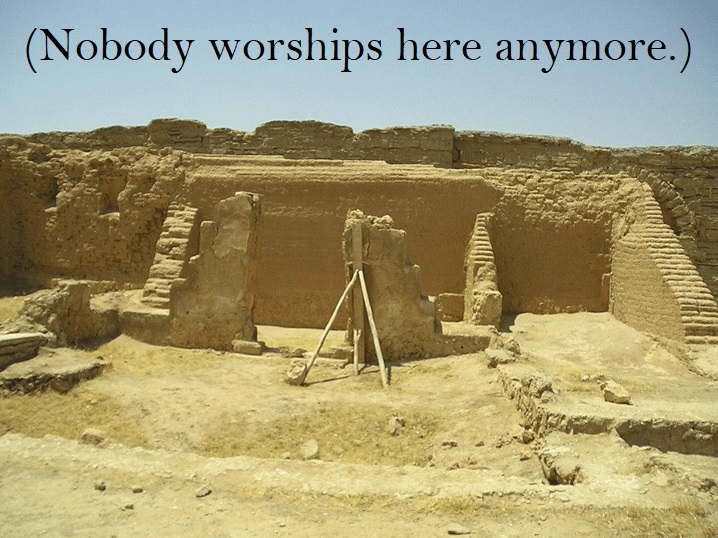
Image of Dura-Europos Church in Syria.  It is possibly – according to this – the oldest church in the world.  Here’s the problem: when people refer to the “10 Oldest Churches in the World” they are talking about church buildings, not actual churches.  Most of the world still believes that the church is a building and that’s why so many of them are closing. 

How Women and Men Are Talking to Each Other These Days (And I’m Glad)

Note:  The post is full of generalizations.

Although I’m a Myers-Briggs Introvert, I find it easy to talk with strangers about cursory topics.  Like shoes.

I’ve noticed that women generally comment to each other about shoes, hair, jewelry, etc.  For example, last week I was in a coffee shop meeting someone and three different women commented on my cute purse.

Women #1 as I picked up my cup of coffee:  I love your purse.  I’ve never seen that purse in white.

Me:  Thanks.  I got it on Amazon.*

Woman #2 two minutes later while I was sitting at the table waiting for my friend:  Your purse is so cute.  Where did you get it?

Me:  Thanks so much.  Amazon.*

Woman #3 in the parking lot:  What a cute purse. I love the cross body.

Me:  Thanks.  

This happens frequently.  “Nice T-shirt” is a common comment I make when walking through my neighborhood.  I have generally believed that guys do not do this with each other.  But then I found myself in rural Canton, NC last week and this conversation ensued with a man fixing my car:

Me: I love your shoes.

Mechanic Guy:  Thanks.  I got them at the Under Armour outlet in Colorado.  They are so comfortable that I found an outlet near here and I bought two more pairs.

Me: So cute.

Did I just say “so cute” to tough guy male car mechanic about his shoes?  Yes I did.

I wonder – as genders are more openly fluid and gender roles are less strict – if men and women are normalizing ordinary conversation in ways like this that make people connect more easily.  Are you finding this?

This is not about flirtation or nervous chatter.  What I’m talking about here is making connections with people beyond “hi.”  When I wear this shirt, I always get comments and smiles.  Or comments and grimaces.  Relationships – even ephemeral ones – are crucial in any culture.

In the United States where social isolation is part of our culture, it’s nice to make connections any way we can between men and women, children and adults, rich and poor, rural and urban.  And so – if I may be so bold – say something encouraging to neighbors today:

I love your shoes.

Your hair is awesome.

Your lipstick is amazing.

Cute dogs.

Again (and please hear me) this is not about flirting with people.  This is about making wholesome, natural connections.  This is about noticing each other.  This is about seeing people as neighbors and human beings.

Have a friendly Tuesday.


Images of the cute purse and cute shoes.

*I am trying to quit Amazon.  But it’s really hard.