Lichen

I’m having Girl Scout flashbacks in Seattle this week in that I’m semi-obsessed with Seattle’s lichen population near the University of Washington.

Last week’s Science Friday featured Troy McMullin, a lichenologist at the Canadian Museum of Nature who describes lichen as “a fungus that’s learned to farm.” In other words, these fabulous fungi  are able to adapt to changes in moisture and temperature.  They are capable of making “mechanical changes” that allow more access to light and therefore new growth to develop.

Lichen can be found in all shapes and sizes, in a variety of colors. And in the healthiest of forests, the diversity of lichen is vast.

If you want to understand the health of a forest, don’t look up at the height of the tree.  Look down at the lichen.

In Church we look up to the heavens for relief and hope.  But – looking around at our healthiest churches  – we find God working especially in adaptive and diverse congregations.  The healthiest congregations have learned how to farm: how to grow nourishing resources, how to use water and light to promote abundant life, how to welcome diversity for the sake of the forest – I mean the Kingdom.

God continues to create every day.  How are we welcoming beautiful adaptive change in our congregations?

Images of lichen on the grounds of the Talaris Conference Center in Seattle yesterday.

Lament As a Spiritual Practice

Here’s a particularly Lenten acknowledgement:

The Church of Jesus Christ has failed miserably in terms of dismantling racism.  We have looked the other way when sexual abuse has occurred – even within the walls of church buildings.  We are responsible for crushing the spirits of God’s children who are queer.  And there are several other things.

Lent is the season when we confess and hope for grace.  But when our very systems are broken, it’s clearly not enough to say, “I’m sorry” and expect everybody to move on.  We need to sit in lamentation.

I often say that we Presbyterians like to see ourselves as the smart ones.  We gather for book studies and intellectual conversation.  We invite speakers to edify us on important topics.  And then we go home smarter.  But nothing changes.  Our studies and conversations have no visible impact.

The same is true for confession.  We Reformed Christians emphasize grace and we regularly make our prayers of confession followed by a swift assurance of God’s grace.  But considering the level of destruction our national sins have created, maybe we need to sit in our lament for a while.

The more we study our nation’s history, the clearer it becomes that – while being a great nation – we have committed horrible deeds.  Native land was stolen.  Human beings were enslaved.  Families were separated and they continue to be separated.  Cultures were erased.  The poor endured different rules from the rich.  To say, “I’m so sorry” is just the beginning.

The NEXT Church National Gathering in Seattle this week was one opportunity to consider lament as a spiritual practice.  We who are the dominant culture cannot move forward without understanding the depth of our often cruel dominance.

This is not a happy, shiny post.  But if we cannot grapple with hard truths during Lent, I don’t know when we can grapple with them.

How do we practice lament?  Read authors whose life experiences are different from our own.  Read Tommy Orange and Jennifer Harvey and Robin Diangelo.

As one of the keynoters said today: we who are white must intentionally put ourselves in uncomfortable non-white spaces. Taste what it’s like to be in an unfamiliar culture.

The Church of Jesus Christ has failed miserably in terms of dismantling racism.  We have looked the other way when sexual abuse has occurred – even within the walls of church buildings.  We are responsible for crushing the spirits of God’s children who are queer.  And there are several other things.

I believe God is calling us to notice the sins of our history and to confess them. And while I believe that God is abundantly gracious, I also know that God expects us to feel it.  We need to be willing to feel the discomfort and the pain.  This is what Jesus did.

Image of Lamentation by Eleanor Coen (1939) in the Art Institute of Chicago.

Life and Death

Our friend Robina Winbush died suddenly yesterday and it feels like a kick in the gut.  Robina was our denomination’s global connector, knowing the world’s ecumenical leaders, keeping the PCUSA engaged with the World Council of Churches, and having the cultural expertise of a diplomat.  Because of Robina, I was our denomination’s representative at the World Council of Churches Consultation on the Ordination of Women Deacons in the Roman Catholic Church in 2017 in Italy.  She was a treasure.  She left this earth the day before my 63rd birthday.

Every birthday is strange for me because 1) it’s a reminder that I’ve outlived both of my parents by several years, 2) I miss my parents more on my birthday than on either of their birthdays or death days, and 3) I always assumed I would die before now.  And yet it was beautiful Robina who is now gone.

In life and in death we belong to God.  This truth gives me great hope.

My family has a twisted sense of humor, especially about death.  We play a game called Dead. Not Dead. The rules are simple: Someone calls out the name of  a famous person and then we each guess if that person is dead or not dead.  Sometimes celebrities pass away and I could have sworn they were already dead.  Olivia de Havilland, Mel Brooks, and Herman Wouk are all still alive.

I am still alive.  You are still alive.  Each day is an enormous blessing and yet we grieve in hope.  I have hope for the global Church because of Robina Winbush.

Image of me with Robina at General Assembly in June 2018.

The People God Is Sending to Us

Some of our congregations are praying for new members.  The #1 question I am asked as a church person is “How can we attract young families?” A close second question is “How can we attract the young people?

It only takes a rudimentary read of the Bible to note that God rarely sends the people we expect.  The examples are endless:  Jacob (cheating brother)  David (sexual misconduct king) and of course Jesus (born in a cave to a poor woman with no interest in declaring guerrilla war on the Romans.)

I often tell the Martha Grace Reece story from Unbinding the Gospel to congregations wondering “how to grow.”  A church in a ski community was “praying for young people” to join them.  Their prayers were serious and fervent. And without sharing the whole story, God indeed sent young people but they were tattooed and pierced and never likely to sit through a worship service.  But they came for food and community and they became the church.

Faithful congregations will indeed grow – 100% of the time – if we are will to include the people God is sending to us.  God regularly sends people to be with us, to lead us.

But sometimes we reject them, we don’t see them, we don’t love them.  I see this every day:

  • The White church in what has become an Asian neighborhood.
  • The white collar church in a transitional neighborhood of blue and pink collar workers.
  • The church that closes it’s doors to LGBTQ neighbors.

Growing congregations welcome the presence and leadership of anyone God is sending their way with genuine affection and a culture of learning their stories while sharing our own.  In the words of Tali Hairston, yesterday’s keynoter at NEXTChurch in Seattle: we in the Church believe that diversity means that people unlike ourselves come into our space and learn to sing the way we sing and to talk the way we talk.  But diversity – actually – is about learning how to sing the way others sing and talk the way others talk.

Instead of wanting people to “join the Church,” what if the Church joined those people?  Just a thought.

Image source.

Pretty Church

There are some breathtakingly beautiful church buildings out there.

But here’s something I’ve found that might make feel like fighting words:  the most effective and vital congregations are usually not pretty churches. There are exceptions but most of the vibrant, impact-ful congregations out there have visibly imperfect buildings and visibly imperfect people.

I love a pretty church building.  Big fan of stained glass and architectural interest. But when everything looks pristine over at First Church on the Hill, I wonder if there’s also pressure for the parishioners to look and seem pristine too.

A strong spiritual community is never pretty from the world’s standards.  Never.

The cross was not pretty.  And human life is a hot mess for most of us.

I just spent the weekend with a group of wonderful women who kept identifying themselves as quirky or unique or “different.”  One of the differences, perhaps, is that they were open to sharing those times when they have most needed God.  They were not afraid to share the unpretty things and yet, in sharing them, they exuded deep beauty.  I experienced church with them.

I need Jesus to center me, to anchor me, to hold me together because I am a bit of a wreck much of the time.  I find strength in the God who heals broken people and if you could see what I’ve seen, you would find strength.  I’ve known people who are still breathing after catastrophic experiences with abuse and betrayal and abandonment.  And nothing about those things is beautiful, until it’s shared.

The Church Jesus cobbles together is made of us the lost and the lonely and the excluded  It has absolutely nothing to do with trimmed lawns and shiny windows.  If that’s all we’ve got, our churches are going to close sooner than later.  If there’s pressure to keep the ugly parts of our lives to ourselves at all costs, our churches are going to close sooner than later.

I remember Barbara Brown Taylor saying one Lent long along ago: “One cross is a crucifixion.  Three crosses is a church.”  Amen.


Working Women

International Women’s Day is ignored in many parts of the world (and in most of the United States) but it’s my hope today that everyone reading this post will have at least one woman in a country other than your own that you honor today.  Maybe you’ve never met her face to face but you respect what she’s done in the world:  Malala Yousafzai, Zulekha DawoodShammaAl Mazrui .

I’m thinking of the women I know who lead congregations in Lebanon and Rwanda and India.  Their ministry is more difficult than my own and yet they have deep hope for the future.  I think of women I’ve met who work as doctors in Syria and teachers in Indonesia, sandwich makers in Turkey and innkeepers in Jordan.

And then there are women who scavenge through trash heaps in Myanmar trying to collect something to sell.  There are women who sew at machines all day in the immense factories of China.

I am a working woman whose mother was a working woman whose mother was a working woman whose mother was a working woman.  I don’t know what my great-grandmother’s mother did all day but I’ll bet she worked hard too.

Women serve a multitude of tasks that keep the world humming.  Today is a good day to consider someone who has not been fully appreciated for the work she does.

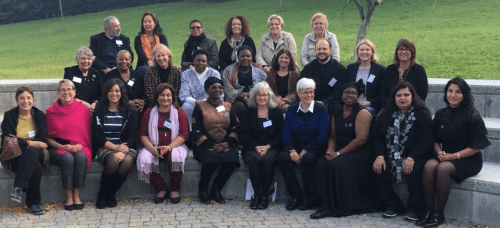
Image of working women from all over the world who met in Bose, Italy in 2017 for the Consultation on the Ordination of Women Deacons in the Roman Catholic Church.  (There were a couple men there too.)

Having Cancer Together

Alex Trebek has pancreatic cancer and some of us immediately flashed back to other people we’ve loved who have succumbed to pancreatic cancer.  Some of us had no idea how sad we would be if ever Alex Trebek was diagnosed with a life-threatening disease. Stage 4.

Some of us find him to be a bit full of himself.  But he is Alex Trebek. And now we are having cancer together.

Only Alex will endure the wicked treatments and bodily betrayal of course but we will be watching and preparing with him. This is not like a sudden overdose or a stroke.  This is not going to be one of those shocking celebrity deaths where one day a person is filming an episode of Riverdale and the next day there’s a Special Announcement with people expressing sudden sorrow on Twitter.

Cancer is a mystery that manifests itself in an array of nasty expressions and nobody’s cancer is exactly like anybody else’s cancer.  But – again – Alex Trebek is someone we have watched and will continue to watch – perhaps on a daily basis.  Maybe he will lose his hair.  Maybe he will lose that “Sorry, you are an idiot” attitude.  Maybe his voice will change.

We will be there with him.

This is Day Two of Lent and I’m reminded that part of being in community with people is that we sit together in crappy times.  We hold hands and pour drinks and have a good cry and try to laugh a little too.  We try to say and do the right things.  We yell at God.  We ache. Your cancer is my cancer.  My heartbreak is your heartbreak.  We get through things together as best we can.

This is Lent.  We have life-threatening experiences together because God created us to be in community. We ask questions even though – as people of faith – we already know the answers.

Image of Alex Trebek, the host of Jeopardy.

Giving Up – for Lent

Forget giving up sweets, alcohol, or caffeine.  What about just giving up?

These are the moments when we are brought to our knees in utter despair, and if that happens not to be your current experience, Thanks Be To God.  But don’t think you have zero responsibilities in light of your blessed contentment.  On this day and every day, people have been spiritually obliterated by tornadoes, cancer, addiction, schizophrenia, poverty, personal betrayal, and random injustice that make thinking people want to holler.

Giving up specific food and drink choices is kids’ stuff.  What if we want to give up?  Period?  (I’ve been there, to be perfectly honest.  More than once.)

God works best when we have no other way out.  When we already feel like dust because we’ve been wrecked, nobody needs to convince us that “we are dust and to dust we will return.”  Our ashen faces and that burnt taste in our mouths have already informed us that the ash heap is where we live.

This is how many of us and our neighbors begin Lent today.  And so we begin Day One of the Forty Days before Easter (not counting the Sundays) noticing things.  We notice ashen faces.  We notice the broken.  We notice the perishing.  We notice and we act accordingly.  We offer what we can.  We offer what might help.

Welcome to Lent. It’s a good time to give to those who have given up.  And if you have given up, please contact me.  Not kidding.

PS I’m reading There, There by Tommy Orange as part of my Lenten discipline because I’m fairly ignorant about the plight of Native people in this country.  It’s a novel about human beings who give and human beings who give up.  I definitely recommend it.

In Between Bites of Pancakes

Lent begins tomorrow and if you are in the Church business you’ve probably already considered Lenten plans, but here are some last minute ideas I love:

  • Marie Kondo-ing 40 gifts.  Some congregations are asking people to collect an item a day for the 40 days of Lent.  Items for a women’s shelter (shampoo, razors, shaving cream, tampons, lip gloss, tooth paste) or items for schools (notebooks, pens, markers, tissues) or items for refugees (gift cards, diapers, laundry soap) – all presented on Holy Week to be shared with those in need.  Each day, as you place one item in your home collection box, pray for the person who will eventually receive this item and thank God for the privilege of sharing it. Spark joy, people!
  • Thirty Pieces of Silver.  Invite people to bring 30 pieces of silver (quarters, nickles, dimes) to Maundy Thursday services (April 18th, 2019) and – while walking forward for The Last Supper – they drop the coins into an empty baptismal font.  The sound of clanging coins during a solemn service can be very moving. The donations are given to an organization supporting people who have been betrayed (abused women, abused children, people falsely convicted of crimes, the homeless.)
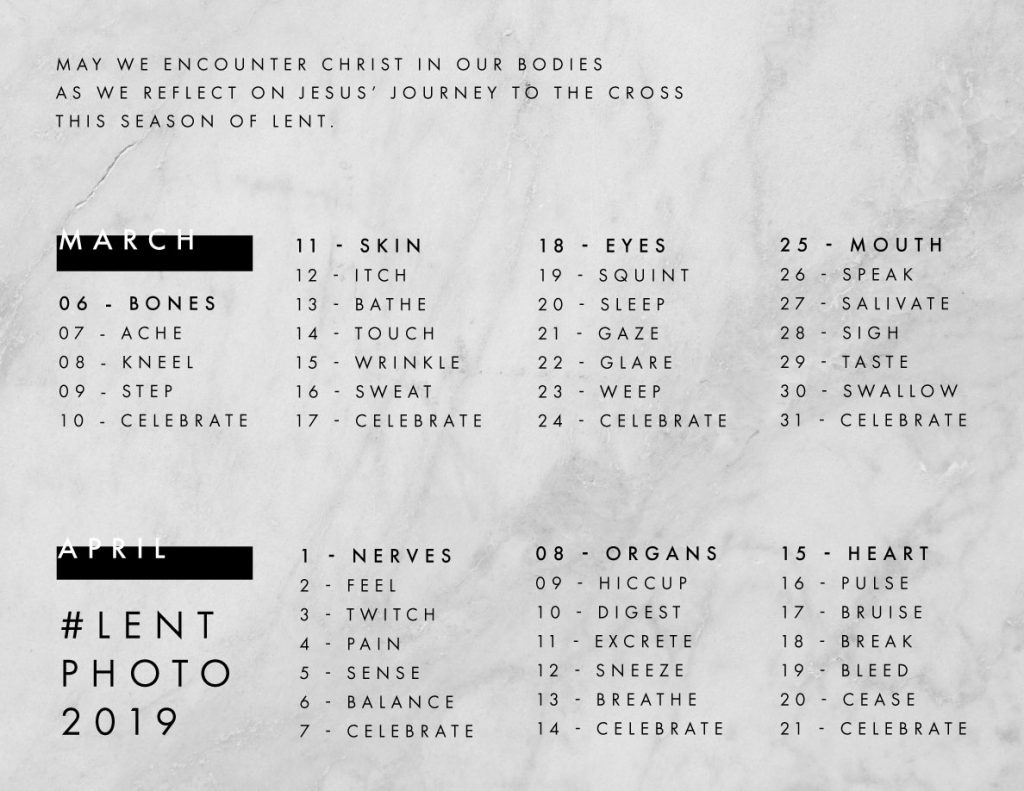
  • Lenten Photo Challenge. As you go through each day in Lent, take a photo of something you notice involving the suggested word of the day.  Here are a couple lists I like:

Post your photos on Instagram or other social media sites with the word/words printed on your photo.  (These examples are from Busted Halo and Tim and Olive.)

Lent not only has the best hymns, but it’s also one of the most spiritual nourishing seasons of the year.  Between bites of pancakes today, ponder a discipline that feeds you for the next 40 days.

Michael Jackson Cancelled?

I have loved dancing to Michael Jackson for the past 49 years.  Is it time to cancel him?

Although there have been rumors of Jackson’s pedophilia for decades, the new HBO documentary offers chilling firsthand interviews about his misconduct. This article says cancelling Michael Jackson is tricky. He’s ubiquitous.  And he’s dead so there’s no possibility of making things right. And he’s certainly not the only celebrity to have a disturbing secret life.

I struggle – as a Christian – with cancelling people.  And I’m talking about Urban Dictionary cancelling here.

But for the longest time, I’ve cancelled famous preachers and theologians whom I know to be sexual predators- often because they’ve assaulted friends of mine. I’ve cancelled politicians who did terrible things even if – once upon a time – I voted for them.  I avoid businesses run by people whose practices have hurt people.

Lots of people have cancelled the NFL, Chick Fil-A, Walmart, Kevin Spacey movies, and anything with the name Trump on it.  But where do we draw the line?

Dissing people and dissing things are different, but is it righteous to be so judge-y?  Or is it merely unforgiving?  I don’t know.

My boycott of something or someone probably doesn’t have much impact but it’s something I might do for me and my own spiritual peace.  Go ahead and listen to R Kelly, but I won’t be joining you on principle.

As we approach Lent, this is something to ponder. At what point do we release someone from the worst things they’ve ever done?  I certainly don’t want to be judged for the worst things I’ve ever done but I suppose it’s possible that someone has cancelled me too.

I’d appreciate your wisdom on these things.  It’s part of the spiritual walk we take together.

Distorted image of Michael Jackson’s album Thriller.