In a Healthy Church . . .

I’ve got a wicked cold and am trying to sleep more, so after Boundary Training yesterday, this is all I want to share – as a gentle reminder, Church Folk:

  • In a healthy church, the treasurer doesn’t keep records at home.
  • In a healthy church, leaders faithfully take their Sabbath time.
  • In a healthy church, former pastors stay away unless invited by the current pastor.
  • In a healthy church, former pastors stay away unless invited by the current pastor.  (Yes, I wrote that twice.)

What would you add?

Grandchildren of Every Color

I am not interested in being one of those moms who persistently asks my young adult kids when they are having children.  Maybe they won’t.  Maybe they will.  I will always have children in my life by virtue of my work and my choices, and while I would love to be Grand Jan one day (yes, I have chosen my own grandmother name based on Jacqueline Onassis’ grandmother name), it’s okay if it doesn’t happen.  My kids are fairly perfect with or without being parents themselves.

BUT . . . if HH and I should be so blessed, I would like grandchildren in any and all colors.

Tom Brokaw has apologized for his recent comments on Meet the Press, but his words stung because there are probably millions of white people who secretly – or not-so-secretly – share his concern about “intermarriage.”

Also, I hear, when I push people a little harder, “Well, I don’t know whether I want brown grandbabies.” I mean, that’s also a part of it. It’s the intermarriage that is going on and the cultures that are conflicting with each other. I also happen to believe that the Hispanics should work harder at assimilation. That’s one of the things I’ve been saying for a long time.

Lord have mercy.

This reality is gross and disappointing to say the least, but it’s real.  We are a systemically racist nation.  Systemic racism is ingrained in our culture, our history, and our deepest psyches.  It’s one of our most common and ugliest sins.

Do I really have to say that children are children?  They are human beings created in the image of God in every color, shape and size. How do we continue to miss this in the year of our LORD 2019?

I feel ridiculous writing about this today.  Good grief, Tom Brokaw.  But the good news is that I could have brown grandbabies someday which would be amazing.

Image of Jacqueline Kennedy Onassis with one of her grandchildren in 1992.


This is How We Do It

A millennial or a young family or some other hoped-for visitor crosses the threshold of your church building on a random Sunday morning. What happens next?

  • This person is/these people are basically ignored. Not one person has thought ahead to prepare for the arrival of a guest.  It’s been awhile.
  • It’s as if they have targets on their heads. Fresh meat. New blood.  Finally someone new to teach Sunday School.  And donate money.
  • Greeters greet them.  Ushers usher them.  But nobody else acknowledges them.
  • People say hi.  Someone walks them to the nursery (if they have babies.)  Someone helps them find the coffee/bathroom/water fountain if they need any of those things.  They are not treated like unicorns (although they might be unicorns.)
  • They are personally and authentically invited to whatever is happening – and things are happening that fill more than calendars.

NEXT Church sponsored an Elder Symposium here in Charlotte over the weekend and there were no workshops.  There was no sermon.  We started at 9 and ended at noon.  There were specific tracks for conversation and sharing.  There was coffee.

This is a different way to train leaders to do ministry.

And it’s not the one and only time officers get trained.  There’s work to do in equipping our leaders on a regular basis.  At every gathering, healthy leadership is modeled. At every gathering there’s a component of learning and culture shifting.

And one of the best takeaways was offered by a leader who said that four times a year, her church leaders have a training called The Way.  They teach leaders that – in their congregation – this is how they do it.

This is how they do hospitality.

This is how they do conflict.

This is how they do mission work.

The way they do Church now is not like the way Church has done hospitality or conflict or mission work before.  A new culture is taught and it slowly becomes their DNA.

The world tells us that everything we do is about me and mine.  The world tells us that “others” are dangerous and “boys will be boys” and appearances are everything and risks are to be avoided and some people are more valuable than other people.  The world teaches us to shame and blame each other.  The world teaches us that where we’re from and who we know forever determine our future.

But Jesus speaks about a different world called the Kingdom of Heaven – and it’s about the here and now at least as much as it’s about the afterlife.  It’s different.

We need to learn how to be the Church differently in a way that’s less like the world and more like the Kingdom of Heaven. But it’s hard to break old habits.  It’s hard to let go of the way we’ve always done it even if the way we’ve always done it is killing us.

Image of Montell Jordan who is now part of Victory World Church in Atlanta.


I Am Judging You

It would be a lie if I told you I wasn’t judge-y.  I judge people according to what they wear, where they live, what they drive, and where they went to college (or when/if they didn’t go to college.)  If I see a group of women wearing sweater sets and pearls, I judge them differently from a group of women wearing RBG t-shirts and pearls.

I’m aware of this and I’m working on it, but it’s really hard in these contentious days.

Julie Irwin Zimmerman wrote recently in The Atlantic regarding the story about the Covington Catholic High School kids and  the Native Americans at the Indigenous Peoples March last weekend:

(It) “is a Rorschach test—tell me how you first reacted, and I can probably tell where you live, who you voted for in 2016, and your general take on a list of other issues—but it shouldn’t be.

She’s totally right.  Those of us who judge the high school students to be ignorant and racist are probably progressive politically.  Those of us who judge the high school students to be normal teenagers trying to diffuse the tension while different protesters who yelling epithets are probably conservative politically.  We are quick to judge.  Just read the Twitter feeds about this incident.

I myself was immediately appalled at the smirk on the young MAGA hat-wearing student’s face.  It felt like my heart was being impaled as he appeared to mock the older man.

Walt Whitman offers a remedy:  Be Curious, Not Judgmental.

Whether I meet someone wearing a hoodie or someone wearing a Burberry coat, whether I observe a person pulling up in a BMW convertible or a rusted out sedan, whether I know someone lives in a multi-million dollar home in Charlotte’s “best neighborhood” or in transitional housing in Charlotte’s “worst neighborhood”, whether someone went to Stanford or to the local community college, I need to be curious about that specific individual person.  God created each of us unique and extraordinary.  It’s an affront to God when we think we know someone based on appearances.

Embracing curiosity rather than judgment seems essential if we hope to pull together as The Church, as Americans, as Global Citizens.  Our culture and our very humanity are being torn apart by our differences.  We barely take the time to know someone’s story before condemning them to otherness.

I for one could be a lot less judge-y. My humanity depends upon it and it’s not too early to be thinking about future Lenten practices.  Also Jesus.


How Does Fairness Inform Your Choices?

I’ve spent the past couple days in Louisiana where the entire state is heartbroken over Sunday’s no-call in the NFC Championship Game between the Saints and the Rams.  (The Saints were robbed.)  And I, too, hate sports injustice.

But we live in a world where sports injustice is the least of our worries. We live in a world where people are indeed judged by the color of their skin. We live in neighborhoods biased against people “not like us.”  We do not have equal opportunity for health care, education, and economic advancement.

Would you give business to a bank that has different rates for different races?  Would you eat in a restaurant that refuses to serve certain people?  Would you invest in financial opportunities that take advantage of the poor, the native, the disabled?  Would you support organizations that do not treat their employees well?

Justice issues are usually complex with many layers and perspectives.  But we can at least try to know to whom we are giving our money and time. It takes effort.

Unlike the refs in last Sunday’s playoff game, we need to pay attention.

How Does Kindness Inform Your Choices?

It had been a rough day and I can’t even remember why. 

I had gone into a coffee shop for a hot mocha and the barista made the mocha and then I realized that I didn’t have my wallet and I burst into tears like a ridiculous person.  The barista just gave me the mocha.  It wasn’t that big a deal to her but it was to me.  I will be their best customer when I’m in that neighborhood.

Kindness is powerful.

I would like my doctor, my dentist, my lawyer, my accountant, and my local brewer to be kind people.  Yes, I want them to be good at what they do professionally, but if the best dentist on the planet is a total jerk, I don’t want to give her business.

HH and I love the last two restaurants where we ate.  They are almost side by side but there’s a Starbucks in between them.  I was in the Starbucks over the weekend and I asked that barista (also making me a mocha) if he had eaten at the restaurants.  He hasn’t eat at either place yet, but he reported that the chef at New Restaurant A is mean.  He yells at the barista staff like a disturbed person. The owner of New Restaurant B is lovely, though.  He treats the baristas kindly and he’s a good neighbor.

So, does this impact whether or not I return ever again to New Restaurant A?  Probably.

How much does kindness inform your choices?  Are you more likely to do business with kind people?  Do you pay it forward?

On this special day in our nation, being kind to people seems like the very least we can do.  Being fair is the next step.

Image of Mike who hangs out in Harvard Square in Cambridge, MA.

Miraculous Seeds

I am obsessed with this amazing microscopic photograph of seeds.  Just look at it.  Look at the colors, the crevices, the textures.

From this website:

“within even the tiniest of seeds lies the complete genetic information required to birth and structure such organisms as the complex passion flower, or a 360 foot tall sequoia. Seeds are also amazing travelers, either with the help of the wind or by hitching rides with neighboring wildlife. If stored in ideal conditions, seeds can also spring to life, after hundreds of years of lying dormant.”

I realize that a big part of my ministry involves planting seeds, recognizing that the seeds I plant may lay dormant – but let’s hope not for 100 years.  That might be too late for First Church on the Hill.

I plant seeds in Church A that might sprout in Church B.  I plant seeds that hitch rides from Pastor C to Pastor D.

I cannot make a congregation discern God’s will, choose wisely, or become more faithful disciples.  I can only plant seeds.  But get to plant them all over seven counties in North Carolina and beyond.  Best job ever.

Photo by Rob Kessler. Image source.

Mission Rorschach

I see strangers trying to take advantage of our church.

    I see children with no place to play in our neighborhood.

I see the possibilities of installing showers for the homeless in our basement.

I see a really big project that we are too old and financially stressed to pull off.

I see a great opportunity to reach out in the name of Jesus.

I see a mountain of problems letting strangers into the building every day.

I see a lawsuit if one of those kids breaks an arm in our preschool.

I see the many faces of God in our  building every Wednesday.

I see the chance to start a Spanish-speaking after school program.

I see six affordable apartments where we’d once planned to put a parking lot.


What do you see?  It impacts how our congregations do ministry.

Marie Kondo-ing Church Buildings

I found myself in a church closet over the weekend and it was an inspirational experience.

I’ve been in a variety of church closets in my life and most of them look like they’ve been overrun by hoarders:

  • Donated wheelchairs, old clothes, and dated non-perishables.
  • Holiday closets with half-melted candles and sad wreaths.
  • Bankers boxes of “important records” – like every bulletin used since the resurrection, ancient photos of Christmas Pageants Past with no identifying names or dates, rubber banded offering envelopes without the money but with names and numbers “in case we need them someday.”

My closet experience last weekend involved none of that.  Not only was everything labeled and stacked neatly, there was room to change my clothes without bumping into random mop handles.  Seriously, I was energized.  You could say that joy was sparked, which leads me to Ms. Kondo.  I’ve written about de-cluttering church before, so I’ll try not to repeat myself.

Yes, we need to de-clutter.  But mostly we need to ask ourselves:

What about our Church sparks joy?

This is somewhat related to yesterday’s post about de-cluttering our program calendars.  But it’s more about focusing on what – in Church – inspires joy.  I can’t tell you how disheartening it is to look out upon a congregation on a Sunday morning and not be able to find a single face that looks hopeful/expectant/happy/joyful.  So many times I wonder why people have gathered.  Few seem glad to be there.  Or maybe they are just thinking really hard and their thinking faces look deceptively bleak.  Maybe the average pew sitter is actually filled with the Spirit but they also shun enthusiastic emotion for theological reasons.

Like Marie Kondo, I believe that human beings crave joy and order and beauty.  How are we in the Church offering a community that feels like these things?


Minus One

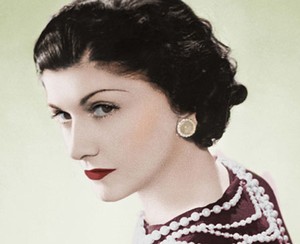
Do you know The Accessories Rule from Coco ChanelBefore you leave the house, look in the mirror and take at least one thing off.”   She was talking about removing a single piece of jewelry or a scarf.  Too much is too much.  Focus on one signature piece.  Or focus on a couple key pieces.  And then go!

Yesterday at an inspiring Pastor Installation Service for one of my colleagues, the preacher suggested taking similar advice from Tom Bandy only this advice is about church programming:

Take at least one thing off your congregation’s program calendar this year.  (Actually Bandy said we should remove two things from our church program calendars, but I’m trying to be gentle with folks who tremble at the thought of changing one thing much less two.)

Most churches are not only stuck; we are okay with being stuck.  Here’s a simple (but not-so-simple) way to give your congregation a little jolt:

Take one big thing off your church’s schedule this year.  How to decide?

  • What program does everybody hate – except for the person or few people who are in charge of it every year?
  • What program has no significant spiritual impact but is very labor intensive?
  • What program is hard to staff with volunteers (because nobody wants to do it)?
  • What program do we do merely because we’ve been doing it every year for over 20 years and we think the neighbors would miss it?  (Maybe they won’t.)
  • What program do we believe we have to do because we are not a church without it? (Example:  Sunday morning Sunday school.)

What if we got rid of it for one year.  Just one year.  And instead do something a little crazy. (Like Sunday School on Wednesday nights or a BBQ dinner at a homeless shelter instead of in our own kitchen just for us?)

What would be the hardest to give up (and does this mean it’s become an idol?)  What would be the easiest to give up (because – really – everybody dreads it?)

What if we focused on a single signature program?  Or a couple of key programs?  And we took off the other ones?

And then go!

[Yes, Coco is still wearing at least six pieces of jewelry here, but she probably started with seven.]