
 I remember talking with a homeless man in Chicago a few years ago on Michigan Avenue. He was wearing the clothes you might expect to see on a poor person: dirty jeans, holey sweater, knit cap. But he was wearing clean, unscuffed New Balance sneakers.
My first thought was that his shoes didn’t look like the shoes of a desperate person. When he saw me staring at the shoes, he said, “Somebody gave these to me yesterday” and I wondered aloud if wearing new shoes makes him less likely to get donations from people.
“Yeah, sometimes I sell things people give me. I need good shoes, but if I’m wearing good shoes, people don’t believe I’m really homeless.”
Alexandria Ocasio-Cortez experienced a version of this herself standing in The United States Capitol earlier this month:
Eddie Scarry, formerly a blogger for the gossip site FishbowlDC and currently a writer for the conservative Washington Examiner, posted a picture of Ocasio-Cortez, taken from behind, seemingly without her knowledge, as she walked through a hallway wearing a tailored black jacket and carrying a coat. He accompanied it with a note that doubled as a caption: “Hill staffer sent me this pic of Ocasio-Cortez they took just now. I’ll tell you something: that jacket and coat don’t look like a girl who struggles.” Source.
If she has struggled financially as a young adult living in the Bronx and working as a bartender, how could she possibly afford such nice clothes . . . unless she is lying to the American people?
Our culture condemns the poor. If the poor look indigent, they are blamed for being lazy/addicted. If the poor look presentable and/or are wearing appropriate clothing, they are accused of being con artists. They can’t win.
A homeless person on the side of the road wearing a good parka and boots makes us wonder, “If they can’t afford an apartment, how can they afford clothes from LL Bean?” Easy – thank God. Maybe a Good Samaritan outfitted them because it’s really cold. Maybe they picked up the outer wear at a church clothing closet. Maybe they used to have an apartment with a closet full of nice things but now they live in a car because they lost their job and then their home. It makes sense to keep the warm jacket and boots from your former closet if you are going to spend hours on the streets.
Like all things, serving the poor involves authentic relationships. If there are homeless people regularly seen in our neighborhoods or small towns, why not strike up a relationship with them? Only then will we find out that a church was handing out new boots one Saturday or a retailer gave out last season’s jackets. Only then will we get to know what our poor neighbors need next: a meal? a haircut? a bus pass?
It’s hard enough to struggle financially in this country. It’s already shameful to have debt and hardship in a land of plenty. But we can offer dignity by befriending people who struggle financially whether they live on the streets or in their cars or in a shelter or in a home on the brink of foreclosure.
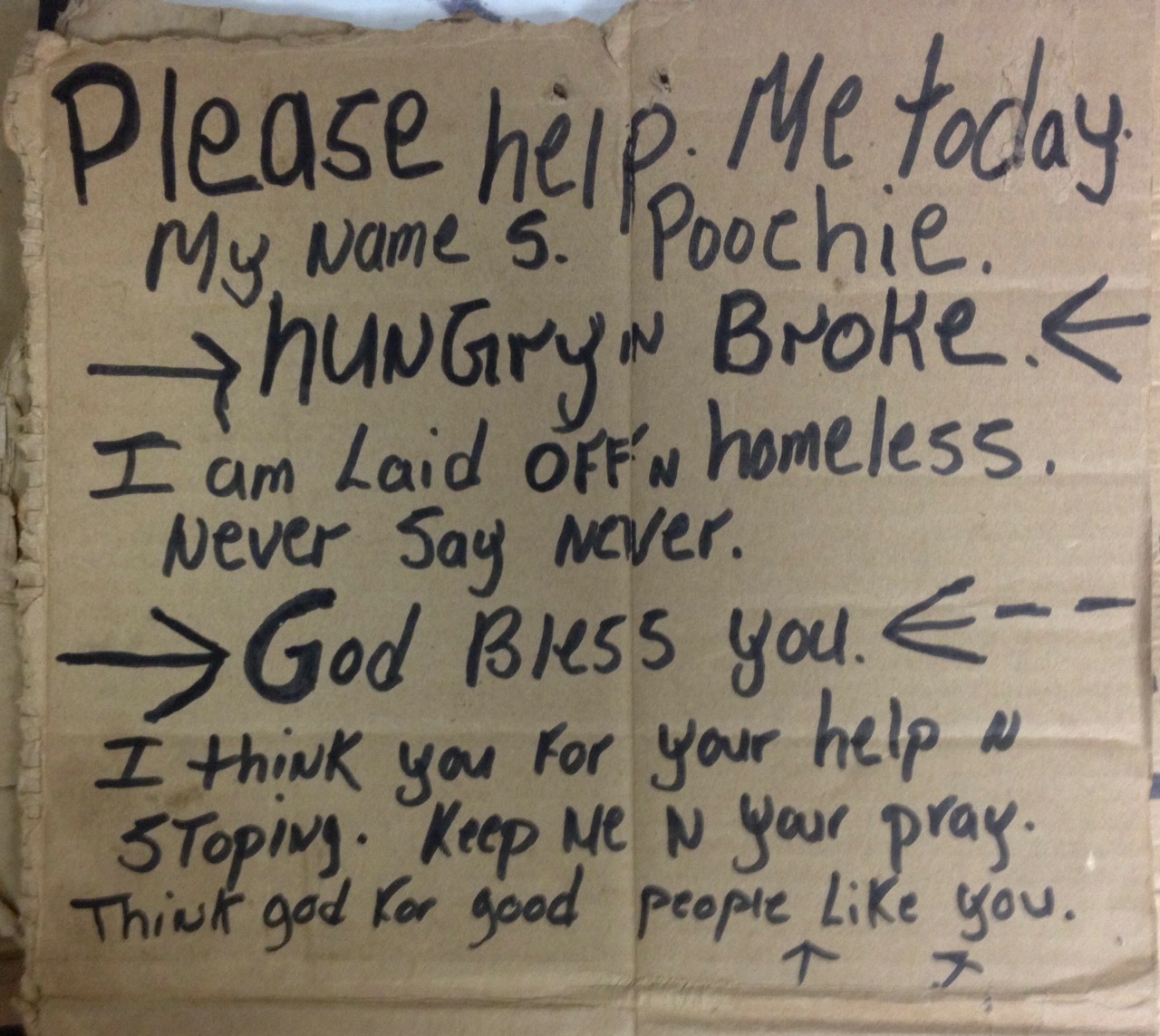
Who is the poorest person you know by name? It’s a serious question: who is it? What’s that person’s name?
The beginning of dignity is knowing someone by name and then being willing to know their story.






 A Church for Starving Artists