Some of Us Are Clergy Couples

Vacation was great and even though it rained all week at the beach and our car broke down and we had to leave it behind at a garage in Eastern North Carolina, I had lots of time to read this book recommended and loaned by the wise TW.  I have many things to write about it, but not this week.

Still radio silent-ish as HH and I spend time at Massanetta Springs with clergy couples. There might be a future post or three on this topic as well, but for now, I’m in conference mode.  In the meantime, my hope is that you too are relishing summer things.

Image of a creek in Rockingham County, VA near Massanetta Springs.

Vacation Week

It’s Beach Week and so I’m trying to be radio silent-ish until August 4.

I hope you have space to breathe deeply too.

The Happiest Pastor

One of our pastor colleagues recently declared:  “I’m the happiest pastor in the Presbytery.”  Deep trust in God has made this pastor “the happiest.

It reminds me of my favorite Bible verses:

Happy are those who trust in the Lord,
    who rely on the Lord.
They will be like trees planted by the streams,
    whose roots reach down to the water.
They won’t fear drought when it comes;
    their leaves will remain green.
They won’t be stressed in the time of drought
    or fail to bear fruit.  Jeremiah 17-7-8

Imagine trusting God even when half the congregation leaves over changes in the church.  Imagine trusting God even when the top three financial donors move to Florida.  Imagine trusting God even when young church members pass away.

It’s not that we aren’t disappointed or sad.  It’s just that we have hope in spite of some hard blows to the community.  These are among the everyday challenges that can threaten us.

My happy colleague reminds me that unbending trust in God brings peace even in difficult days.

The happiest pastor is not paid the most or preaching to the largest congregation.  The happiest pastor is the one who goes through each day trusting that God has already saved us and will continue to save us in unexpected ways.  This happy pastor leads one of the most refreshingly faithful congregations around.  And faithfulness has resulted in deep joy.

Imagine all our pastors vying for who is the happiest.  That would be amazing and it would turn the world around.

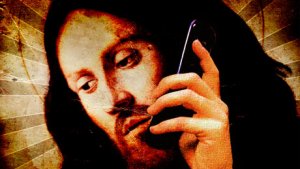
A Call or A Job?

I have a job that pays my life expenses, but it’s more than a job.  We in the Church say we have a calling from God.

Other vocations — Doctors, Educators, Social Workers, Bee Keepers, Etc. – often say they are called by something deep and holy to do what they do too.  I would love for everyone to have a sense of calling in their life’s work – although it’s not true.  Many people have jobs that don’t feed their souls – and I’m not just talking about menial labor.  I know housekeepers who feel called to clean and organize other people’s homes and I know pastors who consider their work to be the job they’re enduring until they can retire.

In my denomination, we neither guarantee that all pastors will be placed in a church nor do we assign pastors to churches and churches to pastors.  Pastors are not considered truly called unless three entities agree:  the Pastor, the Congregation, and the Presbytery.

The truth is that the Pastor, the Congregation, and the Presbytery can sometimes be cynical about this process.  In my professional ministry I’ve observed:

  • The ordination of a difficult person to be a temporary pastor in her home church so that her home pastor could then quickly “get rid of her.”  She was causing trouble and the only way she would move on was to get ordained and then go find a new position somewhere else.
  • The hiring of a pastor “so he would have a salary” (even though he had a history of being a dysfunctional leader) in a troubled congregation that was having a hard time finding a preacher.
  • Positive (but untrue) references from one Presbytery leader to another so that the first Presbytery leader could get an ineffective leader out of his own territory.

None of this has anything to do with God, and yet this is not to say that God won’t use even cynical arrangements.  But healthy congregations and Mid-Councils look for that spark revealing a true calling from the Holy.

Jesus calls us every day no matter what our vocation might be.  We are called to love our neighbors every day.  We are called to pray for our enemies every day.  We are called to offer hospitality to strangers every day.

This means all of us are ministers in a very real way.  Here’s to hearing a clear Voice.

Image Source.

Church Pathologist

When a Church is thriving it’s fun to discover why.  What’s their secret sauce?  Is there a gimmick?  A charismatic leader?  A financial benefactor?

Thriving congregations have common factors that you can read about here and here and here.  So much has to do with authenticity and spiritual curiosity and follow through.  But that’s not what this post is about.

I wouldn’t call it fun but it’s interesting to uncover why some congregations do not thrive.  Maybe they have struggled since the day they were established.  Maybe they were hit by the ecclesiastical equivalent of  an asteroid. Maybe the local economy collapsed or a deadly outbreak wiped out most of the population.

But more likely, the causes are quite ordinary.

Over the weekend, I spent a little time researching a church I love – obsessed with why they’ve struggled for so long.  Eventually, they might blame the Presbytery for “closing them” but the truth is that they have made choices to close themselves that – compounded over decades – proved to be fatal.

  1. They never asked members to make financial commitments.  There was never a “stewardship campaign.”  There were never conversations about the needs of the church or a push to make sacrificial giving.  Throughout their history, they collected “free will offerings” but never expected members to make financial pledges for the sake of budget planning.
  2. They had seven different pastors the first ten years of their existence.  I can’t figure out why this happened and the possibilities are endless.  Maybe they simply kept calling the wrong pastors – whatever that means.  Maybe they didn’t treat their pastors fairly.  Maybe they couldn’t consistently pay a pastor (See #1.)
  3. They loved each other but they didn’t love their neighbors.  They only reached out into the neighborhood in a cursory way and every time they were offered the opportunity to make a difference in the community (house a local ministry in their building, partner with another church to reach out) they said no.
  4. They had no relationship with the wider Church  Say what you will about the problem with denominations, but healthy denominational partners help with everything from emergency funding to leadership training to pastor vetting to mission building.  Their history indicated that they believed the Presbytery would one day want to close them.  Actually the Presbytery’s job is to help them thrive.  I wish they’d asked when they clearly needed it.
  5. A handful of members “ran everything.”  Although pillars of the Church are gifts in many ways, it’s also possible that they can drive other pillars away.  When they cling to offices for decades at a time, when they complain because new volunteers “don’t do it right” they inadvertently push new leaders out.  And they sometimes push new pastors out.

Do any of these factors ring true for your congregation?  If so, it’s not too late to make some changes.  But note that those changes will be very difficult.  We’re talking about editing a congregation’s DNA.  It can happen.  But we really need to want to do it.

I remember talking with a pathologist about why he preferred to work with dead bodies and he said that – as a younger doctor – he’d been an internist who advised his patients to eat vegetables and stop smoking and start exercising. But rarely did they listen.  Now – working with dead bodies – he was never disappointed.  The dead don’t need advice that they’ll ignore anyway.

I prefer to work with living, thriving congregations where:

  • giving is generous
  • pastors are fulfilled and appreciated
  • both strangers and friends are authentically loved as God’s children
  • congregational partnerships are sought out for the sake of ministry
  • leadership is rotated

Those congregations deserve most of our attention because they want to live and thrive.  But I also love those congregation who don’t want to die, while also making choices that will bring their undoing.  (I wish they’d listen before it’s too late.)

We (Don’t) All Have the Same 24 Hours

Over the weekend, this tweet by Shailja Patel opened my eyes to something new in my own long personal journey towards understanding privilege:

Patel says:  We all have the same 24 hours” is capitalism’s toxic tool for:

  • Shaming the 99% for not being the 1%
  • Erasing the support labour that makes celebrity lives possible and the people who perform that labour
  • Shutting down questions about privilege, capital, and safety nets.

In other words, my 24 hours as a privileged person is not the same as the 24 hours of a person with less privilege.

  • I own a car so I can get to my office in 10 minutes.  It would take two different buses and over an hour if I had to take public transportation.
  • I can afford to pay someone to change the oil on my car which takes 10 minutes at Jiffy Lube as opposed to taking – God only knows how long – hours (?) to do it myself.
  • I have no sick relatives to take to chemo or dialysis or physical therapy – at least at this time of my life.
  • I can walk, which means I can get from Point A to Point B without worrying about hunting down elevators and ramps.
  • I get paid vacation which means I can take time off several times a year and still pay my bills.
  • I have health insurance and can make an appointment to see almost any medical professional I need to visit – rather than waiting in an ER or free clinic for what could be hours.
  • I never have to wait in line in Social Services for vouchers, assistance forms, or applications for services, probably missing working to do so.

Remember how great Kate Middleton looked hours after delivering her third child?  Of course she did.  She had the best possible health care, nannies at home to care for her other children, a team of make up and hair people after delivery, and a sweet ride home.

We who have much forget that life is just plain harder for most of the world.  Often it’s crushingly harder.

[Note: If we think people are poor and sick as a result of their own sinfulness/”not trying hard enough” then we need to get out more.]

So, how can be share our privilege?  How can we partner with those who need a hand?  How can we bring relief to someone who has less time than we have?

We can start by opening our eyes and noticing.  And don’t just notice; reach out.  Or maybe we’re the ones who need a safety net, and if that’s the case, I pray somebody notices us.

Image of July 19, 2018 tweet by the Kenyan writer and activist Shailja Patel.  She is the author of Migritude (2010.)


Pick a Fight (Please!)

I was introduced to The 24-7 Prayer Room in Charlotte yesterday – which is amazing by the way.  Check out both the national and Charlotte websites.  Rooms and more rooms of prayer stations all artfully decorated to inspire.

One corner is called Pick a Fight replete with boxing gloves.  And it calls pray-ers to pick something – anything: cancer, human trafficking, bullying, racism – and spend time fighting it as a spiritual practice.

This is the calling of anyone who understands our life’s purpose to be service.  Fighting injustice and pain is the best kind of fighting.

What are you called to fight in this life?  Imagine a world in which we stop fighting each other and start fighting anything that brings suffering.

Today is a good one for picking a fight.

Image from the 24/7 Prayer Room Charlotte which is currently on the campus of Caldwell Presbyterian Church.

Happy Town

You know those slices of life when everything seems to be going really well?  Nobody in my immediate family has cancer.  Everybody’s employed.  There’s a deep joy over the most ordinary meetings and errands. The AC works.  There is money in the checking account to get the oil changed.

This is what I’m encountering this week.  The coffee tastes richer.  The sun on my face feels particularly life-giving.  There is deep hope in spite of the realities of profane injustice in the world.

I see God in the faces of church people who are taking leaps of faith that they wouldn’t have taken three years ago.  I see God in respectful disagreements between people of faith.  I see God in the faces of a young couple in love who are discerning what kind of future they might have together. 

It’s a good time – in spite of the fact that suffering is rampant in this world.  God uses these times of calm to prepare for future experiences that will require resilience and grit.  Those times are surely coming.

But today is tranquil and full of gratitude. Thanks be to God.

Image of an Eastern Bluebird.  I literally saw one last week while visiting one of our exceptional pastors.  

Invitation to Moral Leadership

He is who he said he was.

He does what he said he would.

Now. Who are you?  Traci Blackmon

I live in Charlotte, N.C. and on Monday the Charlotte City Council voted 6 to 5 to accept the invitation to host the 2020 Republican National Convention if an invitation is extended.   The Rev. Dr. Rodney Sadler offered a public letter to the City Council on why he was against accepting such an invitation:

“It is a poor moral witness. It is both un-American and un-Christian to stop immigrants fleeing from violence in their nations of origin on our border, imprison them, deem them and their essential personage “illegal,” and then strip their children away from them (without any consideration given to how they will be reconciled!); to foster a taxation scheme that further centralizes wealth in the hands of the wealthiest Americans while offering little to no relief for the poor; to develop false moral equivalencies between non-violent protest for equality and violent white supremacist and anarchist demonstration (worse, to call those who hold these beliefs “good people”); to work to undermine access to healthcare of poor, working, and middle class citizens based only on partisan ideological reasoning and providing no viable alternatives; to sponsor voting legislation that makes it more difficult for people to gain access to the polls (this after so many have fought, bled, and been martyr securing this right.)”

There are disagreements in the Church about what constitutes Christian and un-Christian behavior.  There are disagreements in the United States about what constitutes moral and immoral behavior.

Nevertheless most people of every or no religion lift up something akin to The Golden Rule:  Treat others as you would like to be treated.

There is a hunger for moral leadership in these days.  Most of us want leaders who tell the truth and conduct themselves respectfully.  I personally crave leaders whom I can trust even if I disagree with them.

After Monday’s vote, Charlotte might be hosting a convention in 2020 that could become a moral test for us all.

  • How will we respond if White Supremacists march in Charlotte as they marched in Charlottesville in 2017?
  • How will we respond if violence breaks out for any reason?
  • How will we respond to the presence of someone who has mocked disabled people, assailed immigrants, and boasted about assaulting women – even/especially if he is President of the United States?
  • How will we protect the vulnerable – especially the homeless – who will be particularly impacted by this convention?
  • How will we seek to prevent a rise in human trafficking during the convention?
  • How will we preach/pray/teach our children about the democratic process in the throes of deep political division?

If Charlotte is indeed selected to host the RNC in 2020, we will have a unique opportunity to model moral leadership.  Who will we be as God’s people in Charlotte?  What type of moral leadership will we display?

Will we sit in front of our televisions and watch from the safety of our homes?  Will we leave town in hopes of missing the whole event?  We will show hospitality to our guests beyond renting hotel rooms and taking restaurant reservations?

What will we do if we witness injustice either in words spoken or actions made? To do nothing seems disobedient if we are serious about following Jesus.  (Remember those who betrayed and denied him and left him to suffer alone?)

Maybe Charlotte will be invited to host the 2020 RNC and maybe we won’t.  But just as politicians are discerning whether or not they will challenge the President for that party’s nomination, we must begin discerning how we will challenge policies and practices that dehumanize God’s children.

And if you don’t live in Charlotte, please know that you too will face moral quandaries in the coming months when you hear or see injustice.  What will you do?  Who will you be?

Images of a July 16, 2018 tweet by the Rev. Traci Blackmon and from the 2016 RNC in Cleveland. (Photo from Wired Magazine)


 

What Would Your Church Be Willing to Do to Grow?

Is your congregation trying to “Attract Millennials”?  Stop it.

Every day in every congregation in every city and suburb and small town, I hear the same thing:  our church wants to grow.  They say they are willing “to think outside the box.” (sigh)  These congregations will try “anything“:  screens in the sanctuary, drums in worship, a youth pastor with tattoos.  They wonder where the Millennials are.

Lord have mercy.  Christ have mercy.  Lord have mercy.

It fills me with joy when I hear someone say, “This church is not about me.  I would give up my favorite things to be what God wants us to be.”  And it’s about so much more than reaching Millennials.

It could be about personal discomfort.  It’s definitely about giving up anything we love more than Jesus.  Imagine giving up the beloved building, the beloved organist, the beloved pastor.  Those are fighting words, but it’s possible that the building or a staff member – the very things we assume are so helpful – are keeping us from thriving.

I’ve known wonderful church leaders who can be counted on to volunteer at every turn, to bail the congregation out financially, to be present for every occasion and – as pastors – we declare them Irreplaceable Pillars Of The Church. At first.

And then we realize that the congregation cannot grow and make necessary shifts because the Irreplaceable Pillars keep others from stepping up to volunteer, to ratchet up their own financial giving, to participate.

Prayerful discernment led by faithful leaders is the ongoing practice of thriving congregations.  And a willingness to take leaps of faith is a norm in thriving churches.  It’s as simple and as scary as that.  If your congregation is filled with Millennials – great.  If you are not – great.  Church growth is about so much more than that.

Image source here.   A relationship with Jesus isn’t about anybody’s hipster quotient.