Author Archives: jledmiston

Simple Reminder: The E Word

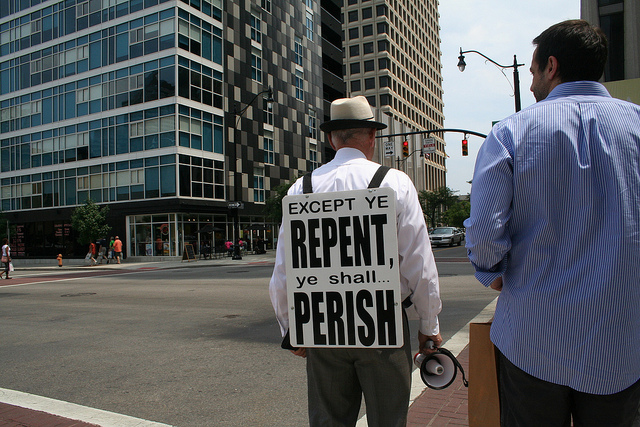
The E Word has a shaky reputation.  People hear “evangelism” and picture somebody wearing a sandwich board like this.  Or they hear the word “evangelist” and picture a sweaty man shaking a Bible in somebody’s face. Nevertheless, I embrace this word as a goal and as my particular appellation.
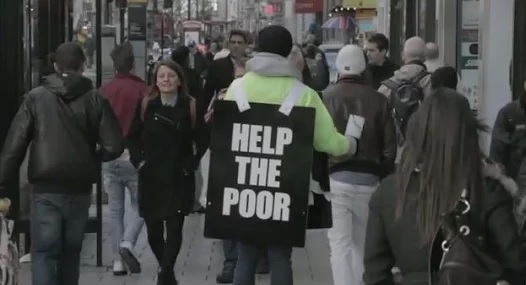
Evangelists share Good News.  That’s part of my job as a leader in my Church.  But here’s an important question:  For what are we evangelists?

  • For our denomination?
  • For our congregations?
  • For our particular brand of privilege?
  • For our political party?
  • For our business?
  • For our school?
  • For our country?
  • For our family?
  • For our team?

Imagine – if you are a person of faith – sharing the Good News of your God’s message.  For me, this would be the message of Jesus:

The Spirit of the Lord is upon me,
   because he has anointed me
     to bring good news to the poor.
He has sent me to proclaim release to the captives
   and recovery of sight to the blind,
     to let the oppressed go free,
 to proclaim the year of the Lord’s favor.  Luke 4:18-19

Sometimes we confuse the object of our devotion.  I know I do.  But on my best days, I remember my most basic purpose.  Imagine – if we actually lived to bring good news to the poor, release to the captive, recovery to the blind, freedom for the oppressed, and proclamation of Jubilee aka “the year of the Lord’s favor.”

The time is coming when this movement will rise again.

Image source.

In Praise of Curmudgeons

There are two kinds of curmudgeons:

  1. Curmudgeons whose crankitude is endless and indiscriminate. Good things happen and yet they rarely acknowledge them.
  2. Curmudgeons whose hope for the world endures in spite of all cosmic ridiculousness. They sound cranky at times and yet their basic faith that human beings are capable of virtue remains.

We know which we are.

People who spend their lives in tireless service to others in the likeness of Christ actually do get tired.  There are glimpses of good and then someone tells you that her white daughter got assigned a black roommate and “of course we had to move her out of that dorm room” or someone makes a comment about your decision to wear capri pants to worship rather than “something more appropriate.”  And you begin to feel grouchy and might even whisper “What’s the use?” to no one in particular.

Following Jesus can be hard.  I’m not sure we are truly following Jesus if it isn’t a little hard.

We are on the cusp of the 50th Anniversary of The Poor People’s Campaign organized by Dr. King and the Southern Christian Leadership Conference.  The hope was to address issues that create poverty and declare war on those issues, resulting in more justice for all.

Happy Anniversary to the Poor People’s Campaign but we don’t have as many laurels to rest upon as we’d hoped.  This article is very helpful for dissecting data between poverty stats in the 1960s and poverty now.  The author, Yves Smith also says that:

“Poverty is multidimensional.  It radiates into housing, health, education, criminal justice, and upward mobility, which in turn affect economic poverty.” 

Talking about poverty is not as sexy or uplifting as talking about so many other things (e.g. Wonder Woman, cute shoes, vacation plans.)  But Jesus talked about it a lot.

I recently heard someone say that “nobody in America is truly poor.

It’s true that many who live below the poverty line have mobile phones and televisions.  But economists explain that measuring poverty is complicated.

If we are measuring poverty according to how many people are receiving benefits like food stamps, free school lunches or housing subsidies, we are overlooking those who are not receiving those benefits because they are no longer available or they are unaware that they are available.  Ask your local church group doing mission trips in rural areas this summer if they have noticed how “truly poor” our fellow citizens are.  We have a long way to go before every child has clean drinking water in the United States, much less a solid education and healthy food options.

Our culture rewards those who are always positive and smiling. But note that Jesus himself was not always the meek and mild prophet who chucked little children under his chin. Note that even Jesus loved the poor enough to toss tables from time to time.

For what injustice would we be willing to be like Jesus?  For what injustice would we toss tables – or simply speak up?

Image source unknown.

Something Important is Coming

More about this later.  But this is happening in my world today.


A Summer Without AC? (No Thanks)

The sunny, 70 degree weather over the past few days in Chicago explains why we love living here. It makes even the wintry winds worth it.  But this weekend, it’s supposed to get hot.  Very hot.

The people responsible for air conditioning should have received Nobel Prizes  – maybe the Nobel in Peacemaking.  I don’t care who gets the long overdue honor but someone should be thanked.

Crime goes up on hot days. Tempers flare.  Crankiness ensues.

One of our cars has no AC and with over 100k miles on it, we don’t want to fork out the money to replace it.  But driving it in the summer = hellish discomfort.

Our home’s AC was out this past week and we had a service person come out yesterday to make Necessary Repairs.  Cool house = ability to sleep at night.

Air conditioning is a privilege that most of the world doesn’t enjoy.  We who have comfort-controlled shopping malls and classrooms and offices forget that most people do not shop, learn, or go to work with AC.  Many of our church buildings are not air conditioned.

God have mercy.  Christ have mercy.  God have mercy.

The days are coming when we will have the joyous opportunity to cool people down.  As worship moves from hot sanctuaries to more comfortable fellowship halls in some of our congregations, there will also be opportunities to make others more comfortable too.  How our congregations can serve the neighbors this summer:

  • Share air conditioned church space.  Offer cool rooms for community gatherings or as drop-in centers on especially hot days.
  • Buy room ACs for those in need.  Some communities offer either free units or free repair for broken units.  Do a little research about who provides this service in your town.
  • Invite neighbors to stay in your home when the weather is sweltering.
  • Ask people if they have a cool place to be.  Just ask and then help.

We say that the electric company gives us “power.”  We who are ordinary people also have power to prevent misery this summer.  It’s not too late to plan for this.

Image from summer of 2016 in Manchester, England. Source here.

If Your Church Suddenly Disappeared . . .

It’s an old question, but it’s still a good one:

If your church suddenly disappeared, who (besides the church members) would notice?

After visiting:

  • congregations in Lebanon that offer medical care and computer training, and
  • congregations in Syria that offer inter-faith activities and assisted living for the elderly, and
  • congregations in the United States that offer support for the homeless and tutoring for new immigrants and community gatherings for LGBTQ neighbors

. . . there are many churches that would indeed be missed if they vanished.

What about your congregation?  This is our calling as followers of Jesus in the 21st Century.  As many are glued to the Comey testimony today, there is a connection – actually – between what happens politically and what happens locally.  We are called to connect with whomever needs support in our particular communities.  Are we connected to the point that people would notice if our churches disappeared?  This determines how impactful we will be for the next generations.

Image source.

Some of the Life-Changing Ministry that the PCUSA Supports

No time to write a post today, so I’ll let CNN do the work:

You can support the Immokalee Farm Workers here.

Pentecost Sunday

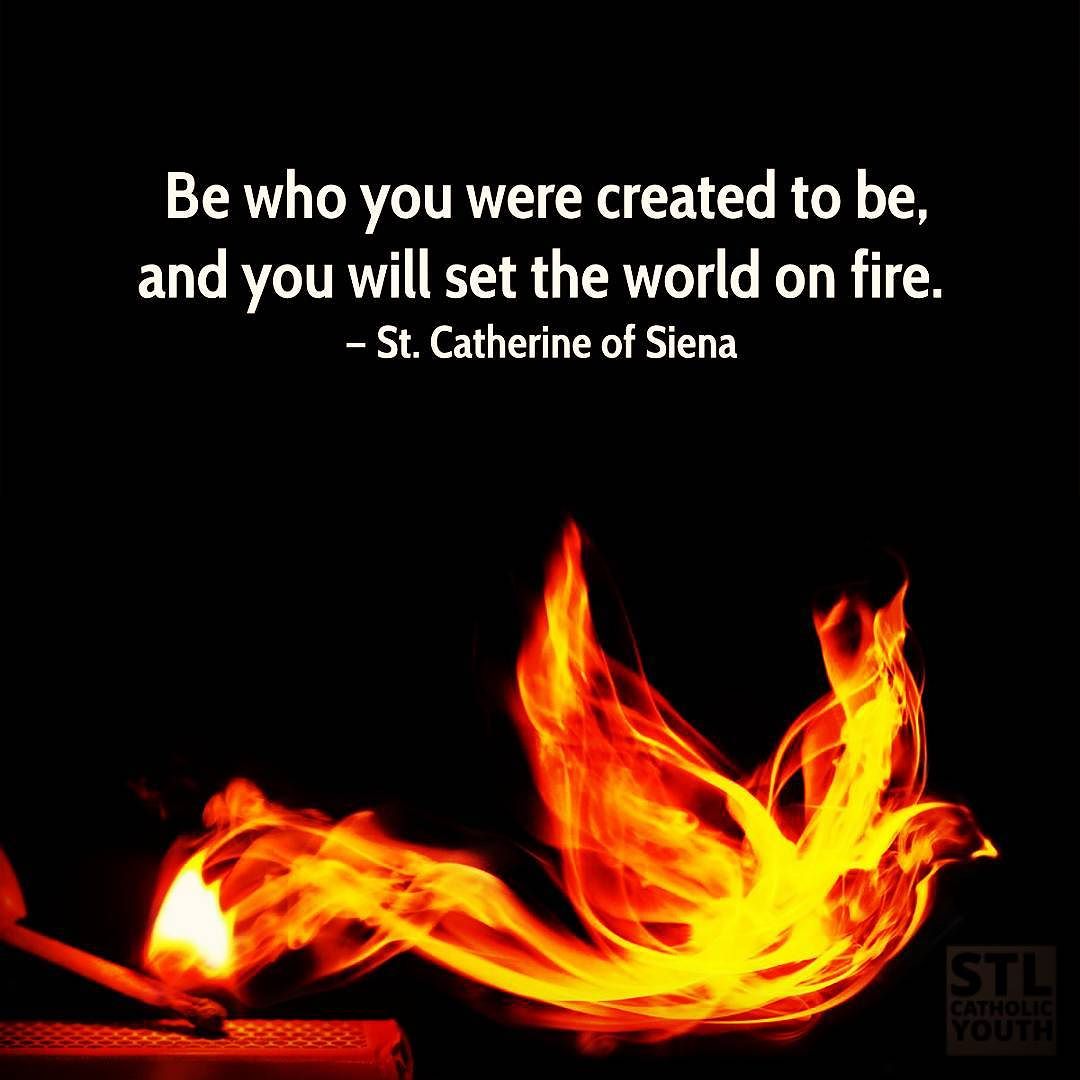
There will be no rush for Pentecost Brunch today.  Nobody’s sending Pentecost cards.  But it’s my favorite day in the liturgical year.  Who’s ready to set the world on fire?

Unnecessary Roadkill

I’m writing this on the road after a great experience at Mo-Ranch (where – I’m told – God lives.)  Driving through the back roads in Texas from Hunt to Austin, I observed a colorful array of roadkill:  armadillos, possums, deer, squirrels and raccoons. Among the living fauna along the road were buzzards (eating the dead armadillos), wild turkey, horses, Belted Galloways, Long Horns, goats and elk (roaming somebody’s ranch.)

I saw a lot – A LOT – of dead armadillos.

Armadillos are not speedy animals although they can be trained to race.  (!)  They inherently jump up when startled – rather than immediately run forward which means they often don’t make it when a truck is speeding down the road . . . except apparently for those who race.

Although their armor gives them the appearance of being tough guys, armadillo bellies are soft.   Their claws are sharp and their tongues are sticky – all the better to dig deep and take nourishment easily.  Best of all, Nine Banded Armadillos – in spite of their propensity to get hit by traffic – are the treasured State Small Mammal of Texas.  

Metaphor alert: Sometimes I see roadkill in congregations.  

While some church members are treasured, they also get run over if they become startled by changes or if they don’t move fast enough.  I’ve known curmudgeonly members who seem as tough as armor, and yet they are actually quite soft inside. They have worked hard – sometimes for the sake of survival – but they are easily nourished spiritually, or at least they seem to be.  They have been attending church Bible studies forever and those classes seems to feed them well.

As the institutional Church is swiftly changing, it’s easy to hit them and keep going. This is unnecessary.

An elegant elderly gentleman wearing the pale yellow suit once asked me “what we could do to encourage men to wear suits to church.”  This happened immediately after I had taught a class in his congregation about the shifts we need to make if we hope to be a 21st Century Church.  Frankly, it was tempting to say:

Did you not hear a word that I said?  The days are over when men wear suits to church.  God doesn’t care what you wear to church.

But instead the Spirit opened my mouth and more generous words came out than I would have naturally chosen:

It sounds like one of the ways you honor God is to dress up in a suit on Sundays and I hope you will keep doing that.  But other people honor God in different ways.  Some  – especially children – honor God by making the effort to come to worship before or after a soccer game which means they are wearing their soccer jerseys.  But they are honoring God by showing up in the best way they can.  Others might be dressed more casually because they are headed to a picnic or maybe they are headed to work and they’ve dressed accordingly.  But I believe God would rather have us come together – whether we are wearing uniforms or play clothes or dress clothes – than not gather for worship at all.

It’s easy to become impatient with those who are slow to move.  I am often one of those impatient people.

I want people to get with the program.  I want them to move faster.  But I’m missing the point if I run over them and leave them wounded on the side of the road on my way to the 21st Century Church.

It takes time to make these important shifts.  Some of us will be the latest of latecomers and the reign of God will not be slowed indefinitely.  But we are called to respect even those who are slower to make changes.  If they have indeed been nourished spiritually by the  church of their youth, then they will be spiritually mature enough to recognize that we need to be a different Church for different times.  Relationships matter.  Church roadkill is unnecessary and – ultimately – destructive to the Bodyof Christ as a whole.

Living for a Cause

Quick question:  What are you living for?  Yesterday’s Memorial Day post was about dying for a cause.  But for what cause are we living?

A talented colleague said to me the other day:  “Serving immigrants has become my life’s work.

Not only does she serve the documented and undocumented immigrants of her community, but she is also a faithful spouse, a loving mom, a generous pastor, and a good daughter.

What has become our life’s work – whether it’s what we do for money or what we do for love?

Most of us have more than one life’s purpose:  to be a loving partner, a committed parent, a reliable volunteer, a force for good, a person making a difference in the world via teaching, preaching, banking, creating, selling, fixing, counseling, cleaning, serving.

Or maybe it’s not a “cause” that gives our lives meaning.  Maybe it’s a mission statement.  One of the best family mission statements I’ve heard recently is “We are pro-cuddling and we vote!” (h/t to BN) But whether we realize it or not, each of us has a de facto mission statement.  Maybe it’s something like this:

  • I will do the best I can do in this office and then I’ll get out and enjoy retirement.
  • I will shepherd my children through high school and then go back to work.
  • I am going to be the best ___ I can be.

I imagine that some of us (or most of us?) basically get through each day without a long range plan or a defining mission.  We just want to be safe/secure/comfortable.

One of the Reasons to Live in my Presbyterian faith tradition goes something like this (with a nod to inclusive language):

Q. 1. What is the chief end of humanity?
A. Humanity’s chief end is to glorify God, and to enjoy God forever.*

Many of us live to enjoy life. Whether we are actually enjoying it or not is another thing.

But “to enjoy God forever” is an interesting twist.  I believe in a God who was so willing to offer abundant life that this God would turn water into wine, heal lepers, and even die for us.  Too few of us seem to be enjoying what we would call “an abundant life.”

Our life’s purpose changes over time.  As the mom of three little ones, my daily purpose was once simply to keep them alive for another day.  These days, I’m especially interesting in a life spent talking about race, learning about people who are not like me, speaking up about interfaith understanding and teaching about church culture shifts.  I’m also spending some time cheerleading for the PCUSA – a church I love.  I’d also like to live long enough to retire with HH and to be an interesting old person.

I live for these causes.  What about you?

Image from a school for Syrian refugee children in Lebanon taken in March 2017. *From the Westminster Shorter Catechism


Dying for a Cause

“Two men lost their lives and another was injured for doing the right thing, standing up for people they didn’t know against hatred. Their actions were brave and selfless, and should serve as an example and inspiration to us all. They are heroes.”  Ted Wheeler, Mayor of Portland, OR

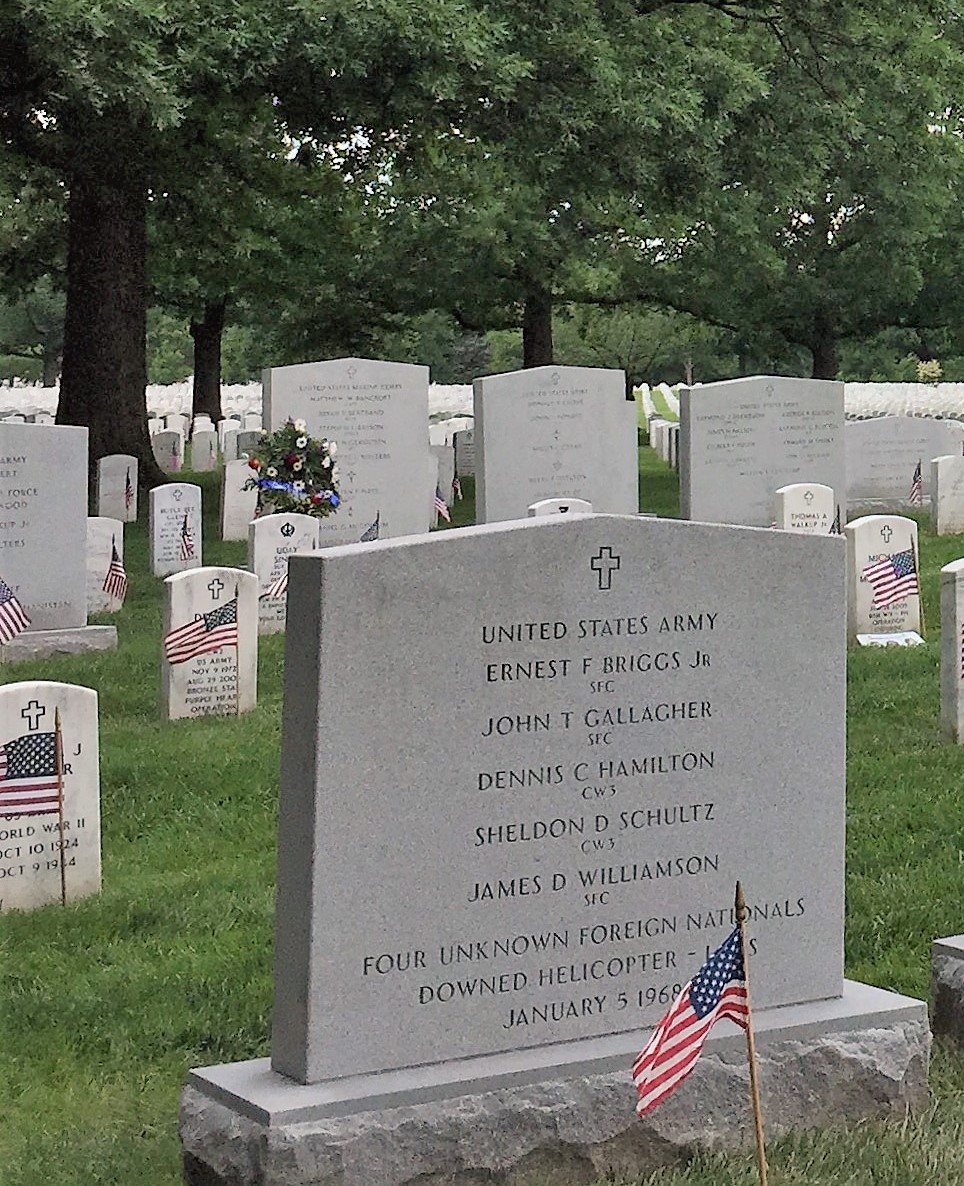
I happened to be in Our Nation’s Capital for Memorial Day weekend and so I visited Arlington National Cemetery Friday to visit graves of some of special people.  I officiated at several graveside services at ANC during my years as a pastor in Alexandria, but none of those souls died in combat.  They were mostly WW2 veterans who returned home to the United States in the 1940s to live fruitful lives and raise strong families.  One of the graves I visited belonged to the three year old daughter of a Naval officer who died tragically on Mothers’ Day weekend many years ago.

Memorial Day is when we remember those who have died in service to their country.  I was struck by the grave marker of Army SFC Ernest F. Briggs Jr (Devine, Texas), SFC John T. Gallagher (Hamden, Connecticut), CW3 Dennis C. Hamilton (Barnes City, Iowa), CW3 Sheldon D. Schultz (Altoona, Pennsylvania), SFC James D. Williamson (Tumwater, Washington) who died in when their helicopter was shot down over Laos.  It took 29 years to retrieve their remains.  You can read more about their sacrifice here.

Sometimes people confuse Memorial Day and Veterans Day.  With all due respect to veterans, it seems essential to offer a special tribute not only to veterans who died in service to their country, but also to the men and women who died in service to humanity.  I’m thinking today of  Ricky John Best and Taliesin Myrddin Namkai Meche who died standing up for 16 year old Destinee Mangum and her 17 year old friend who was wearing a hijab.  Mr. Best and Mr. Meche stood up against a man who was saying that “Muslims should die.”  These men are heroes.

They were not professional soldiers.  They didn’t wake up Friday morning expecting to risk their lives that day.  But they stood up against ugliness and lost their lives trying to do the right and beautiful thing.  Their sacrifice is just as holy as that of a soldier or sailor defending the freedom of this or any country.

My hope is that – instead of hesitating to do the right thing for fear of being in harm’s way ourselves – that we would remember Ricky John Best and Taliesin Myrddin Namkai Meche (as well as Micah David-Cole Fletcher who was also injured defending the teenagers but is expected to live.) I also hope that each of us would stand tall and defend the weak.  Dying for a good cause continues to be a holy thing and not just on a battlefield.