Author Archives: jledmiston

What a Difference Two Years Make

Video is from the 20th Anniversary of the Conference. This will be the 23rd Conference in March 2022

[Note: Ukraine was attacked after this post was written. Please join me in praying for all those in harm’s way today.]

Two years ago, a small group of Presbyterians decided that we would try to bring the National White Privilege Conference to Charlotte. It would be the 23rd of these conferences and – as we started our planning – a lot of organizations were “in.” Yes, they would support the conference. Yes, they wanted their names attached.

Things have changed in the past two years and not just because of a global pandemic.

Today, the words “White Privilege” are fighting words – now more than ever. Today . . .

  • In Virginia, House Bill 781 is being considered and if passed, teachers who teach “divisive concepts” can be charged with a Class 4 misdemeanor punishable by up to $250, face termination or have their license revoked.” You can read the bill here.
  • In New Hampshire, Mom’s For Liberty will pay $500 to people who report teachers in violation of their new “discrimination laws.”
  • In Utah, the principal of West Jordan Middle School asked the student group “Black and Proud” to change its name to “The Black Student Alliance ” after a white student’s father had asked her if his son could start a club called “White and Proud.”***

***This very comment demonstrates why teaching about Slavery, Jim Crow Laws, Red-lining, the Tulsa Massacre, and so much of this history is essential. People with Black bodies have been taught for over 1000 years that their bodies, their minds, their souls were inferior to People with White bodies. This teaching was legislated. It was (and is) part of our culture. And subsequently, People with White bodies were taught that their bodies, minds, and souls were superior. This continues to show up in educational opportunities, law enforcement, and – sadly – church.

We who are White-skinned have been taught overtly and subtly all our lives that we can indeed be proud to be White. It’s good to be White, we’ve learned through the ages, especially in a courtroom, in a classroom, in a board room, in an upscale shopping mall, behind the wheel of a car, walking in a nice neighborhood, running for office, interviewing for a job, etc. etc. etc.

But what a difference two years makes.

Much of these differences are a result of misinformation shared for the sole purpose of causing chaos and division. (Note: Here’s a podcast on how to identify misinformation.) Our nation is terribly divided because of misinformation.

This is a time to be firm but loving with each other. Let’s learn from each other. Let’s talk with each other. Let’s not be a party to the misinformation.

An excellent way to start and/or continue the learning is to attend the National White Privilege Conference. Please join us. You can register here.

So Many Shots

I hope to travel to India in late March for SBC and AJC’s wedding and during my checkup last week, I got all the shots. The required shots. The just-in-case shots. The shots that have nothing to do with travel to South Asia. At the risk of sounding like a certain favorite lyricist unpacking the word “shot” I’m reminded that God connects things for us in unexpected and holy ways.

Example: something random happens on a Tuesday in January and on a Friday in February it suddenly makes sense. It requires alone time to notice these connections. If every minute is fulled, we miss them.

So I was so happy to hear Eminem sing Lose Yourself at the Super Bowl because it is one of the greatest songs of all time and – 20 years later – it still moves me. It will always move me.

You better lose yourself in the music, the moment
You own it, you better never let it go
You only get one shot, do not miss your chance to blow
This opportunity comes once in a lifetime
.

I put it on repeat in my car and opened the moonroof and turned it up and didn’t care when people stared at the white lady driving a ten year old CRV as I drove around last week. And while the lyrics swirled in my head and reinforced my opinion that Eminem is a lyrical genius, I was also thinking about our local countdown to the National White Privilege Conference which starts 15 days from today. And I was thinking about the fact that I can afford to buy tickets to travel to India. And that I have excellent health insurance that even pays for extraordinary innoculations.

This is the definition of privilege: When you get more than one shot in life.

I went to high school with a guy who was given a red Porsche on his sixteenth birthday and even I – a person who didn’t know him well enough to say “hi” in the cafeteria – could have told you that this was a terrible idea. He totalled the car less than a month later, and nobody was surprised when his parents replaced the obliterated Porsche with another one.

I remember times when I’ve failed at something: a test, a job. I remember changing my college major more than once. I remember forgetting to change the oil in my beat up car to the point that the engine seized on an interstate highway driving to Boston. What happened? I got a re-take on the test or a different job. I got to take extra classes to finalize a new major. I even got another car and while it was no Porsche, it was a car and my parents bought it for me and drove it up to Maryland from North Carolina where the other car had died.

I have had countless shots at success, prosperity, and education. Imagine – if we possibly can – what it’s like to have one, single, desperate shot.

Before Miranda told us about Alexander Hamilton’s one shot, Marshall Mathers wrote about it with such clarity that I could feel the sweaty hands and smell the vomit on his sweater. I don’t know who reads this blog, but I’m guessing that nobody reading this right now has ever had one sole shot at success. We have most likely had countless shots.

Desperate people do desperate things. Imagine the despair if there is just one opportunity to rise out of poverty or capitivity or misery and there is a possibility that it could slip away.

I believe that we need to go there – at least in our heads – if we hope to follow Jesus the One who has come to lift us out of death in all its forms. Jesus saw those who were desperate. My hope is that I might see the desperate too so that I might also do the work of Jesus.

Image of Marshall Mathers (Eminem) the writer and rapper of Lose Yourself.

Throw Back Thursday – Blog Version

As my colleagues and I prepare to welcome what we hope will be a couple thousand people from around the country to something called The White Privilege Conference, I found another post from 2016 as I prepared to attend my first White Privilege Conference. You can read it here.

Some things have changed: I now live in Charlotte, NC

Some things haven’t: People still roll their eyes when they hear the words White Privilege.

Actually those words seem to spark more anger than eye-rolling these days. We are so divided that some believe that even talking about hot topics will only further divide us. And yet, when we don’t talk with each other, when we don’t risk being uncomfortable, when we pretend like everything is fine, we are forgetting that things are not fine for all God’s people.

We can do better.

This is not a conference for becoming smarter about all kinds of Privilege (and all of us have some kind of privilege.) This is a conference that we hope will move us to live differently. For me, it’s about God and who God is calling us to be so that the world might be – on earth – as it is in heaven.

You can register for the 23rd White Privilege Conference here. Scholarships and discounts are available.

Why Do I Have to Apologize for Slavery?

I’ve never enslaved a person. For that matter, I’ve never removed Native people from their own property. I’ve never interred a person of Japanese heritage. Why do I have to apologize for something I’ve never done?

I have Black friends. I’ve gone to school with Black students. I was bussed from my own neighborhood to a school across town. And now I live in a neighborhood with Black and Brown people. There’s even a Black family in my church.

Why do I have to apologize for slavery?

Over the weekend, our Presbytery discussed whether or not we would concur with an overture to the General Assembly (the biennnial congress responsible for considering changes to our denomination’s constitution) regarding the history of slavery in our country and in the Church. It starts out like this:

The Presbytery of Giddings-Lovejoy overtures the 225th General Assembly (2022) to offer an apology to African Americans for the sin of slavery and its legacy.

(Note: Giddings-Lovejoy is the name of one of the 166 Presbyteries in the Presbyterian Church USA. It’s based in the St. Louis area.)

Included in this overture are the following statements:

  • White supremacy is a conscious, calculated effort to perpetuate and institutionalize white supremacy and privilege through legal systems as well as economic and physical intimidation.
  • We, as a people of faith, recognize that the only appropriate path to healing and reconciliation is to acknowledge the wrongs that we, the Presbyterian Church, as part of the institutional church structure, were and are complicit in perpetuating.
  •  Black lives have been devalued beginning with slavery, and their human dignity continues to be circumvented through the economic and legal systems that are racist as institutions.
  •  We recognize the necessity of building a trusting relationship between white Americans and African Americans.
  • The PC(USA) apologizes to African Americans both in the church and outside of the church for all the wrongs that have been done throughout our history and those that are ongoing.

These are fighting words for many.

These words spark many layers of conversation from “Is White Supremacy actually baked into our U.S. history from the beginning?” to “Am I personally guilty of the sins of our Fathers and Mothers?” These words make many White people feel ashamed and defensive.

Speaking as a Christian in the Reformed Tradition, my faith is confessional. This means that we believe that although – from the beginning – God has called human beings to live in covenant with both God and each other, we have broken that covenant. Confession is a major part of our faith, meaning that – in simple terms – we can do better. We as individuals can do better. We as corporate humanity can do better. We as a nation can do better.

We all fall short of the glory of God. Even Mother Teresa. Even the Pope. Even our sweet grandmothers.

And so we confess those things that have separated us from God and each other. The sin of slavery is one of those things. It separated human beings in the worst possible ways from the beginning of our nation’s history. And after emancipation, the inequities continued. And they continue today from the shooting of people in Black bodies to the everyday ways people are treated whose skin colors are different from our own.

We have to be blind not to see this.

On Saturday, our Presbytery voted 71% to 29% in favor of concurring with this overture. The 225th General Assembly will discuss it, tweak it, vote on it this summer in Louisville, KY. Clearly there are many people who believe we have nothing to apologize for. In faith I disagree.

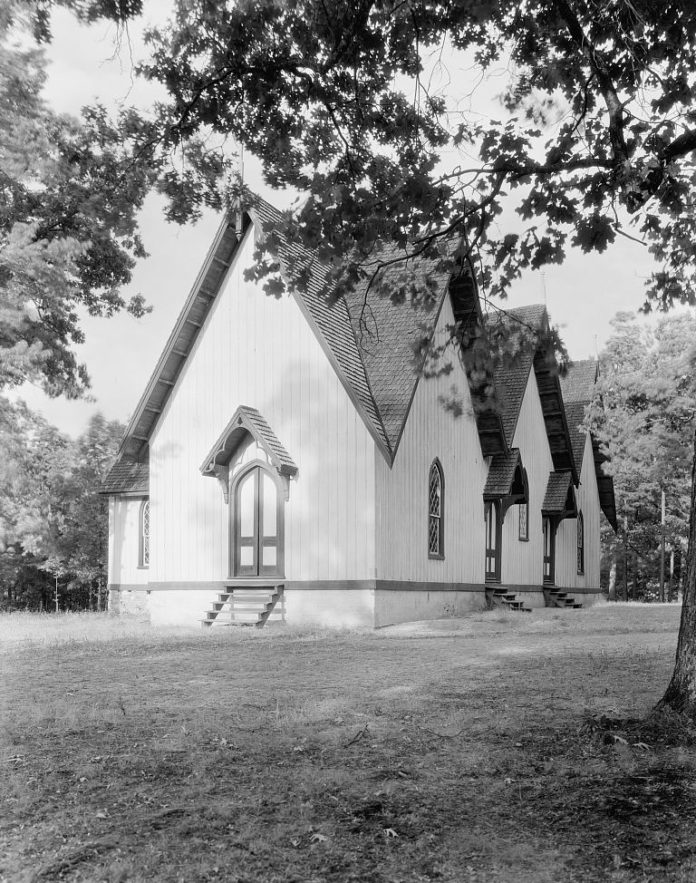
Image of the Briery Presbyterian Church in Keysville, Virginia (in the Presbytery of the Peaks). In 1766, slave holding members voted to raise money to hire a minister by investing in human chattle to build the church endowment. You can read about the church here and here.

“Stop laughing Janice!”

“Stop laughing Janice or you’re going to give yourself a hematoma!”

I’m not sure which was funnier: the Netflex series I was watching or Nurse Marsha of the American Red Cross fussing at me while I was donating platelets over the weekend. What I didn’t know before Saturday is that – while giving whole blood takes about 15 minutes – giving platelets takes about 3 hours during which both arms are pinned down. All the whole blood donation spots were full so I thought I’d give platelets.

I am an antsy person with itchy eyes. Between needing to scratch my eyes and laughing at episodes of Murderville, I was moving more than I was supposed to be moving.

“Stop laughing Janice or you’re going to give yourself a hematoma!”

First of all, no one calls me Janice. And secondly, I’d never been threatened with a hematoma before. This struck me as hilarious.

A lot of things are hilarious in everyday life. And in these days and every day we need to notice those things for our sanity.

I’ve been a pastor for almost 38 years and it’s been inspiring, joyful, exhausting, and funny. Sometimes the humor is dark. In fact, most of the time it’s dark.

I’ve experienced a ventriloquist funeral director, circus tent worship with wild animals trained to dance to organ music, a funeral soloist using karaoke to sing Celine Dion, a 21 gun salute with live bullets, a daughter of the deceased falling into the grave on top of the casket, and weddings with the following songs as processionals: I Love a Rainy Night, Feelings, and Stand Inside Your Love. I’ve been subpoenaed for accusing a man of pooping in the church parking lot (he wanted to sue me for defamation of character but it was tossed out in court) and someone from a 12-step group set up a mini-grotto on church property honoring me with photos he’d taken of me plus lots of candles.

As a mid-council leader I’ve had parishioners accuse their pastors of killing people, changing upholstery material without due process, and installing a swing set too close to the wrought iron cemetery fence.

Maybe this hit me all at once when I was lying in a recliner surrounded by other Good Deed Doers giving platelets on Saturday and Nurse Marsha singled me out. “Stop laughing Janice or you’re going to give yourself a hematoma!” But I laughed until I couldn’t breathe.

Exhausted People: it’s good for the soul to have a bout of doubled-over, tears-running-down-your-cheeks laughter, especially when you are trapped with no means of escape/connected to IVs. I strongly suggest it and yes, I got a hematoma in my left arm. It was totally worth it.

Image from the series Murderville which is one of the dumbest shows I’ve every watched, but if you are punchy or light-headed, it might be hysterically funny.

Auspicious Occasions

HH and I were married on a cloudy day in August. We had not checked the long term weather forecasts when we’d chosen that day ten months before. We only saw that calendars were open and it seemed like a good way to start the month.

I’m learning that in many cultures, occasions are planned according to “the auspices” – certain days determined by the stars and other factors deemed good or not-so-good for a celebration. Actually, we do this in North American culture too – in a way.

There will come a time when couples marry on 9-11 again in this country, but it’s probably a date couples now avoid much like the anniversary of a difficult family event. But just as December 7 was once avoided, future generations might not consider that date’s infamy.

My own faith tradition doesn’t factor in full moons and star alignments (although there was that star that led the Magi to Jesus) and so I’m learning things about what days would be good for our SBC and AJC to marry in India. We are hoping for late March 2022, but COVID has forced two postponements so far. We’ll see.

It occurs to me that – at least in my own understanding of God – any day can be auspicious in the best way. Even a terrible day can be redeemed. Or a random day can become something extraordinary.

  • You’re taking a walk by the river to take a dip and find a baby in the bullrushes.
  • You are in a really bad mood as you set out on a trip and on the way, you hear a Voice that changes your life forever.
  • You’re at a meeting of community organizers and they elect you to be the president of their new group The Montgomery Improvement Association because nobody else will volunteer.

It’s happened to me. It’s happened to you. Sometimes we fail to notice when it’s happening. Instead of noticing that baby or paying attention to that Voice or stepping up when God calls, we go about our own business.

Imagine living each day with the expectation that God might bring someone into our life or speak from the heavens or offer an opportunity. It could happen today.

Have an auspicious week out there.

Image of flower garlands for an Indian wedding.

How “Woke” Became a Four-Letter Word

“Sleeper, awake! Rise from the dead, and Christ will shine on you.” Ephesians 5:14b

“Sleepers Awake” by Johann Sebastian Bach performed by The Royal Philharmonic Orchestra conducted by Andrew Litton on 14th August 2010

I don’t want to perpetuate the issue by including quotes by people condemning other people for being “woke” or acting self-satisfied for being – themselves- “woke” or accusing educators for trying to make students “woke.”

Being awake is a good thing in spiritual terms. I remember – after being raised in the Church from birth – that moment when something awakened in me and I understood who Jesus was in a new way. I remember – after reading Debby Irving’s Waking Up White realizing how little I knew about the laws of my own country and how they were different for people who didn’t look like me.

And now the term “woke” has become yet another weapon in the political lexicon much like “the war on Christmas” and “Black Lives Matter” and “Me-Too” and “White Privilege.”

“Waking up” to new ways of understanding the world is a good thing.

  • Once I didn’t know that Columbus didn’t discover America.
  • Once I’d never heard of The Tulsa Massacre of 1921.
  • Once I didn’t know that the Beatles were British. (Yes, I’m embarrassed about this. I thought everything awesome came from the USA. I’m sorry.)
  • Once I didn’t know that Black veterans did not benefit from the GI Bill after WW2 to pay for their education like White veterans.
  • Once I didn’t know that you can break your tailbone giving birth.
  • Once I didn’t know that I was allergic to oak leaves.

With each of these insights, I understood the world a little bit better. It doesn’t mean I’m smarter than you. It doesn’t mean I know everything. It’s part of life for new truths to be revealed by science or the Holy Spirit or a million other things.

Maybe I don’t understand you because I’m just not there yet. Maybe you don’t understand me for the same reason. I’ve been exposed to different things than you. You’ve experienced different things from me.

I happen to believe that God is the Constant and it’s God who reveals Truth to us. But we don’t all get the same messages at the same time.

So please don’t accuse me of being “woke” as if that’s a bad thing. And please don’t assume that because “you get it” that I never will. And let’s be gracious with each other. Political weaponization of words is evil.

Let’s wake up to the fact that God is love and we all have some work to do.

Art – Literally for Life

Just like exercise and sleep, engaging with the arts is a necessity for a full and happy life.Arthur C. Brooks

Breathe.

Last weekend I attended two installation services for new pastors in our Presbytery. Two parts of any installation service includes a Charge to the New Pastor and a Charge to the Congregation, and invariably, there are words about the importance of self-care:

To the new pastor: Take all your vacation and study leave. Remember your family. Remember that you are human.

To the congregation: Ensure your pastor takes all their vacation and study leave. Remember they have families. Remember that they are human.

Arthur C. Brooks wrote a wonderful article for The Atlantic which suggests that experiencing live art is at least as important for self-care as eating well and getting enough exercise. Please read it.

Imagine making the commitment to experience live music or a live play or a live poetry reading or a live painting at least once a month. Once a week would be even better. If you’ve ever listened to a live performance and felt your heart swell, you know what the arts do to our bodies. In the words of Arthur C. Brooks:

Engaging with art after worrying over the minutiae of your routine is like looking at the horizon after you’ve spent too long staring intently at a particular object: Your perception of the outside world expands.

HH and I have been blessed to experience some life-changing art: Aretha Franklin in the DAR Constitution Hall, the Jacob Lawrence Migration Series at MOMA, Maya Angelou reciting “On the Pulse of Morning” at the Clinton Inauguration in 1993. My heart was full in each live experience.

I love the Ramsay painting of Queen Charlotte in the Mint Museum here in Charlotte, NC. It’s huge and you can sit on the bench just in front of it and take in the folds of her coronation gown and the waves of her hair. How can a human being paint like that?

I love studying Queen Charlotte’s face – a face that shows her North African, Portuguese, and German features although there was royal pressure on the artist to make her look “whiter.” Turns out Megan Markle was not the first mixed race princess in the British royal family. The first was in fact Charlotte and she was Queen of Britain and Scotland from 1761 until 1801, after which she was Queen of the United Kingdom until her death in 1818. She looked more like Golda Rosheuvel than Elizabeth II.

Sitting with that painting is an extraordinary experience. It takes me away. My perception of the outside world expands.

Although Lent is several weeks away, I wonder about taking on a regular diet of in-person art during those seven weeks before Easter. I imagine we will breathe better and life will feel different.

What a lift it would be to commit to at one one live art experience each week during Lent. My plan is to start this discipline now. Pre-Lent.

Image of Queen Charlotte by Scottish painter Allan Ramsay (circa 1762) There are several versions of this coronation portrait and another one is in the National Portrait Gallery of Art in London.

Black History Month for White People

Today marks the beginning of Black History month and I have a couple thoughts as a White person. I was moved by Denise Anderson’s post yesterday about “Kente Capitalism” in February:

Some stores do this with a fair amount of integrity, like Michael’s where they highlight the work of Black creators with whom they’ve collaborated that year. Others like Target will highlight the Black-owned or Black-created brands they’ve had relationships with for forever. And other stores will simply “add some Kente” onto the same stuff they’ve been selling all year long. I’m not saying don’t support any of these efforts, but I am saying be discerning. And ultimately, it’s best to just put money directly in the hands of Black entrepreneurs.

Does Black History Month make us uncomfortable? That’s okay.

I was given a African print dress with the PCUSA seal on it via Denise (who got a matching one) in 2017 when the two of us were Co-Moderators of our denomination and I wore it exactly once – at a denominational event with Denise who was also wearing hers. It felt uncomfortable as a White person wearing an African dress out and about except at that one event. Cultural appropriation.

I also feel uncomfortable singing “We Shall Overcome” or “Lift Ev-ry Voice and Sing” – both beautiful anthems. Although “We Shall Overcome” was written by a White man, the laws written by White people have long been among the things that Black people have had to overcome. I don’t feel worthy to sing it . (Also, every American should be familiar with the Jim Crow laws as well as Red Lining, etc. I’m not sorry if White people feel terrible about that history.)

Most White people don’t know that James Weldon Johnson not only wrote “Lift Ev-ry Voice” but he was also the first Black professor at NYU, among a long list of other admirable things.

But back to Kente Capitalism.

I challenge my White friends and family to broaden our horizons in terms of our purchasing power this month and make the effort to buy from Black entrepreneurs and Black-owned businesses. Find a Black-owned restaurant and treat yourself to dinner this month, especially at a locally owned establishment.

What I’m not saying: stop eating at locally owned White or Asian restaurants.

What I am saying: branch out and get to know a Black-owned restaurant. It will support that business and it will stretch our own experiences and relationships.

Make a conscious choice to read a book written by a Black author this month. Listen to podcasts by Black thinkers. And don’t tell anybody about it. (“Yes, I’m only reading Black authors now that I’m woke.” Stop that.)

It’s a spiritual practice to reach out beyond our usual way of being. Even if it happens only once in the next 28 days, let’s make an attempt to honor our Black siblings in ways that make a positive impact and help us understand something holy we’ve never noticed before.

Image of James Weldon Johnson (1871-1938)

Things That Make Me Uncomfortable

Happy shall they be who take your little ones and dash them against the rock. Psalm 137:9

‘Do not think that I have come to bring peace to the earth; I have not come to bring peace, but a sword.
For I have come to set a man against his father, and a daughter against her mother,
and a daughter-in-law against her mother-in-law; and one’s foes will be members of one’s own household.
Whoever loves father or mother more than me is not worthy of me; and whoever loves son or daughter more than me is not worthy of me; and whoever does not take up the cross and follow me is not worthy of me.
Matthew 10:34-38

If you have found honey, eat only enough for you, or else, having too much, you will vomit it. Proverbs 25:16

These are among the Bible verses that make me uncomfortable. Nevertheless I read them, try to understand them, and allow them to convict me and stretch my understanding about who I am and who God is.

Other things that make me uncomfortable: Eating raw fish. Wearing heels. Listening to preachers who say women are not called to ministry.

Lots of things made me uncomfortable in high school: Chemistry. Singing in public. FOMO.

Some of our state legislatures are moving bills through their process which will prohibit making white students uncomfortable, especially in history classes.

Florida SB148 includes this statement: Examples of theories that distort historical events and are inconsistent with SBE-approved standards include the denial or minimization of the Holocaust, and the teaching of Critical Race Theory, meaning the theory that racism is not merely the product of prejudice, but that racism is embedded in American society and its legal systems in order to uphold the supremacy of white persons. Instruction may not utilize material from the 1619 Project and may not define American history as something other than the creation of a new nation based largely on universal principles stated in the Declaration of Independence.

I’ve read The 1619 Project and find it hard to believe that the majority of Florida legislators have read it. (I wonder how we can require legislators to read whatever it is they want to govern before they prohibit or laud it.) Did The 1619 Project make me uncomfortable? Sometimes. Did it make me hate America? Not at all. Did it make me hate myself (the descendant of slave holders)? Not at all.

Liberal education (and I use the classic definition of that term) involves critical thinking and grappling with hard truths. Thought Police are for fascist countries.

In the Commonwealth of Virginia, where our FBC in a public high school teacher, the new governor set up a hotline for parents to report teachers whose teaching practices are “divisive.” (You can offer your input here, Virginia parents: helpeducation@governor.virginia.gov) And a follow-up bill has been introduced to the Virginia State Senate to legislate a ban on any curriculum that teaches that “an individual, by virtue of his or her race, sex, or faith, bears responsibility for actions committed in the past by other members of the same race, sex, or faith.”

Talk about snowflakes.

One of the great things about living in a free country is the ability to wrestle and disagree and push back. Okay, Jesus didn’t live in a free country and he, for one, was executed for pushing back. But do we want to live in a nation that doesn’t allow us to be uncomfortable in our conversations and lessons?

It was the newspaper industry that first coined their role in society as “comforting the afflicted and afflicting the comfortable” and preachers have adopted that phrase as well. By grace, the Holy Spirit makes it possible for a single sermon to comfort the afflicted and afflict the comfortable. If your preacher doesn’t make you uncomfortable every once in a while, maybe you need a different one. Are we interested in growing spiritually or do we want a community that merely affirms what we already believe?

Jesus was killed for making people uncomfortable.

Things that make humans uncomfortable: Being told we are not pleasing God. Loving our enemies. Praying for those who condemn us. Forgiving those who have sinned against us. Crossing boundaries to care for the Samaritan, the Canaanite, the Leper (or in the 21st Century – the Muslim, the White Supremacist, the Black Lives Matter Activist, the Transgender, the Republican, the Democrat, the Undocumented, the Mentally Ill, the Imprisoned.)

We have got to talk with each other, people. We have got to have difficult conversations in hopes of building bridges. I am not afraid to grapple with you, especially if we disagree. God is with us.

Note: The National White Privilege Conference will be in Charlotte, NC March 9-12, 2022. This is an excellent opportunity to embrace discomfort. It’s where the Holy happens. Scholarships available. And in spite of the ban against “divisiveness” there are workshops for middle and high school students, as well as adults. Join us.