As a college student, I volunteered at a suicide prevention hotline and on Good Friday that year, we got a call from a weeping student. She was inconsolable to the point of not being able to talk, but once she calmed a bit, I heard her say, “I can’t believe that Jesus is dead.”
Me: ?
Caller: I can’t believe he was killed this way. I never thought it would happen.
Me: (in my head) Is this some kind of joke?
Me: (not trying to be funny, but not sure what else to say) If you could just hang on for a couple more days, everything’s going to be alright. If you can just hang on until Sunday.
What a different a few days can make.
For those of you who are overwhelmed this week, for those who feel like you’re are drowning in grief, for those overcome with cynicism in this broken world . . . hang on. Even in our darkest days, there is hope.
Our God knows what it’s like to be betrayed, to be tortured, to be killed by those in power. Our God knows what it’s like to lose a child. Our God knows what it’s like to be a disappointed human being.
Can we hang on for a little while longer? Healing is promised. Resurrection is coming. But first – yes – we feel like weeping inconsolably. Evil is real.
Fun fact: you can watch old “Bewitched” episodes on international American Airlines flights. It’s on the “classics” selection along with Arrested Development and 30 Rock – even though those shows were created thirty years after Samantha and Darrin threw their last dinner party.
I watched an episode from Season 1 (1964) featuring a young Jack Warden. He played Mr. Barker – a baby food executive for whom Samantha threw a dinner party in hopes he would sign an advertising contract with Darrin’s firm. It was clearly a 1960s soiree where men wore suits and women wore cute cocktail dresses. And after the dinner party, Mr. Barker made a pass at Samantha. He tried more than once and – today – we would call it an assault.
A couple of things: Darrin didn’t believe his wife when she first told him about it. And Samantha didn’t seem all that surprised/shocked that it happened in the first place. It was the culture for many men to assume they could grab any woman in their presence. (His lovely wife was there too and she made a comment about her husband that implied that his behavior was often dallying.) The difference in this scenario was that Samantha turned this character into an actual dog. Hilarity ensued.
I’ve shared before that one of the first clergywomen ordained in my denomination told me that from the time she was ordained in her late 20s until she was in her mid-40s, there was not a meeting or gathering of any kind when at least one clergyman didn’t comment about her body or touch her inappropriately. She told me that at one meeting in which she was the sole female in a room of male pastors, one of them said, “You have to understand, ___ , that your ticket into this room is that one of us gets to have you.”
Again, these men were all pastors.
I would call this farfetched except that it happened to me as a young clergywoman too, although not to that extent. I’m sure that the men who made suggestive remarks to me at clergy retreats or after meetings would not do it today. I know some of those guys – still – and they know that things have changed.
There are things we don’t do anymore.
We – White People – do not use the N-word in church meetings or in church parking lots or anywhere. We – straight people – do not make “gay jokes.” We – men – do not comment on the pastor’s legs or the church administrators breasts. We don’t humiliate children during Sunday School.
Only, I know that these things still happen in Church World.
It was shocking to see a black and white TV sitcom make a joke about a man cornering a woman in a gazebo. Yes, she turned him into a little dog. That’s what made it a comedy.
We can call it political correctness or we can call it being the people God has called us to be, but either way, the people of God must not do the things we used to do. It has wounded the Church in the past and I could make a case that it’s one of the reasons so many people do not find Church safe today.
This week of all weeks – let’s be the Church God calls us to be.
As I process our trip to India for SBC’s wedding, my first thoughts involve the basics: human life. Who is valued? Who is not valued?
As in every airport, there were two lines to check in at Indira Gandhi International Airport in Delhi: one line for First Class passengers with two agents and a handful of people in line and another line for everybody else with three agents and a massive crowd. I get it. If you pay for a First Class ticket, you get perks like shorter lines.
People with more money are considered more valuable. Everywhere.
This is how we’ve set up the world. What if the most valuable people were the ones who could lift the most weight or give birth to the most babies? What if the most valuable humans were the ones with the tallest heights or the darkest skin tone?
Nope, we’ve gone with money as the highest value. Even if you have no “class” (good manners, etc.), no wisdom, no integrity, no spiritual depth, you are considered most valuable if you have money.
And although the caste system in India was abolished before I was born, some of my Indian friends continue to self-identify as Brahmin (the highest class comprised of priests and intellectuals) and it’s clear that those who live in the streets are essentially invisible. India is such a gorgeous country and also it is filled with people who endure some of the worst levels of poverty on earth. I noticed that our hosts pointed out the majestic buildings and luscious foliage while not commenting about those living in front of those buildings or on the roads along the parklands.
Part of the color and character of India includes the fact that on any given highway there are sparkling white SUVs, green and yellow e-rickshaws, and ox-drawn wagons speeding side by side with horns honking. The contrast between the wealthy and the poor is quite stark, as it is in many parts of the world – including the United States.
As we tried to keep up with what was going on in the world during our trip – Ukraine, legislation prohibiting the discussion of sexuality in public schools, legislation concerning Transgender people, border issues – it was clear that much of the political battles being fought today are about the value of human life. Simplistically speaking, one side says they value human life by honoring the lives of the unborn. And another side says they value human life by honoring LGBTQA+ or immigrants or the people who don’t have cash to cover their bail although they haven’t been found guilty of anything. One side says they honor Blue Lives and the other side says they honor Black and Brown Lives. Again, this is simplistic.
On the cusp of Holy Week, if we remember anything about the message of Jesus, I hope we remember that Jesus died for all lives including the unborn child and the Trans child, the police officer (including the violent ones) and the incarcerated (including the guilty ones), the Republicans and the Democrats, the Ukrainians and the Russians, the Brahmins and the Dalits. Jesus died for the man on top of the bamboo wagon pictured above. Jesus died for you and for me.
I believe this. And even if you don’t, that’s okay. I – for one – will pray for a peaceful Holy Week where all of us value the people Jesus values.
Image taken on the highway from Dehradun to Delhi, April 2022.
I’ll be taking a break from writing new posts for a couple weeks while HH and I travel to India for the wedding of JHEL and AJC in Dehradun, Uttarakhand, India. Thanks be to God.
Drama Queens can be fun and yet Church Drama Queens are exhausting. Those who clutch their pearls about the brand of furniture polish being used on the pews. Those who angrily obsess that the playground swings are too close to the cemetery fence. (“The children will be able to kick the top of the wrought iron if they pump hard enough!”) Those who complain that Chagall’s Sacrifice of Isaac is not appropriate for a bulletin cover on a baptism day even though the scripture lesson was Genesis 22 (and then keep talking about it for the next ten years.) Do I sound like I’m making up these examples? I am not.
Jesus wasn’t a pearl clutcher. Jesus was a life changer. And following Jesus brings dramatic change in our lives.
I’m not just talking about the former arsonist/meth addict who becomes a banker because he was saved during prison Bible-study. I’m talking about the person who sits next to you during the 9:30 service who clings to grudges and judges people who have made difficult decisions.
And – because Jesus brings dramatic change in our lives – we are called to encourage our congregations to be dramatically changed too. This involves those congregations making dramatic changes for the sake of Bringing Good News to the neighbors.
Not dramatic changes:
Replacing the church signage.
Ordering new hymnals.
Painting the sanctuary “Gracious Greige” when the old color was “Agreeable Gray.” (Note: these are actual paint color names. And for a good time, sit in a church meeting when leaders are debating paint colors by their Benjamin Moore names.)
Dramatic changes:
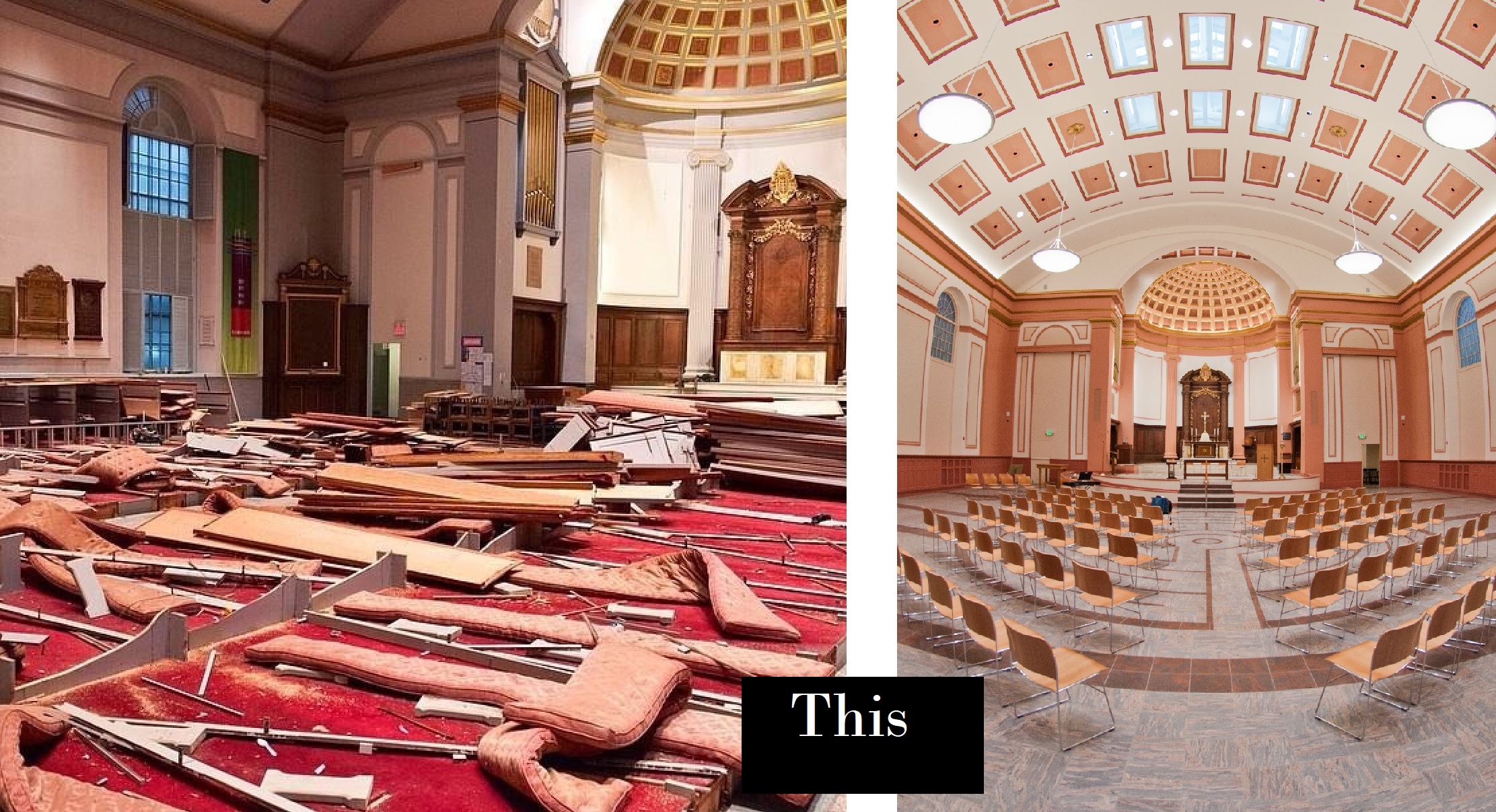
Sanctuary of the Cathedral of St. Paul in Boston Before and After. Note the labyrinth on the new floor. And the skylights.
Also:
Transforming underused classroom space for affordable studio apartments (because you’ve noticed that there aren’t many kids in church but there are quite a few people who need shelter.)
Calling a pastor whose first language is not English (because you’ve noticed that there are quite a few Spanish-speaking businesses popping up around you.)
Starting a gathering for the parents of non-binary kids (because the local guidance counselor tells you that those families have been kicked out of other churches and the parents need support.)
Offering Birthday Parties for kids who never get invited to parties (because the principal was telling you the other day about Kids Who Don’t Get Invited to Parties- especially the immigrant kids and the special needs kids.)
Tear down your mold-filled building with no elevator or sprinkler system and replace it with whatever space in needed for the new ministries you’ll be doing in 2025 (because your rolls are filled with people who no longer live in the neighborhood and they might not be alive in 2025 but all kinds of new folks are moving into the area who seem to need childcare, financial education, job training, grief support, Christian education, affordable meals, friends, tutoring, or all the above lovingly offered in the name of Jesus. Note: Don’t assume what the neighbors need. Ask.
Drama no. Dramatic yes. And to recap yesterday’s post:
Dramatic times call for dramatic changes. This is good news, friends.
But we have to be willing to want this. It has to be about what Jesus has taught us to be and do.
“How to pay for such things” you ask? If God is calling you to do ministry in new, dramatic ways the funds will come. It’s also possible that you’ve waited so long to do the dramatic, that God will call someone else to do it for you.
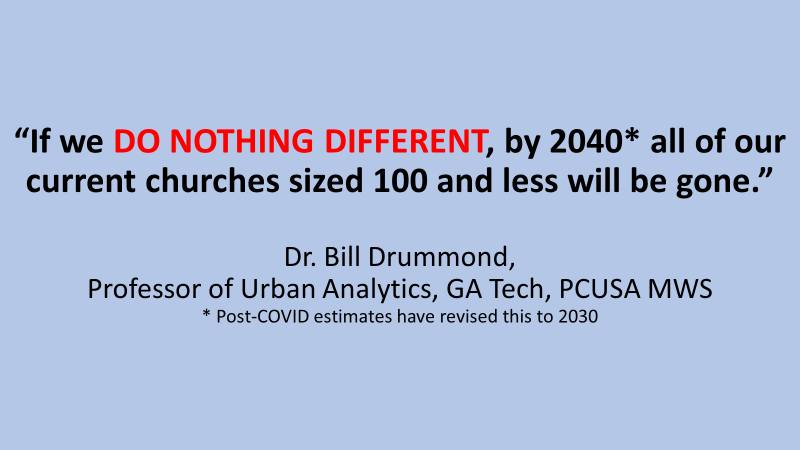
I’m still a bit haunted by this quote (via Jim Kitchens) from Dr. Bill Drummond:
Four friends of mine have all recently decided to leave their church positions without a new call – unless it’s the call to rest and that’s certainly a valid one. And while all their reasons are different and I’m not going to hypothesize what’s made them exhausted, one of the most energy-sucking experiences in professional ministry – especially today – involves working with stuck congregations. It’s not just energy-sucking. It’s dangerous. It will kill.
100% of the congregations that are struggling right now are stuck. And it’s as painful to watch as it is to experience.
Your church is stuck if . . .
Leaders have had the same conversation/debate for months now and no decisions are ever made. The issue might be as simple as “we need to replace a window” or as complicated as “we need to call a pastor.”
Leaders do what they’ve been asked to do (like “bring in new members” or “expand outreach”) and suddenly distracting little melodramas pop up. I call them Satanic S#*@storms. The most common example is the person whose power has been diminished who spreads rumors about the pastor.
Nobody is brave enough to stand up to the bully.
The bully knows it.
The leaders are not faithful disciples (and they don’t really want to be.)
Because we are tired, those little melodramas, those faithless conversations, those allergies to conflict make leaving Church overwhelmingly attractive. Clergy and church members alike realize that life is too short to argue about chancel flowers.
I believe that all the little churches Dr. Drummond is talking about are stuck in unhealthy, unrealistic, unfaithful cultures. And it will kill them sooner or later.
Yesterday I heard UNC Charlotte Associate Professor of Religious Studies Dr. Julia Robinson Moore describe the difference between healthy shame and unhealthy shame this way:
Healthy shame results in positive change. Unhealthy shame results in secret-keeping.
Dr. Moore is interested in researching slave cemeteries here in Charlotte which often means that some of our oldest, predominantly White congregations have an opportunity. They can grapple with the fact that human beings who were slaveholders and human beings who were enslaved are buried on their property. Or they can ignore it.
More often than not the graves of the enslaved are hidden from view without markers or landscaping or tidy fences around them. Note: It’s great to learn our history, but if we don’t act on what we now know, we are wasting an opportunity to repair what is still broken.
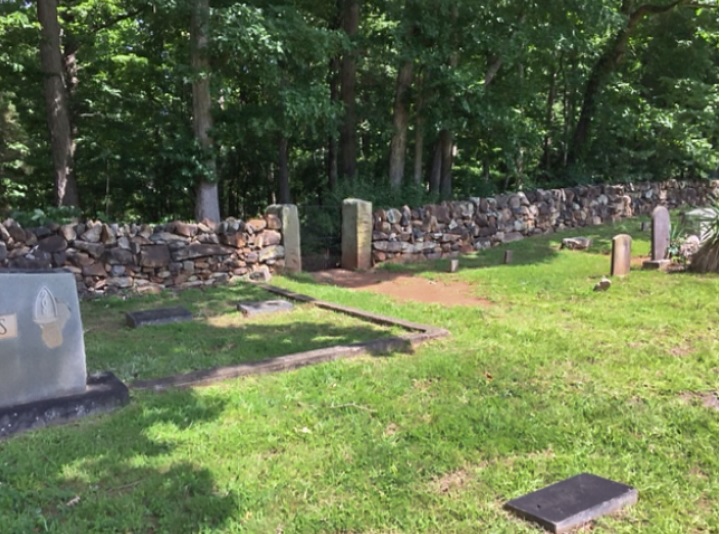
Church cemetery (established in 1767 in Charlotte, NC) with wall opening leading to the graves of enslaved members in the woods.
A couple things:
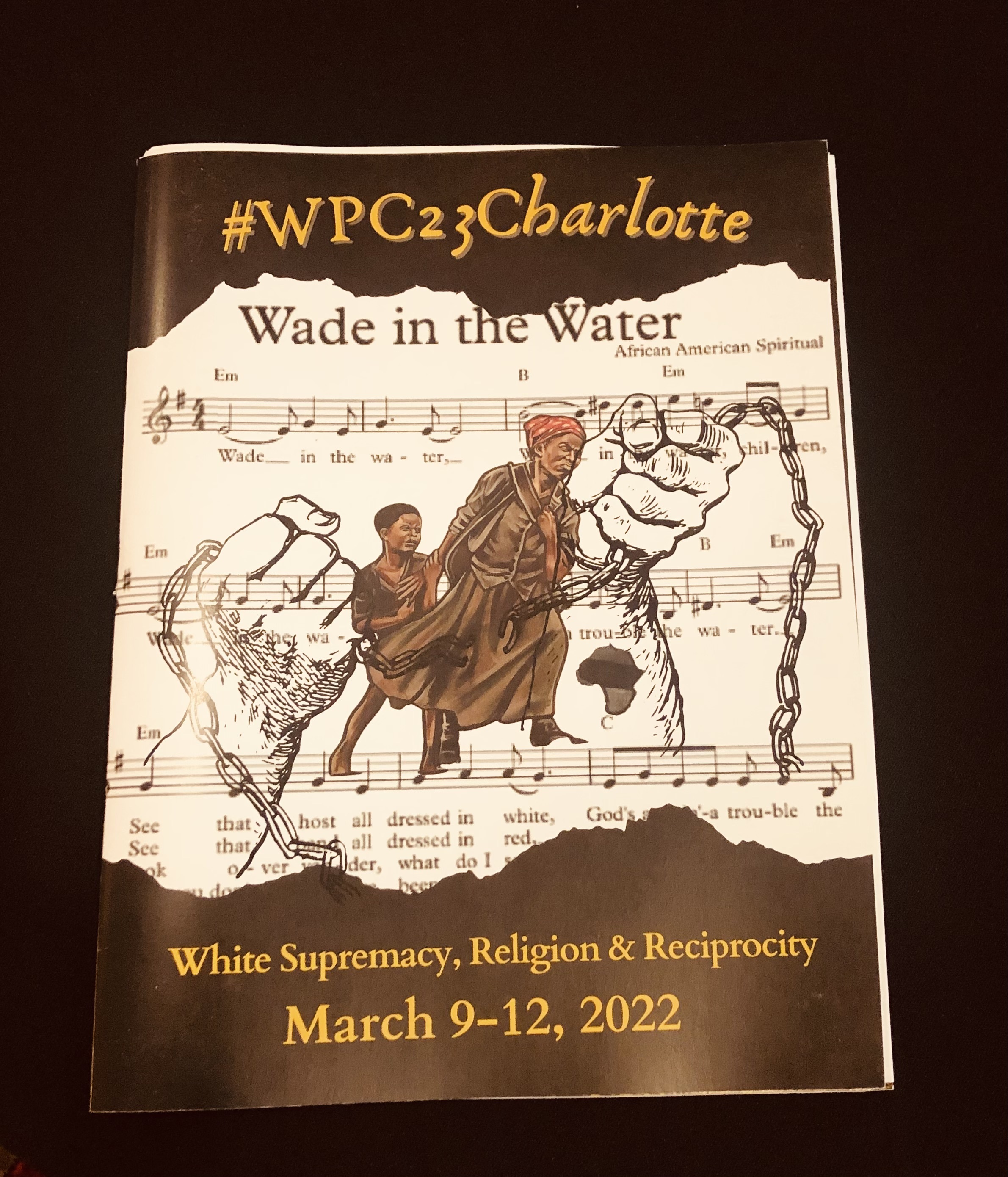
The national White Privilege Conference is criticized by people who assume that it’s an event about shaming and blaming White People. It is not. In fact, there was none of that at the recent conference held in Charlotte March 9-12, and some (White) people told me that they were surprised. They had braced themselves. This conference lifts up the fact that every person has privilege no matter who we are and it’s the hope that we all use our privilege to lift up others. (We who are White have many advantages merely because of the color of our skin.)
Remember when Ben Affleck was on the PBS show “Finding Your Roots” and he’d asked the producers not to mention his slaveholding relative from Georgia? And they complied? When the truth came out Affleck said this:
“We deserve neither credit nor blame for our ancestors and the degree of interest in this story suggests that we are, as a nation, still grappling with the terrible legacy of slavery. It is an examination well worth continuing. I am glad that my story, however indirectly, will contribute to that discussion. While I don’t like that the guy is an ancestor, I am happy that aspect of our country’s history is being talked about.”
Yes, let’s talk about it – not in anger because our noble bubbles have been burst and not in embarrassment to the point that our ancestor becomes like Voldemort (“He-Who-Must-Not-Be-Named”) although it’s possible that our fourth Great Uncle was in fact like Voldemort.
Let’s talk about it because addressing even the terrible parts of our history brings the kind of shame – healthy shame – that results in positive change. The congregation that knows it’s history can then make a commitment to repair that history. The family whose slaveholding ancestors donated the stained glass windows might find themselves called to make financial donations to life-giving causes.
Maybe you don’t live in a part of the world that enslaved people over 150 years ago. But there is something in all of our histories – both personal and corporate – that we need to know in order to move forward to repair the world in the name of Jesus.
Who were the Native Americans on the land where we live? What were the laws in our town that discriminated against the non-dominant population? What do we need to know about our history so that we can do better? What’s the history of hate-groups in our community?
One of the best examples of looking at difficult history and using healthy shame to change the world for good is in York, South Carolina at Allison Creek Presbyterian Church. Check it out here. (Thank you Sam McGregor.)
I have shame about the fact that my ancestors were slaveholders in North Carolina and maybe in Virginia too. But – I hope – it’s mostly healthy shame at this point, and I’ll use it to help repair the breach. I prayerfully ask that you join me in this calling.
Maybe you’ve heard of people who hire dates to accompany them to weddings so that Aunt Sophie won’t look at you with pity because all the other cousins are married. (Note: I remember a wedding in which I was holding a champagne glass which my sister grabbed for preventative measures when an elderly great aunt wondered – out loud – whether or not I had a character defect since I wasn’t married at 30.)
Certain moments are hard when you are uncoupled. And Shoji Morimoto has made a business out of these moments.
He charges 10,000 yen (about $85) per session, and is most frequently hired to accompany people who are at a turning point in life, who want to rewrite traumatic memories or experience a vulnerable moment they feel uncomfortable sharing with friends or family.
Because Japan is a shame-based culture (as are most of our cultures) business is good for Shoji Morimoto. He will be with you when you sign your divorce papers, pick out a casket, tell your parents you’re queer or need a hemorrhoid consulation – all shameful events in many families.
I know how to save you $85. Find a Church that’s not about shaming people.
Your immediately response might be, “Our Church doesn’t do that” and yet, how well does it go when a stranger or a long-term church member blurts out that they are unemployed/dealing with alcoholism/sensing they are bi/not loving their newborn like they thought they would/drowning in debt? Most of our faith communities shame people whether we realize it or not.
The church that gives you attention when you are a young family but ignores you when you are a single person of a certain age.
The church that doesn’t sit beside you in worship or invite you to brunch afterwards because they don’t know your people.
The church that whispers about your job layoff.
The church that you’d never tell about the suicide attempt.
The church that doesn’t know that Child Protective Services took your children.
Please read the Bible.
Jesus spent time with hated people, whispered-about people, condemned people And he loved them not because he was “woke” but because he was holy.
I read this quote on Jim Kitchen‘s FB this past week from Georgia Tech professor Dr. Bill Drummond:
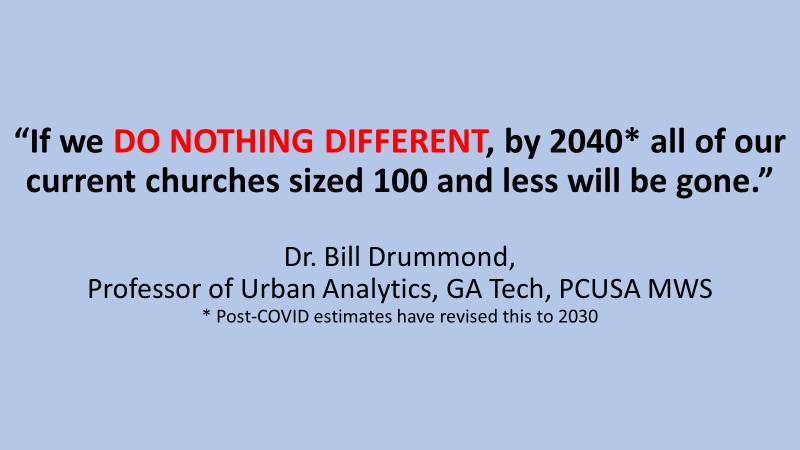
“If we do nothing different, by 2040, all of our current churches sized 100 and less will be gone.”
And all I could think about was Rental-san. If the Church cannot sit with/stand with/pray with/hold those who need someone, we will have failed. This goes for you “theologically diverse church” who actually only tolerates your LGBTQA+ people. This goes for you “friendly church” who actually talks only with people you know. This goes for you “we-want-young-people” church that only wants young people who can be molded into your idea of a Jesus follower.
We must be a completely different church well before 2040. And it’s not about survival. It’s about being The Church of Jesus Christ – literally – for the love of God.
We can hire strangers to fulfill our social and cultural needs. Or we can find – and be – authentic community.
Can you name something – anything – that’s going really, really well?
This is not a rhetorical question. Please add your things-are-going-so-well contributions in the comments. Seriously.
I talked with some public school teachers recently who believe the educational system is broken. I have a police officer friend who believes the justice system is broken. Everywhere we turn – from government to politics to elections to banking to climate to media – things seem a little unglued.
And then there’s The Church. Pastors and other leaders are wondering how to adapt and if they have the energy to adapt post-pandemic.
The common reaction to Times Like These involves:
Clinging to all the things we’ve loved in the past from BBQ fundraisers to traditional Vacation Bible School.
Turning to the tried and true volunteers who have been in charge forever.
Cutting costs.
If we want energy, if we want excellence, we need to look to our Counterintuitive Savior – the One who said Blessed are the meek, for they will inherit the earth and The first shall be last and the last shall lbe first. Jesus turned many things on their heads. Let’s be like Jesus.
Our school teachers are exhausted and demoralized. What if our government forgave the student loans of all public school teachers?*
Our police officers are exhausted and demoralized. What if our justice system allowed police officers to receive more training in de-escalation and culture building and less on military drills?
Our justice system in the United States has failed hundreds of people who have been found innocent after already serving decades in prison. (Check out this story about Darryl Hunt.) We have long focussed on punishment instead of rehabilitation. Imagine investing in – first – assisting those exonerated citizens who have been broken by the system to give them trauma counseling and job training. Imagine helping those in transition out of prison to build new lives that serve the community.
And in Church World . . .
Imagine long term volunteers stepping aside to let someone new be in leadership. The usual thing is to keep the old guard doing what they do for stability. The counterintuitive thing is to equip new leaders and then cheer them on and don’t micromanage them.
Imagine letting go of institutionalized events that “we’ve always done” but – secretly – there’s no energy to keep doing them. The counterintuitive thing is to do is to stop doing that Strawberry Festival in June and discern what new thing God might be calling us to do that nourishes us with more than strawberries.
Imagine making a concerted effort to invite non-Church people to join us. Instead of welcoming Christians from other churches, what if we invited the local sheriff, the local high school principal, the local community social worker – regardless of their faith tradition – to come to our worship services and tell us what they are seeing in their daily work. Maybe the Spirit will open our eyes to new needs, new possibilities for outreach.
Imagine things going really really well in the name of the One who challenges us to look at the world in a new way. Instead of a tyrant, our Messiah was a baby born in a cave. Instead of a political despot, our Messiah entered Jerusalem on a donkey.
Jesus is moving us in new ways. Let’s not miss this opportunity.
If your Church is stuck, get together with a small group of faithful leaders and ask God to show you what to do. Do not be surprised when it’s the opposite of what you’ve always done.
*I can hear you asking, “Who’s paying for all this?” I believe that we could afford to pay for this and more if we had the will to do so.
Logistics are important. Like all event planning there are the big decisions (what hotels to book) and there are the tiny decisions (how to arrange the t-shirts.) This event took about three years to plan. A lot can happen in three years.
Context is more important. When we started planning something very intentionally named “The National White Privilege Conference” almost every bank, hospital, restaurant, and club wanted to be a part of it. That was 2019. In 2022, almost every bank, hospital, restaurant, and club didn’t want anything to do with it. During those three years, Breonna Taylor, George Floyd, Daunte Wright and several others were killed by police officers while unarmed. Armand Arbery was killed by three men later convicted of hate crimes. The U.S. Capitol was attacked by people who defecated in congressional offices and beat police officers. And over six million people have died of COVID worldwide.
Exhaustion reigns. People are tired of COVID. People are tired of hearing about racism. (Note: if you happen to have long-COVID or you lost a loved oned to COVID, there’s a different kind of exhaustion. And for those of us who are White People, saying we are “tired of race talk” only highlights our privilege.
Misinformation also reigns. Yes, we got a little hate mail and it was usually filled with misinformation. My favorite was a complaint about the Presbytery spending $250 million on this conference. (Believe me, if we had $250 million there wouldn’t be an affordable housing problem in Charlotte.)
Hope reigns most of all. One of the disadvantages of attending this event virtually (and more than twice the participants attended virtually both because of COVID and expense) is that you don’t get the hallway conversations and the lunch meet-ups. You don’t get to have informal conversations with the keynoters and workshop leaders. In those interactions there is enormous hope. People are smiling in spite of the world’s brokenness. There is laughter and it’s not all cynical. There is deep respect and love shown.
Also, everyone should visit the NASCAR Hall of Fame. They were big unexpected supporters.
Why do I work to make conferences like this happen? Because Jesus. I would love to talk with you about it if you are willing.