Pastor as Pinball

I remember a day when – as a parish pastor – I chose cover art for a worship bulletin, did Greek word studies for a sermon on the Gospel of Luke, visited a new mom in the hospital, testified as a character witness in a military trial, moderated a session meeting, and talked with a newly retired member about her suicidal thoughts.  I remember feeling like I was in a pinball machine with no time to process these experiences.

[Note: one of the added stresses was that I also couldn’t share with anyone what I had done that day – but self-care is the topic of another post on another day.]

This memorable day came to mind as I read this article by John Dickerson.  He writes about President Obama’s week before Osama bin Laden was killed in 2011:

The events that took place immediately before and after those secret bin Laden meetings included: an education-policy speech; meetings with leaders from Denmark, Brazil, and Panama; meetings to avoid a government shutdown; a fund-raising dinner; a budget speech; a prayer breakfast; immigration-reform meetings; the announcement of a new national-security team; planning for his reelection campaign; and a military intervention in Libya. On April 27, the day before Obama chaired his last National Security Council meeting on the bin Laden raid, his White House released his long-form birth certificate to answer persistent questions about his birthplace raised by the man who would be his successor.

In the two days before the raid itself, Obama flew to Alabama to visit tornado victims and to Florida to visit with Congresswoman Gabrielle Giffords, who was recuperating from a gunshot wound. On Saturday, April 30, with the operation under way but its outcome uncertain, he attended the White House Correspondents’ dinner, where he had to entertain journalists with a comedy routine. In the joke-writing process, he had removed a quip about bin Laden. His aides were given no hint of why.

Dickerson mentions in this article that the President of the United States is expected to master pastoral skills.

Actual pastors are expected to be emotionally intelligent, theologically impressive, media savvy, administratively gifted life hackers.  Oh, and the pastor must be Christ-centered.  Of course.  And a good preacher.  Other helpful skills include: accounting, mechanical engineering, fundraising, and social work.

What actually happens is that the superbly gifted preacher might have weak bedside manner.  The mission leader might be an ineffective meeting facilitator. The deeply faithful shepherd might be a failed administrator.

Now more than ever, we need what Forbes Magazine calls “unbundling.”

We need leaders – in church and beyond – who know how to share power and break up hierarchies.  We need leaders who understand our limitations and welcome authentic partnerships.  We need leaders who are not threatened by the leadership of others.

No one person can excel in all the areas needed for excellent leadership.  But a good leader assembles a team that not only covers all the bases well but they work together for a common mission.

Pastor as Pinball is not a model for ministry.  We need time to process and pray and stare into space.
From Virginia to North Carolina By Way of Chicago

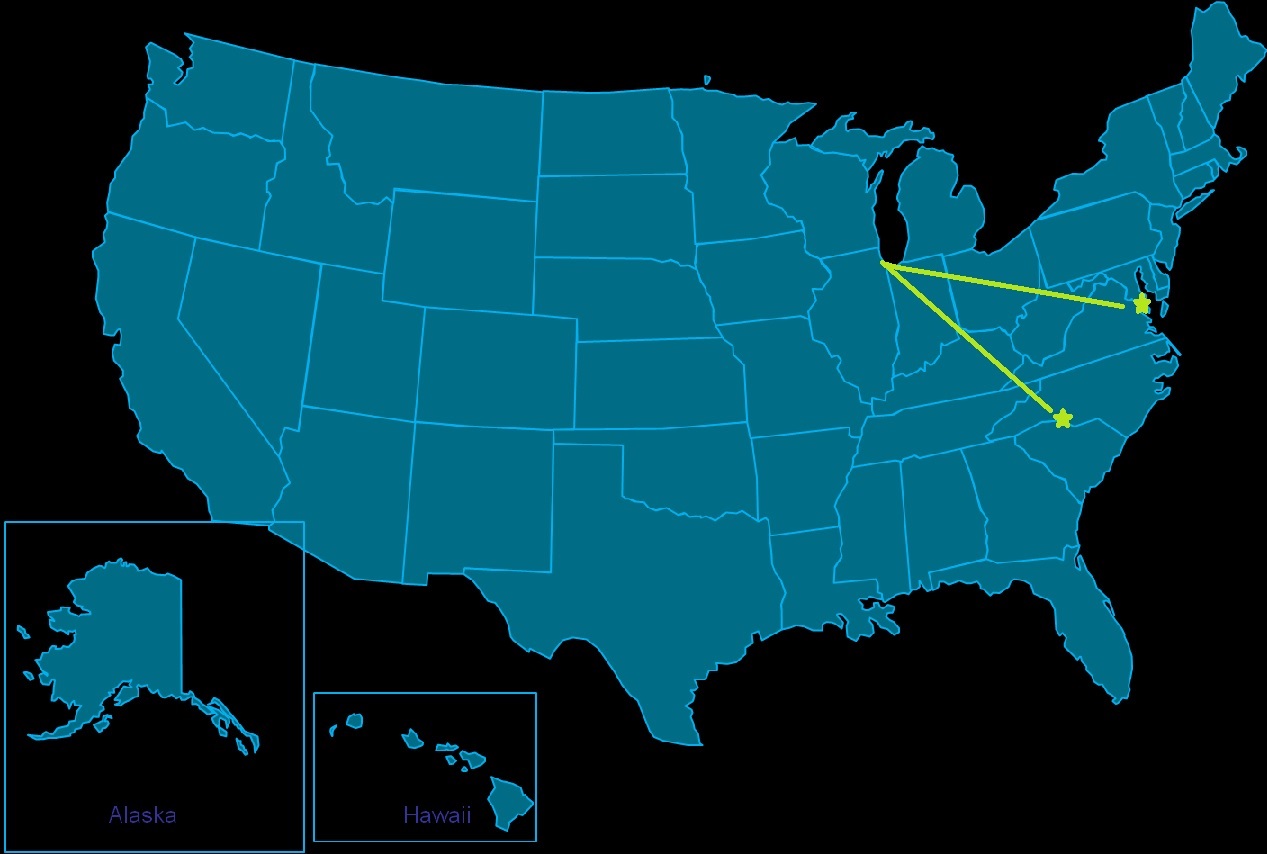
It’s less than 400 miles from Our Nation’s Capital where HH and I raised our children and served the Church for 22 years to North Carolina where I have moved to begin my next chapter of professional ministry.  But it took me seven years to get here.

Like the Israelites’ exodus from Egypt to Canaan, I have arrived from Virginia to North Carolina indirectly although my detour took only seven years.  I loved that detour through Chicago – which was the farthest west I’ve ever lived except for a summer in Guatemala.

I learned so much in Chicagoland.  I learned that deep dish pizza is for tourists and Rick Bayless’ restaurants are for people who appreciate the perfect mole sauce.  I learned that you can take the architectural boat trip a dozen times and it will be life-giving every time.  I learned that ketchup on hotdogs is an abomination. I learned that Anthony Rizzo is one of my favorite humans. And I learned a great deal about mid-council ministry.

Leadership is a fascinating journey and I can hardly wait to start working with leaders in my new part of the world.  I’ve been relishing this.

We learn from great leaders but we also learn from not-so-great leaders.  Learning how not to lead is as valuable as learning how. 

For many years, I’ve kept notes on the shifts into 21st Century leadership both in and outside the Church.  I have files and files and files. I see patterns and trends.  And it seems to come down to – simplistically – dignity and authenticity.

I’d love to hear your insights as I share my own in the coming days.


Limivoid Times Are the Worst

[Note: Like I said in my last two posts, my Roundtable Preaching Group does more than sermon preparation – at least in the traditional sense.  Yesterday we spent rich time with the extraordinary Jen Lord who inspired this post.]

Maybe you’ve heard the word “liminal.”  It gained popularity in theological and sociological circles in the early 20th Century by scholars like Arnold van Gennep and Victor Turner.  Liminal times are “threshold moments” when we are on the cusp of a new chapter in our lives.  From child to adult. From single to partnered.  From child-free to parent.  From active employee to retired. Rites of passage are essential tools for nourishing us through these transitions.There’s also the word “liminoid which is to liminal what opioids are to opiates.  Opiates are pain relievers that come from natural plants like poppies. Opioids are pain relievers that come from synthetic drugs like fentanyl.  The “-oid” suffix implies that something resembles the preceding thing, but it’s not exactly the same.  (One is fake-ish?)

Jen Lord pointed out that we humans confuse “liminoid” moments with “liminal” moments all the time.  Halloween is a “liminoid” moment, for example, in that a rough and tumble boy can don makeup and a dress for the night and it can be okay.  On Halloween we can try out different identities but actually the boy in this example hasn’t been permanently changed into a woman.  It was a costume. Comic Con events, virtual reality games and war re-enactment groups could be examples of liminoid moments.  People are not actually transformed into Captain America or a member of the Star Trek Bridge Crew or a Civil War soldier.  They are temporary roles we might play. [Another Note: some people dress as the people they truly are inside and they are not wearing costumes. I’m not talk by about Trans people or gender fluid people here.]

Take notice Church People.  We in the Church can easily fall into liminoid moments when we think we are experiencing a liminal moment.  Examples:

  • The Christian who dresses up for Church on Sunday, but leaves Church without anything changing in her soul.  She goes back to work Monday being her same angry gossipy self.
  • The worship experience draws huge crowds offering entertainment/amusement/fascinatation/spiritual intoxication. But the highs are short-lived. There is no actual spiritual transformation or community-building.

There’s also the word “limivoid which was coined by Bjorn Thomassen in 2012.  While liminal experiences transform us into a new way of being and liminoid experiences – at least for a moment – seem to transform us, limivoid experiences are deceptive.  Those who lead us promising salvation actually create chaos.  They set themselves up as purveyors of truth when actually they perpetuate destruction.  Scripture calls such leaders false prophets.

Note that Jesus gave his life in sacrifice to others for the sake of love.  False leaders only serve themselves while saying that they are serving the people.

This is heavy stuff for a Friday.  But here’s the thing:  now more than ever, there is a deep need for authentic, self-sacrificing, loving rituals which carry us across the thresholds of life.  Rites of passage are important.  They give our lives meaning.  They satisfy us deeply.

This is what the Church offers in the 21st Century – if we are being faithful.  True spiritual community gives us meaning and purpose.  It’s less about bells and whistles and fog machines and costumes. And it’s more about real life and genuine compassion and being the people we were created to be.

I love real Church.  But it’s hard to find.

Image of doors into a new space at the Lady Bird Johnson Wildflower Center in Austin, Texas.

Sometimes We Need Beauty

My preaching group meets for about four days every year but we do much more than preach/share sermon preparation.  I was thinking about sharing the Top Ten Quotes of the week, but I can’t because:

  1. Some of my favorite quotes are too revealing in terms of keeping confidence, and
  2. Some of them make us sound a little unhinged.

One of the quotes I can share though is this one:  “I need someone to give me a benediction.”  A benediction – for those who don’t do church – is a blessing usually imparted by the preacher to the congregation at the end of a worship service.

In my most exhausted moments of ministry, my voice cracks during the benediction because I am done.  I can barely utter another word, much less a holy word and I think that means that I need someone to give me a benediction too.

Yesterday our preaching group did something that worked wonders for our ability to preach/breathe/keep going.  We spent the afternoon at the Lady Bird Johnson Wildflower Center outside Austin, TX.  Because sometimes we need someone to give us a blessing.

Sometimes we need beauty.  Flowers and trees are among God’s best benedictions.

Images from the Lady Bird Johnson Wildflower Center outside Austin.

What Clergywomen Do When We Are Away From Our Churches

There might be wine.

But mostly there is catching up, praying, supporting, mentoring, and sharing.  My clergy group has been meeting for about 18 years and it makes an enormous difference in our energy levels as we take a break from day to day ministry.  One of the highlights today was meeting with several young women who are – themselves – seminarians or Young Adult Volunteers preparing to begin seminary.  They are already exceptional leaders.

Within our clergy group, there is over 300 years of professional ministry.  But we still have so much to learn.

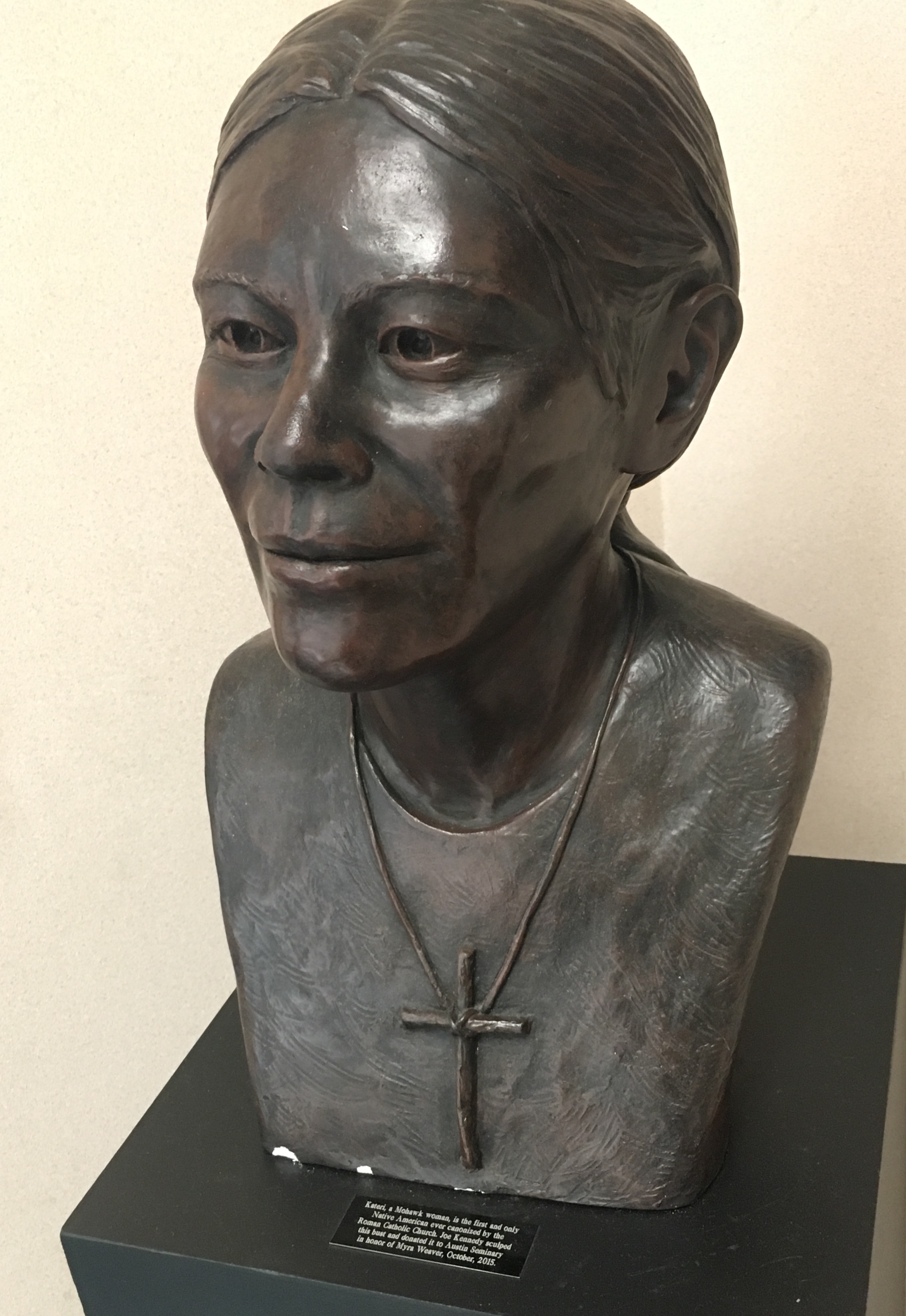
Image of Kateri by sculptor Joe Kennedy (2015) who is the only Native American  canonized by the Roman Catholic Church.  On display at Austin Theological Seminary.

Praying for Barbara Bush

Former First Lady Barbara Bush might be on the cusp of eternity.  This breaks my heart.

I shared this article on FB yesterday and received a private message from someone who was “surprised” that I would lift up the Bush family in prayer.  “I wouldn’t peg you to be a fan of the Bushes” I was told.  That’s a huge assumption, actually, and here’s my response:

  • I am a huge fan of families that support each other and love each other through the good and the not-so-good.
  • I am a huge fan of people who not only survive deep grief but use their grief for good.  I will always have a special place in my heart for Mrs. Bush who not only buried a three-year old but used that tragedy to support other parents who buried their own children.
  • I am a huge fan of people with good manners and people with noble core values.  I’m not thrilled that Mrs. Bush would call Mrs. Ferraro “something that rhymes with ‘witch’” but I’m chalking that up to Not Her Best Moment.  All of us have those.
  • I am a huge fan of wit and good-natured snarkitude.
  • I am a huge fan of pearls.  Real ones.  Fake ones.  Especially clutched ones.

One of the things I am not a huge fan of is the fact that many of us are so divided that we would celebrate in the sorrow or the destruction of people with whom we disagree. 

  • I am sickened by this story about the man who made a cardboard cutout of David Hogg and used it for target practice with his assault rifle.  This man needs Jesus as much as anyone I’ve ever met.
  • I am sickened by the tweets that celebrate the bombing of Syria as if the bombing of any country is reason to party.  Even when we (or anyone else) bomb military sites, there is collateral damage to innocent people.  (After visiting rebuilt homes in Syria myself a year ago, the bombing of the Homs air strip blew out the windows of those new homes shortly after we returned to the U.S.)
  • I am sickened by anyone who allows the gas lighting of their political opponents. The way things are now, even the most noble political candidates of either party are considered criminals if there is enough misinformation about them to blanket the airwaves.
  • I am sickened that ugly politics and blatant lying by leaders on both sides of the aisle has become the norm.

It does not have to be this way.

I am praying for Barbara Bush and you can’t stop me.  Even if she were my enemy (which she isn’t) I am called to pray for her and so are you.

And we are called to pray for the assault weapon guy.  And for Assad and Putin.  And for the Cambridge Analytica people. It doesn’t mean we agree with them or like them.  It means we are trying to follow Jesus.  For the record, I want the haters to get shut down but I am commanded to pray for the haters.  “Love your enemies and pray for those who persecute you,” is no joke.

Barbara Bush is a public servant, a wife and a mother and grandmother and great-grandmother.  She has lived a privileged life but she has used her privilege for good countless times.  I thank God for her life, and I pray that she will see her three year old again whenever the time comes.

Image of Barbara Pierce Bush and Millie is by Diana Walker (1989) and it hangs in the National Portrait Gallery in Washington, D.C.

I Still Remember Sicker Abdul

The most widely read post I’ve ever written is this one about the first Nigerian school girls who were kidnapped by Boko Haram.  The fourth anniversary of that terrible night is April 14th. Some of those young women have been freed and some have died and some are still missing.

The one I chose to pray for is named Sicker Abdul.  My eyes were drawn to her name and I still wonder about her.  Someone by that name contacted me on social media a while back, but that person was an imposter.  I pray that “my” Sicker Abdul is safe and will one day be free.

Resilience is a priceless characteristic in humankind.  And people who teach resilience skills are unsung heroes.

Please stop whatever you are doing at this moment and read about the Nigerian women who are now free but are trying to be resilient in the face of their trauma.

They live in university housing and they take classes in everything from math to yoga.  They watch movies.  They are trying to find themselves.

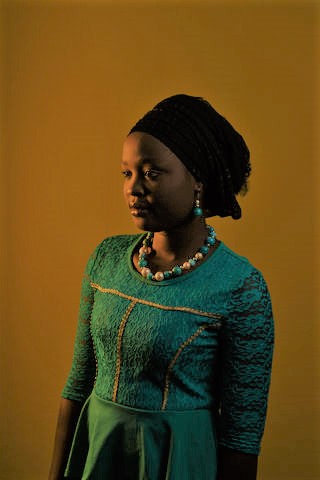
Please continue to pray for them. The two women pictured here are among those my 2014 blog post mentioned by name and now they are free.  But many others are not.  Even just for today, just this one time – please stop and pray for those whose whereabouts are still unknown.

Thank you.

Photographs by the amazing Adam Ferguson for the New York Times.

Do We (Really) Belong to a Church?

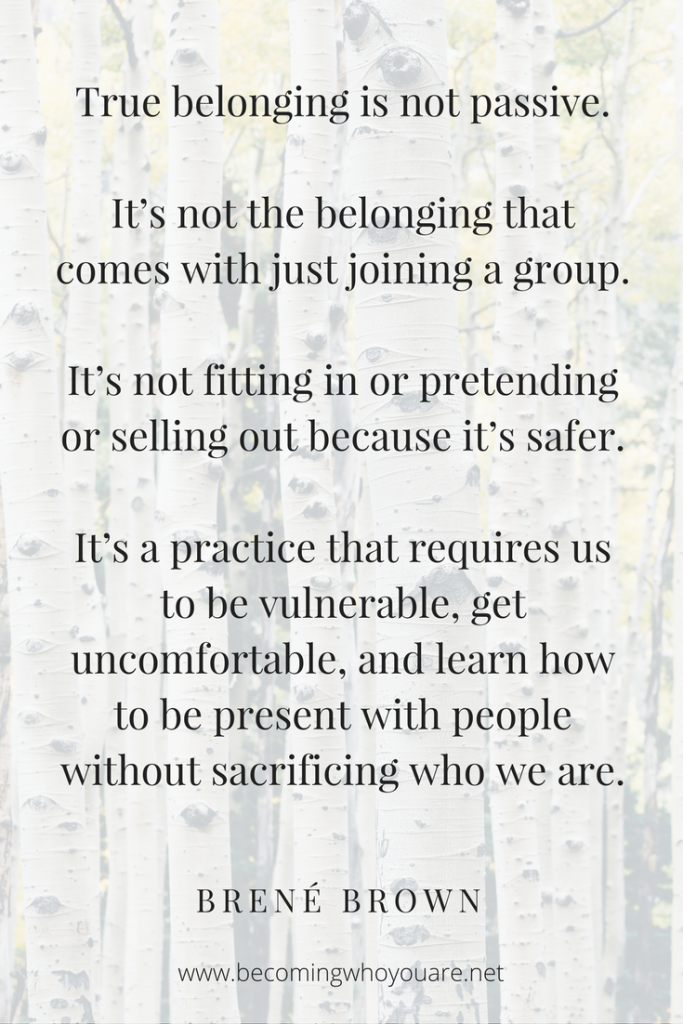
Belonging is being accepted for you. Fitting in is being accepted for being like everyone else. If I get to be me, I belong. If I have to be like you, I fit in.” Brene Brown in Braving the Wilderness

Most 21st Century Culture doesn’t care if we belong to a church (or temple) or not.

Some people join churches to gain a wedding/baptism/funeral venue.  And some join because it eases entry into a good preschool.  Or maybe we actually join in hopes of truly belonging to a community of people who love us no matter what and who remind us that God loves us no matter what.

Loneliness is a killer.  John Cacioppo, who died last month, studied the effects of loneliness and said, “Chronic loneliness increases the odds of an early death by 20 percent which is about the same effect as obesity, though obesity does not make you as miserable as loneliness.”   I often ask congregations, “What breaks God’s heart in your neighborhood?” and more than one church has answered with one word:  isolation.

We are an isolated people in terms of truly belonging.  Although we might have hundreds of social media friends, how many of us have 3 people we could call in the middle of the night to come over because we are a wreck?

Brene Brown writes in Braving the Wilderness that belonging to ourselves is the most important kind of belonging – which is uncomfortable for someone like me who believes that “in life and in death, we belong to God” first and foremost.  But what she means is this:  we live in a fitting-in culture and we need to love and accept ourselves to the point that we don’t need to fit in.

We deserve to belong because of who we are – not in spite of who we are.  But it takes work and vulnerability to become who God made us to be.

The best kind of church is a spiritual community that not only allows people to be the people God created us to be, but encourages people to be the people God created us to be.   God created us to serve God by serving each other.  God created us to honor God by honoring each other.

I want to belong to that kind of church.

Image source.

Let’s Pretend Like This Never Happened

I was once in a church meeting after an ugly congregational split, and one of the church members said, “Can we pretend like this never happened?

The answer is a big no.

I grew up trying to avoid unpleasant stories – especially scary stories that are real.  Turns out this is a luxury that we cannot afford if we truly hope to Make America (or our congregations, neighborhoods, families) Great (er).

For example, Oprah Winfrey talked about one of those scary chapters of our nation’s history last night on 60 Minutes and I hope you’ll watch it here.

Thousands of men and women were lynched in this country between 1877 and 1950.  Sometimes children were invited to witness these executions.  Sometimes preachers invited parishioners to bring a picnic basket for the event.

The lynching of Jesse Washington was witnessed by over 10,000 people who cheered as he was not merely killed, but tortured as he died.  Maybe he was guilty of the crimes he was accused of and maybe he wasn’t.  But his lynching is a horrible part of American history – an act of terror that was carried out to “warn others” to watch themselves.

We who have power and privilege in this country, we who truly love this country have a duty to face the “unpleasant” stories of our nation’s history, our church’s history, our families’ history.  As conversations continue about reparations for the descendants of enslaved people in this country, the least we can do is acknowledge the terrible stories of our past and keep them from happening again.

Let’s pretend like this never happened” is not an option if we hope to be healthy people.  Families often hide abuse and addiction.  Churches often cover up misconduct and other shameful actions.  And nations are forever broken if we fail to talk about our past disgraces.

Talking about what really happened is essential if we hope to thrive in the future.

Image owned by the NAACP of the lynching of Jesse Washington on May 15, 1916 in front of Waco City Hall, taken by Fred Gildersleeve (1881-1958).

Three Memories about Dr. and Mrs. King

On April 4, 1968, I was doing my homework at our dining room table.  My mother was sitting on the sofa reading but the television was on and it was announced that Dr. Martin Luther King Jr had been killed in Memphis at the Lorraine Motel.

Me:  What’s going to happen now?

Mom:  I don’t know, honey.

Decades later when my sons were about the same age as I was on the day Dr. King was murdered, I took them to Ebenezer Baptist Church in Atlanta where – during the Passing of the Peace, my boys shook hands with Mrs. King and Dr. King’s sister.  It was one of those moments in their lives when I held them firmly by the shoulders, made them look me in the eye and said , “Boys, I need you to remember this moment for the rest of your lives.  You have just been in the presence of history.”

In between these two memories is another one.

I don’t want to drop names here, so I won’t. But I was in a well-known theologian’s home with a group of friends in the 1980s when the phone rang and I was asked to answer it.  The person calling identified herself as Coretta King.

Mrs. King:  Hello.  May I speak with ____?  This is Coretta King.

Me:  Seriously?  (I was in no way a cool, unflappable twenty-something.)

Mrs. King:  May I speak to ___?

They spoke and what I remember most was that when he returned to us, he referred to her as “a b@#*^.”   I was shocked at his language, but today, I’m more shocked (and yet not shocked) at his characterization of her – most likely because she was a strong woman and a scholar/activist in her own right.  Women with opinions – and maybe especially women of color – are still called names when we are not docile enough or polite enough.

The day after his murder, Mrs. King continued the march with sanitation workers in Memphis.  The. Day. After. Her. Husband. Was. Killed.

This is a person who totally got it:  instead of being paralyzed with grief – even the deep grief of losing her partner and the father of her children –  she kept the movement going. Some things are bigger than we are.  Bigger than our own emotions.  Bigger than our own families.

Coretta Scott King is a model for us all.  Everybody remembers that it’s been 50 years since Dr. King was murdered.  Some are noting that we haven’t come very far in terms of economic justice for the poorest among us.  But only a few are continuing in the movement to bring justice and moral renewal to this great nation.

The Kings are not merely historic figures.  They continue to inspire us to keep moving forward in the cause of liberty and justice for all people.

Our memories can serve as sentimental thoughts that make us smile or weep.  Or they can serve as the spark that moves us to serve in the likeness of the Kings – or even more so – in the likeness of Jesus.

Image source –  from 1966 on a rural road in Mississippi.  And please join the Poor People’s Campaign: A National Call for Moral Renewal here.