Emmett, Ronnie, Brandon and Kevin

Heads up:  this post is for White people.

I don’t really have any Black friends.” 

Someone said to me recently and when I asked, “Why not?” she said that they live in different neighborhoods.  They go to different churches. She said that she rarely sees Black or Brown people in her professional circles.

“Do you want to change that?” I asked.  And she said yes but she doesn’t know how.

I don’t know how either except to invite her to get out more, to notice people who might be invisible to her, to educate herself on racism and White supremacy.

We (White people) can educate ourselves about race by reading a number of good books.  We can watch excellent documentaries like these.  And certainly we can befriend actual human beings of all skin colors.

But I also recommend watching Lena Waithe’s amazing show The Chi on Showtime.  It’s one of those special series that captures the drama, humor, love, beauty, ugliness of real life in a neighborhood on the South side of Chicago. What the writers do is amazing in terms of making us care about and even love the characters.  Among the ones I care about most are Emmett, Ronnie, Brandon and Kevin.  (I once tweeted Lena Waithe and asked her not to kill Kevin – ever – and the fact that she didn’t reply is worrysome.  Not that she and I are friends or anything, but please . . . not Kevin.)

My point is that authentic relationships are everything in the 21st Century Church and although television characters are obviously not real relationships, getting to know the fictional characters of The Chi might be a start. It offers a small slice of the intersectionality of race, violence and urban life.  It’s excellent.  It will make you care for people you don’t know yet.

Image of (from top right) the actors Ntare Guma Mbaho Mwine, Alex Hibbert, Jason Mitchell, and Jacob Latimore who respectively play the roles of Ronnie, Kevin, Brandon, and Emmett on The Chi.

Tiny (Fossil) Steps

Changing a congregation’s culture is exhausting.  But it’s not impossible.

In the 1990s when I was just getting started thinking about What The Church Could Be (and no longer is) I registered for an Easum and Bandy event at Cedar Ridge Community Church in Maryland – the church that Brian and Grace McLaren started in 1982.  I asked my friend and colleague AP what she knew about Easum and Bandy and she told me that the last time she’d taken a group to one of their events, she had to pull the car over on the way home because everybody was crying.

It happened to me too.  I took a group from my church to hear about The Emerging Church and had to pull over to tend to crying parishioners.  One person was kind of drooling.  “We could never do that.”

Culture changes are hard.  And if your congregation is predominantly comprised of people over the age of 60 who have been Christian for at least 40 years, and have been a member of that particular church for at least 20 years, your congregational culture is fossilized.  (This is known as George Bullard‘s 20-40-60 rule.)

Survival mode kicks in. We go to workshops.  We read experts.  We have those awesome Mountaintop Experiences at The Best Conference Ever.  We go home to introduce new ways of doing/thinking/being.  And one of the following happens:

  • Our people immediately offer reasons why We Can’t Do That.
  • Our people roll their eyes.
  • Our people threaten to withhold money.
  • Our people decide we are no longer their pastor and they turn against us.

It’s foolish to believe that we can turn a congregation’s fossilized culture into a festival of creativity in a single day/season/year/decade.  Such fools become frustrated and depressed.  (Note:  I have been one of those fools.)

Tiny steps are required.  Even fossils can take tiny steps if we move them. 

Before introducing The Big New Thing that will overturn 50-150 years of The-Way-We’ve-Always-Done-It, think small.  Think tiny even.

What are some tiny steps that we can make even in the company of fossilized church people?

  • Start every board meeting with a prayer for the church’s transformation.  Are you praying for “young families”?  “More money”?  Ask God to transform your congregation to look more like Jesus.  And then (this is the hard part) go around and ask each person at the table to share a time they’ve observed someone or something looking like Jesus since the last meeting.  If they can’t think of one, let them pass.  But make this a practice at every board meeting.  You might find that people become trained to look for Jesus out there.  A tiny step.
  • Walk the neighborhood two by two.  Ask your board to meet 30 minutes before the next meeting.  Divide them up into teams of two (or three) and send them out in as many directions as you have teams to walk – without speaking – in search of something out in the neighborhood to bring to the meeting to pray about/for: A playground where children play.  A parking space for a disabled person.  A boarded up building.  A mom pushing a baby in a stroller.  Kids playing soccer.  After 15-20 minutes of walking, gather back at the church building and then ask each board member share what they want to pray about based on what they noticed.  (Wild and crazy idea: have each person pray individually, one-by-one, about the things they saw.)  A tiny step.
  • Go on a mission tour of your own church building.  Start in the parking lot and enter through the door where most people enter. What happens in every corner of that building?  (“This is where non-perishable food is left to take to the shelter.”  “Here is where the choir stands during worship.”  “There is where bulletins are folded.”)  Stop and connect each room/corner/entranceway to ministry.  Discuss those corners of the building/yard where it’s hard to make a ministry connection and ask how we might make that connection.  “What can we do to make this classroom, office, hallway, closet about mission and ministry?”  Remind your people that the reason we have church buildings is to use them as tools for ministry.  Pray at the end of your tour that you will embrace sharing your building as a tool for ministry for the sake of God’s love. Then do this again six months later to note if there are any changes. A tiny step.

Even the most rigid leaders can take these simple steps.  The point is to get ourselves out of the way for fresh thinking.  It’s the first step to shifting a culture that can become a 21st Century Church.  We can do it.


Is 21st Century Life Making Us Sick?

Anybody out there feeling stressed out?

This article makes me wonder what the Church’s role will be if Andrew Sullivan’s premise is true:

Are Americans increasingly seeking opioids and other brain-numbing practices in order to avoid the life we find ourselves living?  In Sullivan’s words “This nation pioneered modern life. Now epic numbers of Americans are killing themselves with opioids to escape it.

Addiction rates are overwhelming – from alcohol to heroin to fentanyl.  Many of us are addicted to nicotine, shopping, and our cell phones.  Post traumatic stress issues are the daily burden of everyone from military veterans to gun violence victims to children who have endured multiple Adverse Childhood Experiences (ACEs).

Just as medical students are being trained to ask their patients about their childhood experiences, I wonder if seminarians will soon be trained in asking parishioners the same questions in hopes of discerning the best way to offer spiritual care.  In deepening relationships with parishioners, will we be looking for evidence of childhood  . . .

  • Physical abuse?
  • Sexual abuse?
  • Emotional abuse?
  • Physical neglect?
  • Emotional neglect?
  • Household violence?
  • Substance misuse in the home?
  • Household mental illness?
  • Parental separation or divorce?
  • Incarcerated household member?

Clergy and other church leaders are usually not equipped to handle serious health issues.  We sing about a balm in Gilead that can heal the sin sick soul.  But we don’t generally know much about maladies of the body or mind.  And yet our congregations suffer with all the above.

How will we partner with nurses, doctors, social workers, teachers, and law enforcement officers?  The point is that 21st Century ministry indeed requires such partnerships.  The sooner we consider ourselves to be on the same team, the sooner we will serve our communities more effectively.

Jesus promised abundant life  while plenty of thieves still try to steal away our lives.  21st Century ministry is no joke. No longer is it enough to plan worship, visit parishioners in hospitals, and lead a Bible study.

We need emotionally intelligent, energetic, imaginative souls willing to love even those who are not very loveable because that’s who Jesus loves.  And I find this exciting actually.

It means that we in professional ministry are increasingly dependent upon the Holy Spirit to help us figure it out.  It’s a crazy world and we can’t save it ourselves.

Image of Papaver Somniferum which is the source of opium.

Taking Versus Leading Continuing Education

Church Leaders: when was the last time you took continuing education without having a leadership position?

As I prepare to return home after the National Gathering of NEXTChurch in Baltimore, I feel replete with so much good information now crammed into my head. Next comes the fun part: processing what I’ve absorbed.

  • Worship ideas
  • Church development ideas
  • Mid-council ideas
  • Relational ideas

My brain is stuffed full of them, not to mention the unspeakably joyous feeling of being with both birth/marriage family and chosen family.  Sharing stories and updates is soul-enlarging.

I was asked to co-lead a workshop at NEXT because of my role in the denomination.  And while that was a satisfying experience, what was more satisfying and life-giving was hearing from so many amazing people whose wisdom I need to hear again and again.

Sometimes we reach a point when we don’t want to play/participate if we can’t be in charge.  At this point in my life, I have been blessed to be the leader many times in a variety of venues.  And that’s a great honor and privilege.  But I have come to love attending events when I am not in charge.  There is so much I have to learn and I love that.

Some (many?) of our congregations resemble Zombie Land.  The living dead roam the halls of our church buildings perpetuating programs that are also dead – although we don’t realize it.  There is no evangelical spark in their voices.  There is no excitement about resurrection in their faces.

These congregations tend to have leaders who either

  • get no study leave funds or time (because they are part-time with no benefits) or
  • they do not take their study leave to learn new things or
  • they spend their study leave looking inward – preparing worship or strategic plans for the next year without any beyond-the-walls influence.

I have colleagues who do not take advantage of continuing education unless they are in charge and while I agree that preparing to teach something is itself a great education, we really need to step out on a ledge and allow ourselves – even our erudite, brilliant, super-experienced selves – to learn from people who are younger, browner, and closer to the secular world than we are.  (I’m talking to you, Baby Boomer sibs.)

NEXTChurch consistently offers an array of brilliant material in the form of worship experiences, workshops, talks, blog posts, publications, and conversations.  And they are not the only ones.  Wild Goose and The White Privilege Conference are two other events where I’ve been stretched and inspired by people beyond my usual circle of influencers.

What if we – clergy types and especially stuck clergy types – intentionally chose a continuing education event in the coming months that made us a bit uncomfortable and less rigid?  What if we registered for an event that pulled and pushed us spiritually?

Note to congregations and boards:  please be as generous as possible with Continuing Education funds for your leaders.  You need to give them at least $1000 to attend an out-of-town conference.  It would be better to give them $2000.  If you want to reward staff members for an excellent job, add to their continuing education line item.  (If you give them a raise, they pay taxes on it, although raises are good too.)

The old Church is dying.  We won’t know what the new Church looks like without being nudged to consider the possibilities.  Also Pastors:  you don’t have to be in charge.  Just sit and learn.

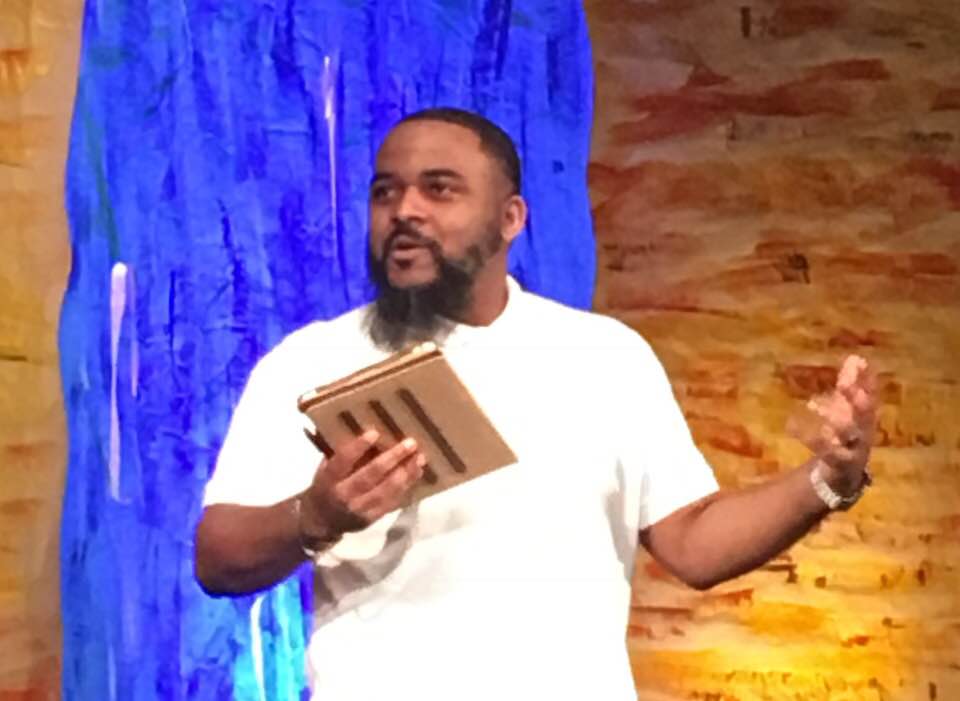
Image of the Rev. Billy Michael Honor, the first preacher at NEXTChurch National Gathering 2018.

They’ll Never Apologize (But It Will Be OK)

Another Kate Bowler reference:

When Terry Gross interviewed Kate Bowler for Fresh Air earlier this month, she asked a question about the long process between experiencing her first physical pains and her receiving a diagnosis of  advanced colon cancer.  Bowler had been in pain for a long time and kept calling her doctor for help, but it wasn’t until she herself demanded a CT scan that a huge tumor was discovered.  Terry Gross asked this:

Did that doctor ever, at the very least, apologize to you? Did you ever consider suing? Like, I would just be so angry.

For the record, the doctor never apologized and probably never will.

In my years of ministry – and especially as one of the Co-Moderators of my denomination, I’ve heard stories of people who have been hurt by the church they love.  Sometimes the hurt involved heinous misconduct against them.  And sometimes the hurt involved mere offenses to their souls.  Sometimes there was a cursory “my bad” or a general acknowledgement that something wasn’t handled well.  But more times than not,  there is no satisfying apology.

But it will be okay.  It has to be okay.

The world is not fair and people will take advantage of the innocent, ignore the the suffering, betray the friend, and gaslight the unsuspecting.  Unfounded rumors will be believed.  Dishonest people in power will prevail in spite of the truth.

God knows what happened.  God knows what’s real.  And while it may not be comforting to hear that “God knows” there is some relief in that faith.

Part of spiritual maturity – as frustrating as this is – involves trusting God to work it out.  It’s possible for bodies and souls to find peace without justice.  It’s sweeter when justice reigns.  But I’ve come to the conclusion that – at least for now – justice doesn’t often reign in this life. Nevertheless we keep striving towards justice.

There is an Easter.  Just not yet.

Don’t Easter My Lent

I just finished Kate Bowler’s book and – for the love of God – please read it, especially if you are a human being.

Dr. Bowler is a Duke Divinity School professor who specializes in The Prosperity Gospel.  She went to Texas to hear an inspirational speaker give a talk during Lent last year, and it was the kind of theological talk that makes Christians like me crazy.  (Sort of like the preacher I heard during Lent a few years ago whose sermon was part of a series called “Don’t Worry.  Be Happy.”)

The speaker was a perfect 30-something woman with good hair and a tiny waistline who confessed that suburban moms hate her because she never has to wash her hair and life is pretty crazy because baristas mess up her order.  She also confessed that she is afraid of death and she’d rather not hear you talk about it either.

“Everyone is trying to Easter the crap out of my Lent,” Bowler said later to a friend in response to hearing this speaker.

I’m with her.

I’m not dying of cancer like Kate Bowler, although that possibility is a perennially looming mist through which I live.  But I would like to talk about  death.

I am angry. I am shaking-my-fist-like-the-Psalmist angry.

I am angry that my friends’ child is tortured by cancer.  I am angry that 18 year olds in Florida can buy assault weapons and shoot other teenagers with them.  I am angry that the world has forgotten Syria.  I am angry that there is still no power in every corner of Puerto Rico.

I am really angry that a lot of people believe in Prosperity Gospel and subsequently blame illness, poverty, and desperation on the sick, the poor, and the desperate.  I believe God is going to jolt us all when we realize that the Holy One who walked alongside us expects us to walk alongside the sick, the poor, and the desperate too – unless we already understand that part of the Gospel.

Please don’t Easter my Lent.  Or anybody’s Lent.

This is the season when we remember that death is part of life and we are called to notice it.  We are called to face it.  We are called to let the reality of death re-prioritize our lives.

This is the time when it becomes less important to talk about how hard I have worked for all my toys than it is to work so that others get toys.

This is the time to embrace activities that not only give me life, but they give others life too.  As Denise Anderson asked in social media last week, “Are our baptisms doing anybody any good besides ourselves?”

If we take our baptisms seriously and our baptisms transform us, we are called to transform the world for good in Jesus’ name.

Lent reminds us that there is a world of suffering out there.  How are we offering ourselves to stand with those who suffer? (It’s not a rhetorical question.)

Also, read Kate Bowler’s book.

The Difference Between Reforming & Eliminating (Yes, This Sounds Boring)

As I travel around Church World today I often hear these terms:

  • Cutting Costs
  • Trimming Overhead
  • Making the Organization More Nimble
  • Getting Rid of Waste
  • Tweaking the System

For various reasons – often connected to downsizing – we in Organized Religion find ourselves reorganizing.  In fact every organization from the United States Government to the local credit union is reorganizing all the time.  It’s part of 21st Century life.

This article – When Reform Means a Process of Elimination by Beverly Gage – caught my eye in terms of examining how we make those reorganizing decisions.  We in the Reformed Tradition claim to embrace ongoing reform theologically and ecclesiologically.

In the Gage article,  she notes that politicians politicize “reform.”  (Maybe we all do.) The majority in Congress, for example:

  • Calls cutting Obamacare “health care reform”
  • Calls cutting taxes for corporations “tax reform”
  • Calls cutting immigrants from a path to citizenship “immigration reform”

It’s also true that expanding healthcare beyond Obamacare, spending more taxes on mental health and infrastructure, and welcoming Dreamers into full citizens could be called health care reform, tax reform, and immigration reform, respectively.

Reform doesn’t always equal cutting back.  It could mean adding to.  It could mean shifting around.  It could mean re-thinking priorities.

I am foolish enough to believe that we have all we need to do ministry.  We simply need to be creative.

  • Instead of an Associate Pastor who serves the congregation alongside the Senior Pastor, maybe we need a Neighborhood Pastor who spends most of her time making connections in the community.  (This would give the congregation a better idea of authentic outreach needs in the neighborhood.)
  • Instead of a Children’s Minister (for 5-10 children) maybe we need a Christian Educator who focuses on the whole age range of congregants.  (This would nurture those children, the parents of those children, and everybody else, plus bolster relationships beyond generations.)
  • Instead of a secretary, maybe we could hire a high school student for two afternoons a week?  (This would give a fresh approach to media materials and the bulletin layout.)

Everybody is reforming the way we do church and the way we are Church.  Rather than making necessary changes through the lens of anxiety and pessimism, what if we made necessary changes through the lens of creativity and hope?

Messy cuts do a lot of damage.  Creative changes inspire!

What’s Your Wakanda?

Everyone should have a Wakanda.  But it’s not like that.

Wakanda is the fictional nation ruled by King T’Challa who is also The Black Panther.  Although most of the world knows Wakanda to be a poor country of farmers, the truth is that Wakanda is the world’s only source of vibranium.  And vibranium is . . . well, go watch the movie.

Along with being a technologically superior nation, Wakanda enjoys a long and revered tradition of honor and peace.  They have never been colonized.  Their resources have never been taken from them.

Everyone should have a Wakanda.  But it’s not like that.

This is what I heard the brilliant Jenn Jackson say on Sunday night at a showing of Stay Woke, a documentary about the Black Lives Matter movement by Laurens Grant.  Laurens also happens to be brilliant.

Imagine a world where people live in honor and peace, where those who farm and build and create enjoy the fruits of their labors without fear of oppression or plunder or colonization.  Interestingly enough, the prophet Isaiah wrote that God wants this for us too:

They shall build houses and inhabit them; they shall plant vineyards and eat their fruit. They shall not build and another inhabit; they shall not plant and another eat; for like the days of a tree shall the days of my people be, and my chosen shall long enjoy the work of their hands. They shall not labor in vain, or bear children for calamity; for they shall be offspring blessed by the Lord— and their descendants as well.  Isaiah 65:21-23

Jenn Jackson shared a human truth as she referred to The Black Panther movie in her talk Sunday night:

“If your Wakanda means that people who look like Jenn Jackson will be enslaved, then it’s obviously not Wakanda for everyone. My Wakanda cannot be one that oppresses anyone.”

As we grapple in the United States with issues about everything from settling refugees to protecting DACA people to selling assault rifles to offering health care to the poor to expanding mental health care – we are actually talking about what our Wakanda looks like.

Although we do not have unlimited resources in the United States, we are rich.  We. Are. Rich.  And yet our riches are hoarded by an elite few whose Wakanda involves something different than the one I’ve described.  We have the capacity in the United States to feed every child, offer health care to every citizen, and end school shootings.  But those with power choose not to do those things.

As children are shot in their classrooms or white supremacists march in Charlottesville or unarmed Black men are shot for violations that White men would get a pass for, we sometimes hear that “This is not who we are as Americans.”  But the heartbreaking truth is that – actually – this is exactly who we are.

We are a country with gun laws that make it easier for unspeakably disturbed people to shoot people in schools.  We are a country where white supremacists march with torches and yell Nazi slogans.  We are a country where we turn away people even if they are running for their lives or grew up here with parents who were desperate enough to flee their home nations.  Dear God, we are a country that once kidnapped and enslaved human beings only to free them to a system of sickening laws that has led us to an obvious school to prison pipeline that incarcerates so many people of color that “it has warped our sense of reality.”

This is who we are.  But we don’t have to be this way.  We could be more like Wakanda.

Or we could actually be the America that once welcomed immigrants with these words, the America that fought against fascism in the 1940s, or the America that created blue jeans, hamburgers, donuts, and Google (thanks to immigrants.)  We could be the America that dismantles racism.  We could be the America that considers poverty to be a sin (rather than calling the poor sinful.)  We could be the America that gives every child the possibility of a good education.

Everybody should have a Wakanda.  We are the ones who could make it more like that.

Image of Wakanda from The Black Panther.

Remember When Child Sacrifice Was Not Okay?

One of the reasons that the God of the Hebrews was special in the Old Testament is because this God did not ask people to practice child sacrifice.

The point of the story of “the sacrifice of Isaac” is that the God of Abraham was different.  God asked Abraham to sacrifice his son – which was not an unusual request considering that the Amorites worshipped Moloch and the Moabites worshipped Chemoth – both fans of human sacrifice. When God offered a replacement sacrifice, it was clear that this Deity was different.  Child sacrifice was not okay with this God.

Early Christians were known for their generous treatment of widows and orphans in a culture known for casting widows and orphans out.  Early Christians worshipped a God who would rather touch lepers, eat with pariahs, converse with unfamiliar women, and even turn water into wine before allowing the sick to suffer, the unpopular to be ostracized, the powerless to be disregarded, and even the wine-less to be shamed.

With Jesus, love was introduced as God’s superpower.  And it becomes our superpower when we follow Jesus.

Love makes sacrifices for others.

But we are extremely confused today.  Instead of making sacrifices for others, we have reverted to sacrificing others to benefit ourselves.

We choose to sacrifice our children for the sake of the gun lobby.  We choose to sacrifice the poor for the sake of corporate profits.  We choose to sacrifice people fleeing from war and abject poverty for the sake of people who chant for a wall.

We all deserve to go to hell if we don’t stand up and declare that child sacrifice is not okay.  Via the prophet Isaiah, God said this:

When you stretch out your hands,
   I will hide my eyes from you;
even though you make many prayers,
   I will not listen;
   your hands are full of blood. 
Wash yourselves; make yourselves clean;
   remove the evil of your doings
   from before my eyes;
cease to do evil, 
 learn to do good;
seek justice,
   rescue the oppressed,
defend the orphan,
   plead for the widow. 

I would like every local, state, and national politician  – especially those who call themselves Christian – who has ever voted to choose corporate interests over the interests of children to read and re-read this and recognize that their hands are full of blood.

And our hands are full of blood if we do not vote these people out of office unless they make it impossible for anyone to purchase an assault weapon. 

Remember when child sacrifice was not okay?


Image of the Moabite god Chemosh from Wikipedia.  Also, this post was inspired by this excellent Garry Wills article written after the Sandy Hook shootings.

Commuter Marriage

HH and I have been married for 30 years and we’ve lived apart twice before – for six months each time. 

The first time was when we were newlyweds – which was weird because many couples live together before marriage and we didn’t even live together after marriage – for six months.  At month three, we learned we were expecting our FBC so it seemed wise to speed up the let’s-move-in-together plan.

The second time was when HH had a new call, all three kids were in college and I needed to get some things done – professionally and personally – before joining him in Chicagoland.

This third time will happen in April and there is no time limit in terms of how long we will live apart.  HH serves a great congregation in Chicagoland.  I’ve just been called to a great position in Charlotte.    Sometimes couples have to live apart to stay in their profession.

In the course of discerning if we could do this, I talked with:

  • God
  • HH
  • Our kids
  • Other people doing commuter marriage
  • God again

And while I am pumped for this new position and know that God has called me to this ministry, it is bittersweet.  There are hundreds of things I like about being with HH every day.

So, here’s what I’ve learned in my two previous stints in a commuter marriage and in my term as a denominational leader (which involves quite a bit of time away from home) and in talking with commuter couples who offer their own Pro Tips:

  1. Absence makes the heart grow fonder and reunions are sweet.
  2. I get a ton of work done when I live alone.
  3. I need to remember to stop working when there is no one around to remind me to stop working.  (I got a dog in my first call when I was single just to be able to tell people “I have to get home to my dog.”  Some people expected me to work 24/7 and I bought into this unholy idea for a while.
  4. HH and I plan to have coffee together every morning via Facetime.
  5. I talked with the search committee (and will be talking with other leaders in Charlotte) about “going home” to HH twice a month, if possible – leaving Thursday nights and returning Saturday nights/ Sunday nights once a month.  This will have to be flexible according to church schedules of course.  (People tell me it’s easier when only one person does most of the back-and-forth travel.)
  6. I will need a true home in Charlotte too with familiar things. (And I have one.  Moving into cute apartment next to a BBQ place.)
  7. Spense needs to stay in Chicagoland but we will also be talking via Facetime.  #Yard
  8. A healthy marriage makes me a healthy pastor.  I’m best if my marriage is happy so feel free to encourage me to take my Sabbath/see HH as often as possible.

I’m happy to accept further Pro Tips for any of you who commute between two homes in your marriage.  Especially for clergy couples who take God’s call to professional ministry seriously and cannot always find calls near each other, living apart can be a reality.

Some of you will disapprove of this arrangement for whatever reasons.  But my hope is that most of you will hold me and my HH in prayer that this will only make our marriage stronger and more fun.  It’s will kind of be like having a love nest in Plaza Midwood.