Who’s Demolishing Churches?

Many of us with PCUSA –  and especially Washington, DC  – ties have shared this 800px-Sydenham_Heritage_Church_demolitionarticle  published in the Post last weekend: “Arlington Congregation Holds Last Worship Service Before Church’s Demolition.”
The title of this article creates some confusion because:

  1. The building is being demolished, not the church.
  2. This was actually not the last worship service before demolition. They will continue to worship at 716 S. Glebe Road in Arlington, VA and the building won’t be razed for several months.

It’s not that I don’t believe that churches can be demolished.  It’s just that I believe that machines do not demolish churches; people do.

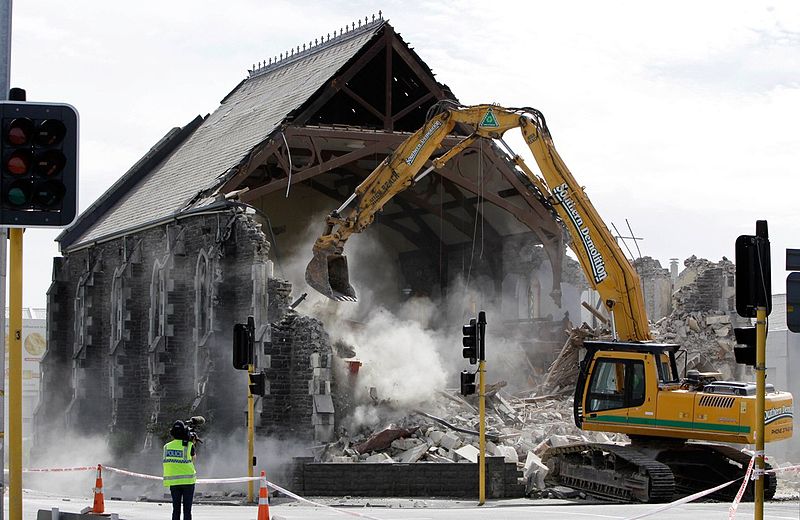
It’s a common mistake.  The image above is from the demolition of the Sydenham Heritage Church building near Christchurch, New Zealand, but the article describing this event calls it the “church demolition.”  Again, the church was not demolished.  The building was demolished.

A church is not a building.  (This notion might take a lifetime to correct.)

Cranes, excavators, and bulldozers demolish buildings.  Human beings demolish churches – and if you are interested, this is how we do it:

  • We gossip about each other to the point of creating a false narrative about a person or a group of people.
  • We fear change to the point of demonizing people who seek faithful transformation.
  • We shame and blame people who disagree with us.
  • We lose sight of why we first gathered as God’s people and we shift from worship community to private club.

Sometimes  – prior to demolition talk – I hear “closing talk” as in: “The Presbytery is trying to close our church”  or “That pastor was brought in to close our church.”  Again, this is usually misinformation.

What’s actually true is that a church has been choosing to close for many years now.

  • They chose to close when they called a part-time leader to save money, even though they could have afforded a full-time pastor.
  • They chose to close when they stockpiled their financial resources for a rainy day and didn’t notice it was pouring outside.
  • They chose to close when they allowed one or two powerful church members to bully other church members with no repercussions.
  • They chose to close when they consistently allowed fear to win over faith.
  • They chose to close when they loved their building and property more than they loved Jesus.

I understand when the secular press gets it wrong and believes that a bulldozer can demolish a church.  But it’s less understandable – or acceptable – when we human beings demolish our churches.

(Let’s stop doing that.)

Image source.

Note:  This post is dedicated to Arlington Presbyterian Church that used to worship on Columbia Pike in Arlington, VA.  They will worship there again in the future.


“If You Can’t Say Anything Nice . . . “

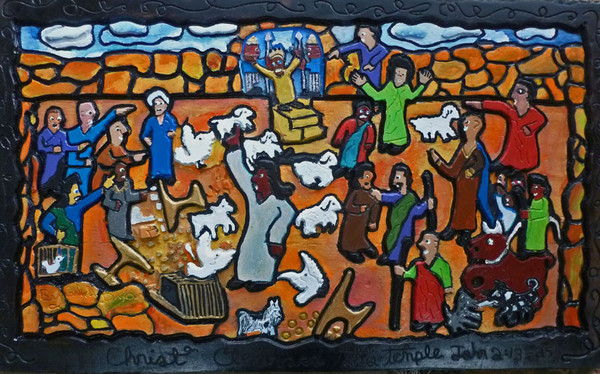
Jesus Cleansing Temple Carl Dixon

A cousin reminded me recently that our grandmother often said, “If you can’t say anything nice, don’t say anything at all.”  I remember that too. Maybe everybody’s grandmother said this.

Thumper also said it in the movie Bambi.  You know who never said it?  Jesus.

We in the church are taught to be nice.  Nice = Godly in many Christian homes.     But the word “nice” cannot be found in the Bible.   In fact, Jesus wasn’t always “nice.”

Years ago as young pastors, HH and I heard that there had been a by-invitation-only gathering after worship with a group of long-time church members and one of the former pastors who was visiting for the weekend.  (We had not been invited, which was okay.  Old friends were catching up.)

The former pastor contacted us the next day to share that the hosts of the event had trashed us throughout the meal, challenging our character, our faith, and our call.

What did the others say?” I asked, knowing that several of our most wonderful members had been in attendance.  Surely they spoke up for us.

They didn’t say a word,” our predecessor said.  “It was very disappointing.”

Those church folks were trying to be nice.  They were the guests at somebody else’s party.  If they couldn’t say something nice in response to ugliness, they chose to say nothing at all.  Some call this The Heresy of Niceness.

Now more than ever, we are not called to be nice.  We are called to be faithful. We are called to stand up for the poor, the oppressed, the powerless, the marginalized.  It’s. In. The. Bible.

So, what do we do when . . .

  • We overhear someone make a racist joke?
  • We observe someone teasing a disabled person?
  • We listen to someone threaten a gay person?
  • We notice a child being bullied?
  • We are included in a gossipy conversation?

We can be nice.  Or we can be faithful.

Being faithful is not about shaming someone.  It’s not about returning evil for evil.  It’s about expressing a different message – a message of grace.

If we do not speak up when overhearing words that incite or perpetuate injustice, we give the impression that we  concur with what’s being said.

If you can’t say anything nice, don’t say anything at all.”  I’m not needlepointing this on a pillow.

Image source.

“Now We Can Wear White Again”

WUWcoverFINAL-200x300With Memorial Day comes sartorial permission to wear our summer whites – even though that’s not even a thing anymore. Few of us refrain from wearing white between September and May. (Note:  it’s really about texture.  More about that later.)

Nevertheless someone reminded me recently that – after Memorial Day –  “we can wear white again.”  My immediate thought was that I wear white everyday.

I am white.  Or in the words of Ta-Nehisi Coates, I think of myself as white.

For a while now, I have found myself on a spiritual journey about race.  It’s definitely more than a cultural or anthropological journey.  It’s spiritual in that it’s informing me who God is and who God’s children are, and how – as a follower of Jesus – I am called to live in response.

The journey has worked this way for me:  While I’ve always thought of myself as a racist to some extent (because we all have our unintentional biases), I’ve also believed that I was somewhat enlightened.  The mayor in my hometown growing up was black, My high school principal was black.  My children have grown up in integrated neighborhoods and schools.   I notice when everybody in the room is white.  I experience a weird twist in my stomach.

But over the past five years or so, as I’ve paid more attention to the news in Ferguson and Cleveland and Chicago, as I’ve become unable to stop thinking about the nine human beings who were killed in their church building in Charleston last June, as I’ve watched footage of a pool party in McKinney, TX and a classroom in Richland County, SC my soul has grown hungrier for insight. As I’ve chosen to read more novels by people of color and to attend training sessions on racism and white privilege my soul has grown hungrier for more.

One of the non-fiction books I’ve read recently is Waking Up White by Debby Irving and I want more.  These days, I am waking up white myself.

And about texture:

Fashion experts now explain that it’s not the color that we should avoid in the cooler months; it’s the texture of the fabric.  We can wear white wool in December but white linen is best for June.  It’s about the fabric.  It’s about what keeps us warm in the cold and cool in the heat.

The same is true for our friendships, our interactions, our viewpoints.  It’s not about the color; it’s about the texture.  God has fashioned a world comprised of a broad texture of human existence.  Yes, our skin colors vary, but the fabric of our society depends upon all human beings being interwoven together.

This is on my mind as I countdown to the 222nd General Assembly of my denomination.  19 Days from today.  #NoSleepTilPortland

The Way My Face Looks Now

Jan GlassesI look in the mirror sometimes and see my mother.  It freaks me out a little, because I haven’t seen her actual face in almost 28 years.

When I’m walking around, I imagine my face looking younger and thinner, and then I pass my reflection and think, “Oh right, I’m older now and my cheeks are a little puffier.

While in a church meeting recently, someone made a brilliant comment about The Way Our Face Looks Now – as a denomination.  He said it’s as if we are plastic surgeons trying to explain to our people that “this is how we look now.” The changes have already happened; we just need for people to accept them.

All of us in the church have been to meetings in which the faces are older and the hair is grayer.  I value those wrinkles and gray hair.  They represent much wisdom and experience.

But increasingly, I am also attending church meetings to find that many of the faces are both  younger and darker.   Many of those faces do not look like me but this is a good thing.  The way the face of the church looked yesterday is not the way our face looks today, which is not the way it will look in the future.

Sometimes we imagine that the face of the church was better back in former years.  Or we forget the way our faces look today.  But I have enormous hope in the way the face of the church will look in the future if we  – who increasingly have wrinkles and gray hair –  allow new faces to step up to positions of power and leadership.  Thanks be to God.

Rich Church. Poor Church.

So the last will be first, and the first will be last.  Matthew 20:16

When I was a child, the leaders in our Mainline Church were – for the most part – successful Broken glassprofessionals:  the professors and lawyers, the business people and doctors. They faithfully pledged a portion of their incomes towards the ministry of the church. Mission often meant writing a check to “the needy.”

One of the culture shifts for a 21st Century Church is that shift from Members Supporting Institutions to Institutions Supporting Members.  In other words, if a church focuses on reaching out to broken people, there will be financial ramifications unlike those experienced in the 20th Century Church.

Of course, some broken people are financially rich.  Maybe their brokenness involves  family estrangement or addiction or cancer.

Other broken people are financially poor.  Maybe they are dealing with family estrangement or addiction or cancer . . . as well as unemployment or homelessness or financial insecurity.  In some neighborhoods, the broken also include formerly incarcerated people, gang members, victims of random gun violence.

As our congregations continue to shift from a 20th Century Model (we write checks for people in need) to a 21st Century Model (we have relationships with people in need) the financial responsibilities of our congregations will increase.

Being a missional church is inconvenient and expensive.

Let’s say our church opens its doors to tutor at-risk kids after school.  Not only will we get to know the students, but we will also learn who needs new shoes, and whose mom is in the hospital, and who is on free lunch in school and won’t eat this three-day weekend. As we become aware of our neighbors’ needs, faithful congregations will seek to alleviate those needs.

This changes things.  With fewer people in the pews, there are also fewer dollars for ministry.  Many of our buildings are in need of expensive maintenance and we are making decisions between replacing boilers and feeding hungry people.

Nevertheless, there is enormous hope.  If we are truly doing faithful ministry and caring for broken people in our communities and beyond, I believe that financial support will come.  We will be able to replace that boiler because it’s clear to everybody that our buildings are tools for ministry – so that hungry people can indeed be fed in there and kids without computers at home can do their homework in there and mentally/physically sick people can find treatment in there.

Jesus spoke about reversals of fortune.  It’s quite possible that “rich churches” and “poor churches” could come to trade places.  The “poor church” that focuses on missional ministry might find themselves “rich” because people want very much to support efforts that make a difference.  And the “rich church” that fails to financially support their neighbors might find themselves poorer for it.  They will have lost their purpose.  (Note:  it’s not about perpetuating an institution – even if that institution is our beloved church.)

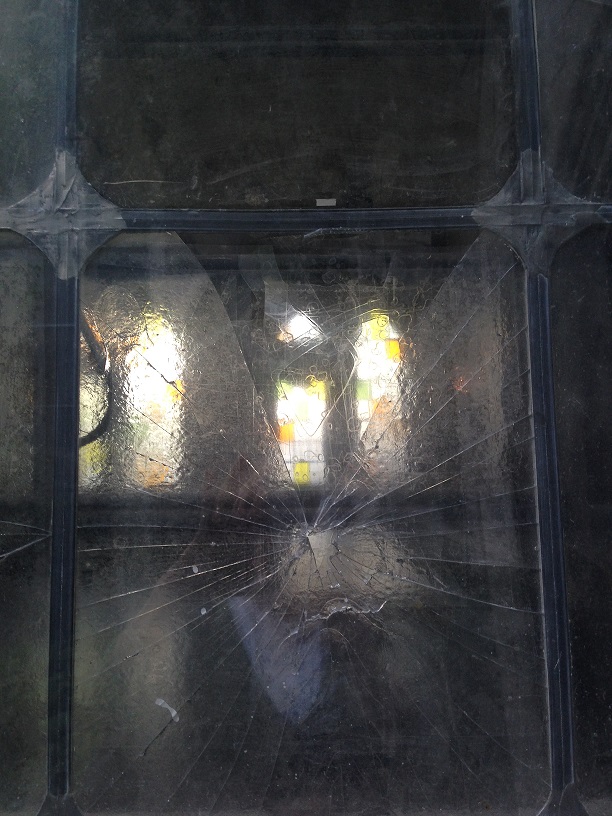
Image of a neighborhood church.  More than this window is broken.

Texting in Meetings (I’m a Fan)

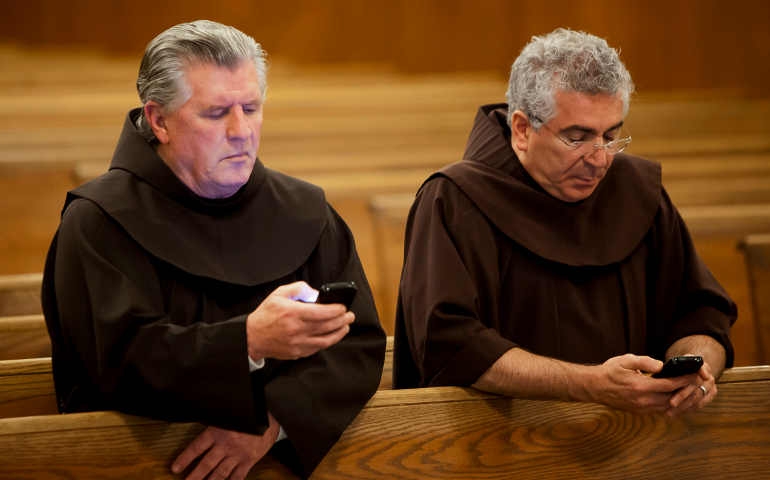
priests-textingIn a recent worship service, this was an announcement in the church bulletin:  “To make a public expression of a joy or prayer concern, send a text message to (pastor’s name) at (cell phone #).

This presumes that 1) the pastor keeps a phone close by during worship and 2) other people have their phones on too.   I’ve heard some say, “Can’t people put down their cell phone for just one hour of their lives for the LORD?”  But here was a church inviting people to text during Sunday worship.  Yay.

Conventional wisdom is that texting during business meetings – much less worship –  is rude.  This article, though, says that texting during worship meetings can be effective in connecting people.

Do you remember whispering to a friend in 4th grade and the teacher saying, “Do you have something you’d like to share with the whole class?”  (I would always say ‘no’ even if the question was “What page are we on?”)  I didn’t have the courage to share out loud to everyone that I was lost.

Sometimes there are conversations that are important but they don’t need to be shared with the whole room.

Good reasons to text during a meeting – if you ask me:

  • Encouraging someone on the other side of the room to speak up about “that thing” they were talking about before the meeting.
  • Asking a question that not everybody at the table needs to hear. (What page are we on?)
  • Saying thank you.  (“Thanks for backing me up.”)
  • Making sure your child found the house key to get inside during a rainstorm.

Not-so-good reasons to text during a meeting:

  • Making dinner plans with your college roommate for next month.
  • Talking about your co-worker’s new tattoo.
  • Checking randomly because you are bored.

Yes, all the best practices venues will say that texting during meetings makes people appear unprofessional or disinterested.  But I believe that we are more attentive if we can text during meetings – at least in some contexts.  The bigger the meeting, for example, the more helpful it is to text.  What do you think?  What are the norms for your meetings/worship services/life?

Image source.


Allergies

It’s that time of year when my windshield has a yellow film over it each morning pollenand my eyes water and my whole body feels itchy.  I have allergies.

Pollen is the primary culprit and it’s the full gamut: grass pollen, weed pollen, tree pollen.  I also have issues with leaf mold and hops.

Do you ever find yourself feeling uncomfortable – and maybe even a little itchy – but there’s no pollen or mold or hops —- or peanuts, wheat, shellfish in the room?  Chances are we have other allergies.

I’m increasingly allergic to fake people.  They make my eyes water.  They make me tired.  The same is true for clothes shopping.  Ugh.  It saps my strength.

Things I’m not at all allergic to:  dark chocolate, NPR, reading books in airplanes and – weirdly –  the smell of freshly mown grass.  Also:  helping individuals and churches figure out their calling.  These things give me energy and joy.  My eyes might indeed water but with happy tears.

Pentecost is about the Spirit-soaked Church.  When we allow God’s Spirit to permeate our lives, we are energized and nourished.  Nobody is allergic to this.

To what are we allergic in everyday life?  And what are we doing to avoid those things?  And what are we doing to open ourselves to God’s refreshing Spirit?

In Search of Unicorns

I don’t have much to say today, but Vu Le does.  He’s a non-profit guy in the Non-profit unicorn
Seattle area and he appreciates unicorns. He also writes a provocative blog.

We in the church are always on the lookout for unicorns:

  • 20-somethings interested in joining The New Members’ Class.
  • Tenors who never travel during the Christmas or Easter seasons.
  • Young adults with no student loans and lots of time on their hands who want to a) tithe and b) spend their weekends at church events.
  • Pillars of the Church who love the idea of changing everything.

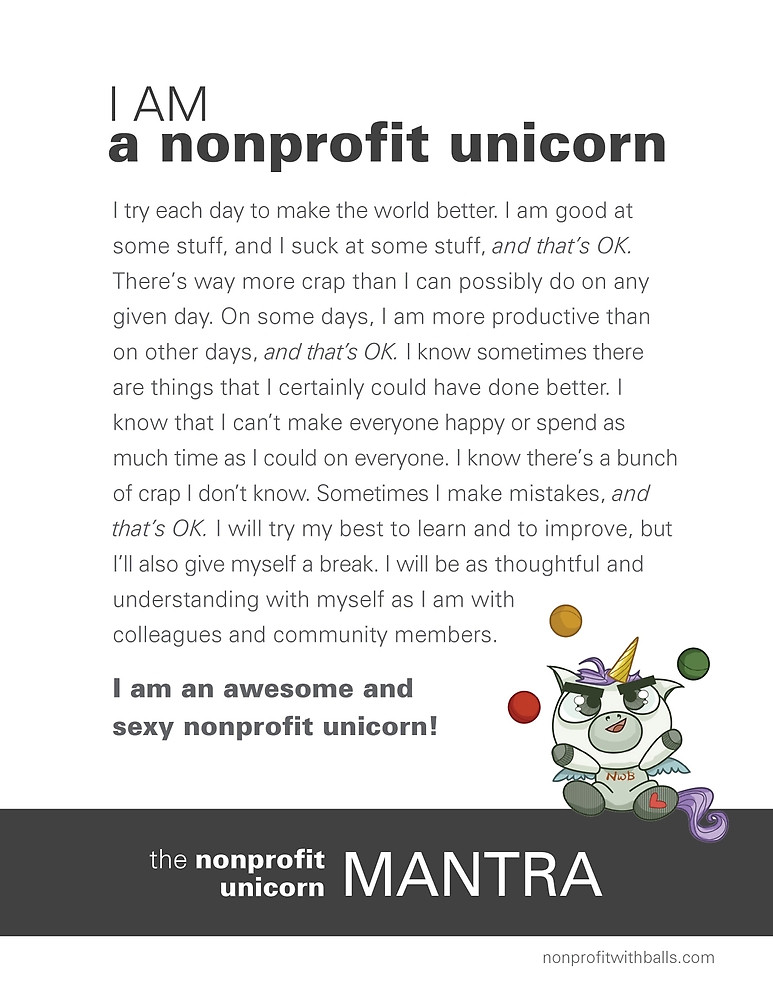
In reality, all of us can be unicorns, according to Vu Le’s Mantra.  In these hectic days, there are increasingly leaders who understand that it’s not the church’s job to program people to the point of exhaustion or shame.  Instead, we are called (my word, not Vu’s) to use our gifts to transform the world for good.  We will not always succeed at this, but there is grace and there is forgiveness and there are second and thousandth tries.    I wouldn’t say that we are all “awesome and sexy” non-profit unicorns but there is something glorious about wanting to make the world better.  (Some of us do this in the name of Jesus.)

The Pure Joy Olympics

ScoutI enjoyed reading this article over the weekend – especially the part about The Misery Olympics.  Our miseries not only take up a lot of time; they also take up a lot of energy.

Whether we are sharing that time we spent 3 days giving birth or that time we moved twice in one year or the time we lost our passport and our phone in Malta, we all compare and contrast our agony quotients.  Of course there are real traumas that take much time and effort to process:  the fiery crash, the cancer, the house flood, the unspeakable  betrayal.  But most of us do not live in the Misery Olympics every day.

Also over the weekend, there was a wedding.  It was holy and heartfelt and kind of perfect.  It was potentially complicated but – turns out – not so much.  It rained.  Nobody cared, really.  It was a testimony to hope and hospitality and goodness and the best that the Church can be.

Imagine spending more time talking about The Pure Joy Olympics.  That time we watched a team of little girls in ponytails run laps about the soccer field laughing at the end of practice on that perfect spring day as the sun was setting.  That time we thought __ might die but she lived and even got out of bed the next day.  That time a neighbor met an older lady who was lost on her way to a party and she offered to drive with her there and then walk home.  That time you sat surrounded by friends and felt enormously blessed.

The Pure Joy Olympics.  Let’s play.

This post is dedicated to my sisters in Christ – the brides.  Photo by TBC.

What the Names on Our Church Rolls Say

Sylvia PoggioliIra Glass, Sylvia Poggioli, Neda Ulaby, Kai Ryssdal, Jim Zarroli, Korva Coleman, Soraya Sarhaddi Nelson, Lourdes Garcia-Navarro, Dina Temple-Raston.

NPR fans know these fabulous names. We wake up to their voices.  Their stories inform and entertain us on the way to work. They reflect everything from name hypothesization trends to racial-ethnic diversity.  Yes, the NPR staff includes more common (to people in the U.S.) names like Michelle Norris (although she pronounces it MEE-shell) but most of their names reflect global poetry and the diversity of 21st Century life.

This article makes the point that – if we look over the names of our co-workers, neighbors, etc. – we might find that NPR names are not so different from the names of people we work with or live among.

I would say that this is not the case if we live in rural Nebraska or Kansas.  But I could be wrong about that.

Just for fun, take a look at the list of surnames in your church rolls.  Do they include the most common surnames in North America (Smith, Jones, Davis, Thompson)?  Do your rolls also include such common North American names as Gonzales, Garcia, and Cruz?  Do the rolls include twenty people with the same last name? (That’s a special kind of ministry.) Any Wangs?  Kims?  Nguyens?  Smirnovs? Məmmədovs? Wójciks?  Singhs? Khourys? Effiongs?

As I ponder what the church will look like in the next decade and beyond, I believe that our rolls will sound more like the NPR staff roster than the names on the church rolls of my childhood.  At least, this is my hope.

Image of Sylvia Poggioli.  Nobody says her name with more flair than Sylvia Poggioli.