One Wrong Move: Church Version

Life is full of existential moments when we might say to ourselves, “This decision could change the course of my life forever.”  (Note:  Winning or losing a Saturday afternoon soccer game is not one of those moments.  Passing or failing a particular math test is not one of those moments.)

High School Teacher Peter Greene’s blog post One Wrong Move speaks to this issue of children and young adults being so terrified of “the moment that defines their downward spiral into failure and squalor” that could possibly result in “living in a van by the river eating canned cat food warmed on a hot plate, alone and miserable and poor forever” that they become paralyzed and joyless.  Also Hanna Rosen’s article about Silicon Valley kids who have a suicide rate four to five times the national average is an important read.

Maybe we don’t live in Silicon Valley, but we know these kids.  One Wrong Move


I distinctly remember a moment in my twenties when I realized that a decision I was about to make (breaking up with someone I thought I would marry) would change the course of my life.  There are definitely moments like that for all of us.  I made a decision and it was terrifying.

And yet, even if I had made a different choice, my life would not have crashed and burned forever and ever amen.  The road would have been different, but I trust that God would have used whatever came around the bend.

Vibrant churches – if I might make the segue you’ve come to expect in this blog – are so sure of their call to make disciples and love their neighbors that they launch off into unknown territory less afraid of “making the wrong move” than they fear missing the cosmic point.

Dying congregations, on the other hand, are often paralyzed, fearing that The Wrong Move will send them off a cliff.  The wrong move – for a church – could be anything from daring to call a pastor who doesn’t look like them to investing assets to start a hospital in Haiti to moving from one church building to another. Some of these moves are so absolutely harrowing that we choose not to move at all.

But there also churches that make terrifying decisions:

  • I know a church which has decided to go for broke and spend their last chunk of financial assets to call a bilingual pastor for a three year designated time who – with their backing – will blitz the community around with whatever the neighborhood might need.
  • There are other churches with plans to start new congregations which will – in no way – directly benefit their own congregation.  But they are willing to invest in ministry that wholly benefits other people.
  • I know a church that’s moved to a new building four times in their long history.  When a building no longer matched their size or their needs, they moved to more appropriate spaces that allowed their ministry to shift for those times.  (If you know how hard it is to move pews, you know that moving sanctuaries is miraculous.)

So – back to our kids.

Yes, there are Huge Decisions we make in life that impact our futures significantly.  But not every decision is like that.  Let’s encourage our kids to take electives that make their hearts sing.  Let’s allow them to fail.  Let’s give them a break.

And as for us – the adults in the room – the same is true.  Let’s allow each other to make the kind of wrong moves that make our hearts beat faster.  And let’s be around for each other when everything goes south.
This Never Happened

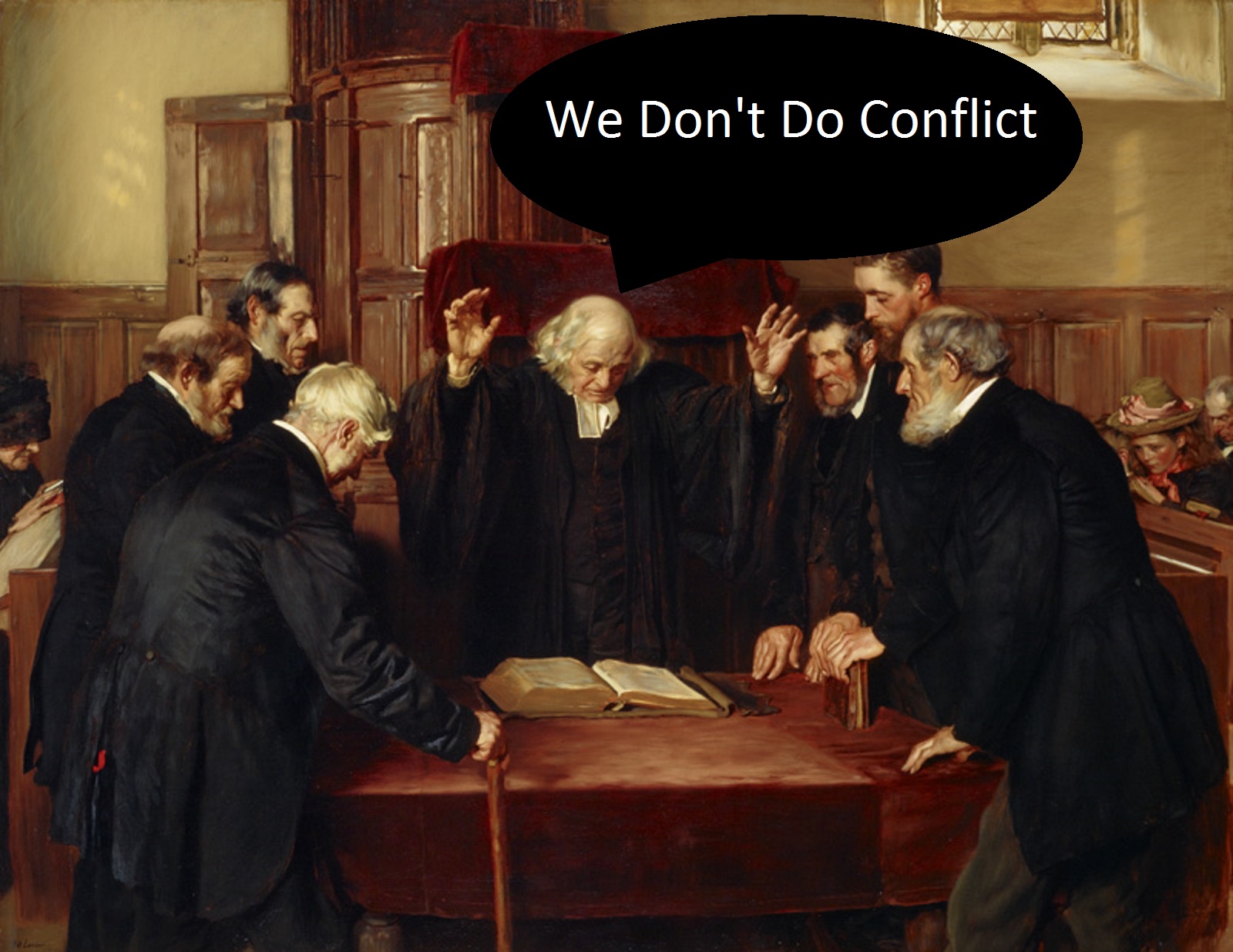
John Henry Lorimer, The Ordination of Elders in a Scottish Kirk

  • A Pastor Nominated Committee loved the idea of having a new
    Pastor in time for the Christmas next Winter.  How long could it possibly take to find the right pastor?  Twelve months is plenty of time.
  • A Pastor Nominating Committee became tired after a longer-than-expected search and settled on an okay choice.
  • A Congregational Nominating Committee could not find enough people willing to serve as elders and deacons, so they decided to elect nominal members who might be lured to “come back to church” if they were elected to be officers.
  • Nobody had the heart to ask a ineffective church leader to step down and so they promoted her to a position of even more power.
  • Nobody had the guts to ask a toxic leader to step aside for the sake of the peace and unity of the church.
  • A year passed.  Nobody tried anything new.  Nobody expected much.

Let’s enjoy such an ecclesiastically healthy year in 2016 so that we can honestly say that these scenarios never happened.  We called to something so much greater.


Image is The Ordination of Elders in a Scottish Kirk (1891) by Lorimer.

Set Somebody Free in 2016

On April 1, 2011 I outlived my mother.  In August of this year, I will outlive my dad.  I don’t take being alive for granted for many reasons because remembering my mortality sets me free.

America Windows Chagall

It occurs to me that most of our holidays and holy days are about freedom. The lives of Nicholas of Myra (St. Nick), Patrick of Ireland (St. Pat), and Valentine of Rome include tales of freedom.  Nicholas paid the dowries of three poor girls to save them from prostitution. Patrick escaped slavery in Ireland only to return as an adult to share the message of Jesus.  Valentine secretly married Christian couples although it was forbidden as married men were less likely to volunteer to be soldiers.

Our uniquely U.S.  holidays – Martin Luther King Day, President’s Day, Patriot’s Day, Memorial Day, Independence Day, Veterans Day – are all about remembering those who helped set us free or keep us free or dreamed that we might one day be free.

Labor Day marks the freedoms that labor unions created.  (Thank you for weekends.)  One could make the case that Halloween sets us free to try out new identities.

A sign that a holiday is not a real holiday?  When that “holiday” is about enslavement (i.e. Columbus Day) or burden (every Hallmark you-must-buy-a-card-for-this occasion.)  This means that Mother’s Day and Father’s Day are iffy.

Thanksgiving – in a perfect world – brings freedom from want to mind. And then there’s Christmas.  The real Christmas Come, thou long expected Jesus,
born to set thy people free.  Cultural Christmas, on the other hand, often enslaves us.

The beauty of a New Year is that it marks a new beginning when we are free to hope and dream and imagine what the future holds, and we trust that the future holds something wonderful.

In 2016, I will outlive my dad.  It’s also possible that my ministry will change.  A new president will be elected.  Maybe you will get a new job or a fall in love or get healthy or become a new parent.  It’s all so wonderful to ponder.  It feels good to be alive.

Perhaps the best resolution of all is that we spend this year setting ourselves or someone else free.


Image is Chagall’s America Windows (1977) in the Art Institute of Chicago which “celebrates the country as a place of cultural and religious freedom.”

De-Cluttering Part 2

Everything I Ever Let Go Of Has Claw MarksIt’s obvious that church buildings – like homes – need to be de-cluttered from time to time.  It’s less obvious that congregations need to de-clutter calendars, as I wrote about last week.

But the hardest things to de-clutter are those theological and ecclesiastical weights that 1) actually hurt our relationships with God and each other and 2) drive us to miss the point of life.  Learning about God is a lifelong endeavor that involves intentional activity.  Yes, sometimes we are not looking for a Big Cosmic Truth and then – boom – God cracks us over the head with an insight that helps those proverbial scales fall from our eyes one more time.  But usually, we need to make an effort.

I remember a parishioner who told me that everything he believed about God he learned by the Third Grade.  Frankly, it showed.

Reaching adulthood with a childhood understanding of God is an insult to God. Examples:

  • God is not magic.
  • God is not like Santa.
  • God does not control every steering wheel, gun trigger, or fist.
  • It’s not God’s fault when terrible things happen to us.

Although I love my particular denomination, some of our denominational stuff also gets in the way.  For example, last week Carey Nieuwhof wrote  5 Disruptive Church Trends that Will Rule 2016 and it surely makes my people nervous. Nieuwhof’s ideas are italicized and mine follow.

  1. Church online will become an advance, not just a supplement to or replacement for church.  Institutional Church fear:  If people don’t come through our doors, we won’t be able to know them/get a commitment from them.  How will we pay for the building?
  2. Preachers will preach less often.  Institutional Church Fear:  If our professional ministers aren’t – first and foremost – preaching, our Reformed Theology (at least for my denomination) is compromised.
  3. Experience will trump content.  Institutional Church Fear:  Do we even know how to create intimate community?  We’ve always self-identified as “friendly” but that’s not enough.  This might mean that the pastor’s job is totally different (from spending most of his/her time on creating a sermon to spending most of his/her time on equipping people to care for each other and make an difference in the neighborhood.)
  4. Passion will beat polish.  Institutional Church Fear:  But what about our efforts to create amazing worship and music experiences?  Can we actually teach people to be authentic?
  5. Only the most engaged and curious will attend.  Institutional Church Fear:  Do we have any idea how to minister to “the curious”? This means we might have to rethink our vocabulary and our expectations.  And are we okay with saying goodbye to nominal members who are on the rolls only for sentimental reasons or because they want a venue for familial events like weddings and funerals?

Please read Nieuwhof’s post.  What needs to be given away/tossed out/repaired and re-purposed in our own congregation’s or denomination’s culture?  When we figure that out, we will have our work cut out for us.  (And it won’t be easy, but it will be amazingly holy.)

Image Source.  This is a quote by David Foster Wallace.

The Best of 2016

wedding volunteersHyperbole is my middle name.  My family includes The Best Sister Ever and The Best Daughter Ever.  “You are the best” is my highest compliment.

And with that in mind, know that the following things were The Best in 2015 – at least for me.  If I were The Queen of All Things I would require everybody to choose/ponder/relish in:

  • The Best Article of 2015The Black Family in the Age of Mass Incarceration by Ta-Nehisi Coates from the October issue of Atlantic Monthly.  Look for the story about Celia.
  • The Best TED Talks on Race in 2015 – These were selected by the TED people, but they are excellent for personal edification or group discussions.
  • The Best Performance by a National Treasure in 2015 – Just the other night, Aretha owned it at The Kennedy Center Honors.
  • The Best (New to Me) Restaurant in 2015River Roast.  The vegetables.
  • The Best Wedding Venue in 2015 – Our backyard.  God’s gift of perfect weather made all the difference.

May 2016 bring the best in every way to you and your loved ones.  Thanks for reading my blog in 2015.  I really appreciate it.

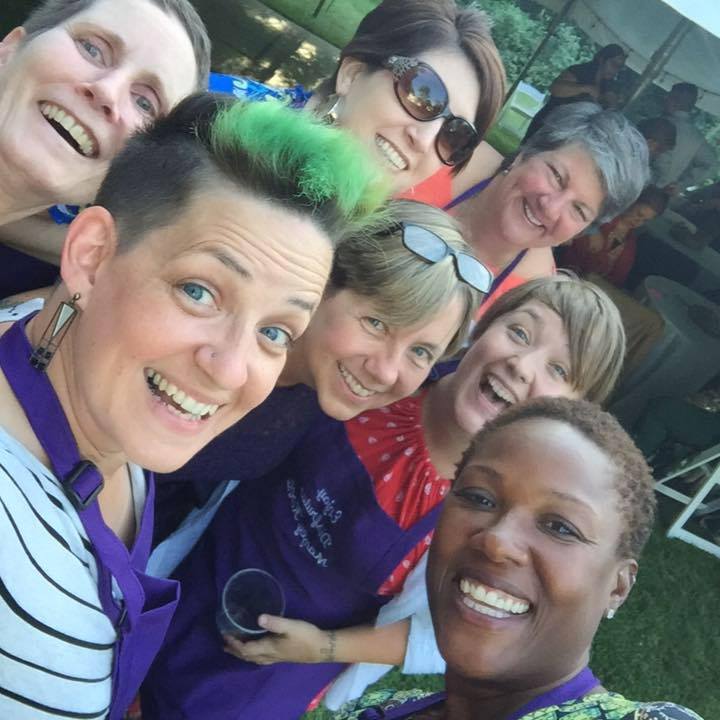
Image of The Best Wedding Volunteers on one of The Best Days Ever a girl could ever want.


Would You Give Your Child a Bullet-Proof Backpack?

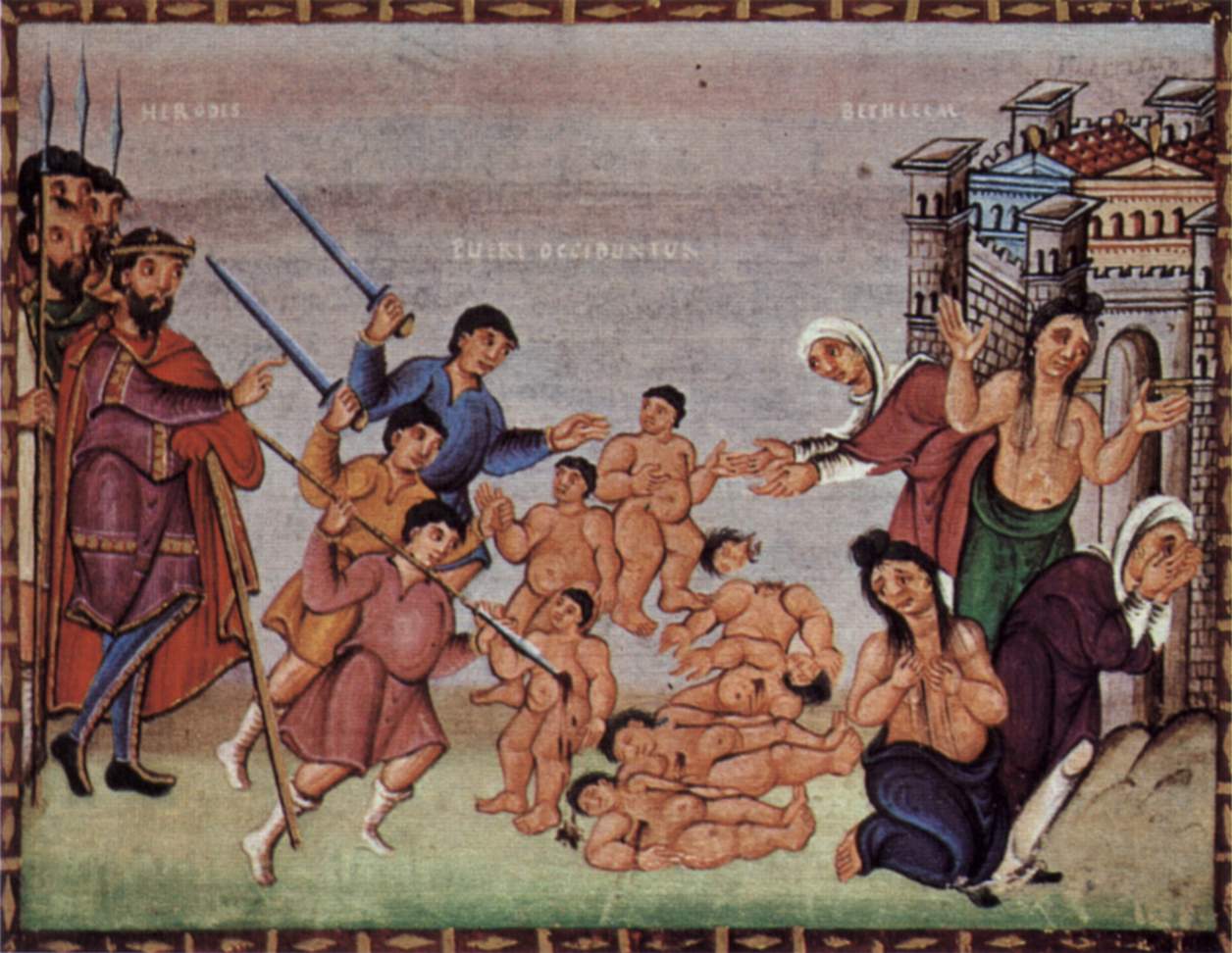
When Herod saw that he had been tricked by the wise men, he was infuriated, Kerald_(Meister_des_Codex_Egberti) Slaughter of the Innocentsand he sent and killed all the children in and around Bethlehem who were two years old or under, according to the time that he had learned from the wise men. Then was fulfilled what had been spoken through the prophet Jeremiah: 

 ‘A voice was heard in Ramah,
   wailing and loud lamentation,
Rachel weeping for her children;
   she refused to be consoled, because they are no more.’  Matthew 2:16-18

When I heard this interview on the radio Monday, it sapped me of Christmas spirit.  I wonder if Santa brought bullet-proof backpacks to many children last week.

Several public school systems across the country have introduced  ALICE training — Alert, Lockdown, Inform, Counter and Evacuate – into their staff development education.  And just weeks ago, students themselves were taught the ALICE program in Beaver, PA and Columbia, MO.

We are teaching our students history, math, and how not to freeze if an active shooter invades the cafeteria.  Could this actually be the new normal – that children will increasingly wear  ballistic resistance-tested backpacks?

Lord, have mercy. Christ, have mercy.  Lord, have mercy.

The radio interviewer expressed some of my own reactions to the dad who gave a bullet-proof backpack to his child – who attends a Christian school in Massachusetts.  Doesn’t this give a feeling of false security?  (i.e. you might not be shot in the back)  How do you explain to your child why he needs to wear a bullet-proof backpack?  Wouldn’t this add to a child’s nightmares?  Isn’t this a terribly sad way to live your life?

I’ve heard people say that they carry a gun just in case.  Would they actually use it in an emergency?  Would they be able to reach it?  What are the chances of someone threatening you so that you’d need a gun in the first place?

These are the same questions I would ask parents who outfit their kids in a bullet-proof backpack.  We live in a free and open culture but there are too many guns and too few mental health options.

This is a theological conversation that I hope our congregations will have in the new year.  Is there a place between theological naivete (God will protect my children if I pray hard enough) and theological que sera sera  (Whatever happens will happen so there’s nothing I can do about it) where we can be faithful?

Image is The Massacre of the Innocents from a 10th Century manuscript.


Does Jessica Jones Need an Exorcist?

God didn’t do this. The Devil did. And I’m going to find him.”  Jessica Jones

jessica-jonesImages of light and darkness are countless in this season.  Jesus versus Herod. The Resistance versus The First Order.

The light is infinitely better, although much of the world is drowning in darkness.  This is why we need Christmas.  This is why we need the Incarnation.  This is why we need Jesus.

In the thick of all this, I’ve been watching Jessica Jones on Netflix at the recommendation of lots of people.  Warning: it’s a little dark.

In fact, it’s so dark, I wonder if my soul can take it.  The dark side includes addiction, mental illness, PTSD, deceit, crime, and pure evil – sometimes all swirling together in a ball of chaos that feels bankrupt of any possibility for redemption. With Philippians 4:8 on the tip of my tongue, I wonder how healthy it is to subject my amygdala to Jessica Jones.  And yet, I love the storytelling.

Some of the darkness is ridiculous (Robyn and Rubin) and some of it is supernaturally powerful and deeply disturbing (Barty Crouch Jr. – yikes.)

Does evil exist in the world?  Absolutely.  It’s manifested in war crimes, mental illness, addiction, sexual violence, human trafficking, poverty, ignorance, and greed.  I don’t understand where it all comes from.  But it’s real.

I believe in the Light.  I have occasionally seen evidence with my own eyes, but we are called to believe by faith not by sight.  Maybe Jessica Jones needs an exorcist.  Maybe she needs a happy ending.  Maybe I should just remember she is  a fictional character.

But pastors know Jessica Jones.  She’s the parishioner who drinks to forget her past.  She’s gruff and for good reason.  She’s the person in the pews who has been abused beyond all measure and now she is trying to make things right, for herself and for others.

So I’m watching the first season and looking for light, just as I’m facing the new year fully expecting something brilliant to happen in the darkness.

Image source.

Image

What Would Make You Say, “I’d Like to be Part of This”?

Christmas Eve services are behind us and at least one of two things happened inCome Back Soon church on the First Sunday after Christmas yesterday:

  • Congregations celebrated one of the High Holy Days of Associate/Guest Pastors.  (Translation:  lots of people were on vacation including the regular preaching pastor and subsequently “the numbers were low.”)
  • The sanctuary was packed full of people so moved by Lessons & Carols that they couldn’t possibly stay away yesterday. (Translation: a miracle happened.)

Although some church regulars resent Christmas Eve Christians, maybe we should thank them, love them, and learn from them.  I especially wish we could interview them.

My first question:  “What would make you want to be a part of this church thing?

My unscientific research from talking with assorted family, friends, and strangers tells me that we sometimes forget that guests (i.e. people with no church experience, no family in town, no connections of any kind to a particular congregation) are among us even/especially on Christmas Eve.  Their suggestions:

  • Please don’t sing every verse of every song.  There might be six verses of “It Came Upon a Midnight Clear” but singing every one of them makes our eyes glaze over.
  • Basing the Christmas message on scholarly ideas that nobody cares about but the preacher = a missed opportunity. (Most people didn’t come to hear a research report about the fact that Jesus was probably born in the springtime or that Mary could have been as young as 13 years old, or that the shepherds could have been watching other animals along with the sheep in those fields.) 
  • While lots of people go for the music, the message and prayers are also crucial for offering hope, comfort, and peace.  Christmas Eve is a great time to offer a taste of The Good News of Jesus.
  • We’d like to know what else happens around here, but not in a way that sounds like a commercial (i.e. give us $.)

And speaking of “what else happens around here” this is one of the features of community that make people want to belong to that community.

People want to be moved and what seems to move us include these things:

  • The community serves people in need who may or may not be a part of that church.  I know a congregation filled with families – most of them straight – but they want to be a part of a church that reaches out to homeless LBGTQ kids.  They want their children to grow up in a community that cares about these kids.
  • Relationships are real.  It’s clear that people care about each other.  When somebody asks “How are you?” they expect to hear more than “Fine.”  It’s safe to share tough things (I lost my job. My daughter’s in rehab.  The cancer’s back.  I’m really lonely.) People look you in the eye.  (Note:  this is not the same as being pounced on as a potential member.)
  • Messages preached in worship, discussed in classes, prayed about in gatherings, and lived out in practice are heartfelt, applicable to daily life, and deep.

We hear a lot about “the new atheists” and others who have no interest in being part of a spiritual community.  But there are thousands of people who are indeed looking for a spiritual connection.  This is a good week to ponder how we will do Christmas Eve 2016.  Imagine welcoming people who have never crossed the threshold before.

Gabriel Still Speaks

Seeing Shepherds Daniel Bonnell“Do not be afraid; for see—I am bringing you good news of great joy for all the people . . .”

Just as Jesus was born during anxious times, we will celebrate Christmas 2015 in a time of bitter disagreements and alarming realities.

But there is enormous hope ahead – especially if we become the hands, feet, and voices of this Good News of Great Joy.  Part of being 21st Century agents of Good News involves knowing when to step back and when to step up.

Here are a couple thoughts about that.

  • Please step up if God is calling you to some scary new purpose.  Note that this is not about you/gaining power/getting a job/climbing a ladder.
  • Please step back if you are no longer called to serve a particular ministry or if the work sucks the life out of you. My friend John Vest wrote about this last week.  He (and Seth Godin) are right.
  • Please step up if you see injustice.  I was talking with a colleague yesterday about whether it’s best to pull out a camera phone or pull out of our indifference when we witness wrongdoing.  Of course, it depends. Sometimes we need to do what Feidin Santana did. Sometimes we need to do what Shannon Johnson did.  Both are life-threatening, but there are also non-life-threatening ways to step up: look people in the eye when we greet them, notice the invisible people out there, give when we can.
  • Please step back if you find yourself in a hot mess this season.  We are entering Ground Zero for family drama and many of us tie ourselves in knots trying to fix the unfixable.  Sometimes all we can do is take a step back and breathe and recognize that God is God and we are not.
  • Please step up if you can do some small thing for a neighbor.  Maybe just be there.

One of my favorite Gabriel sightings was a few years ago when I spent Christmas Eve in an ER with TBC awaiting test results for some mysterious (it-could-be-cancer) maladies.  As midnight drew near, a nurse entered the room with a broad smile saying, “Behold I bring good tidings of great joy!  The tests are negative!”  The nurse’s name tag said “Gabriel.”  Seriously.

We can be Gabriel too, not because we can save people but because God uses us to save people.  Merry Christmas Everybody.

Image Source.

Most Intriguing People of Faith in 2015

HH and I flipped through the TV last week and caught a glimpse of a couple Jesus Marc Chagallpeople Barbara Walters considers “most intriguing.”  Intriguing is an interesting word.

We can be intrigued by what’s beautiful, dangerous, mysterious, brilliant, or even evil.  BW considers celebrities to be intriguing.  I personally find people intriguing when they are stunningly thoughtful and compassionate in a world where it’s much easier not to be.  So, here are some of the folks I would like to know more about in the new year:

  1. Mandy Patinkin.  Actually I know a lot about this actor and have appreciated him for years.  But he has also become an outspoken supporter of the Syrian refugees and was spotted by someone (as reported on Facebook last week) helping a Syrian family navigate the NYC subway system.  He describes himself as “Jewish with a dash of Buddhist” belief.
  2. Larycia Hawkins. Dr. Hawkins is a Christian and an associate professor of political science at Wheaton College in IL.  I love Wheaton College.  I love that she wore a hijab to show support for Muslim women.  I do not love that she was suspended for saying that Christians and Muslims worship the same God.  Her dissertation was Framing the Faith-Based Initiative: Black Church Elites and the Black Policy Agenda and I’d like to hear more about that.
  3. Pete Docter.  The man who taught us it was okay to be sad in Inside Out is a Presbyterian Christian who also wrote Toy Story, WALL-E, and Up.  I love it when brilliant, creative people are unafraid to talk about their faith.
  4. László Nemes.  I’m not sure I can bear to watch his movie Son of Saul, but the interviews about the movie – written and directed by Nemes, who is a Hungarian Jew – make me want to try. Unlike other Holocaust movies, Son of Saul was created not to make us cry but to make us feel like we’ve been hit by a truck.  The world can be so unspeakably cruel, sometimes we need to face it and then try to change it.
  5. Ani Zonneveld.  I first heard Ani speak at the Wild Goose Festival in 2013 representing Muslims for Progressive Values.  She is an imam in Los Angeles and her ministry challenges what most Americans have heard about Islam.  Check her out.

What people of faith intrigue you?

Image by Marc Chagall of the very most intriguing person of faith.