What I Learned From a Viral Post

imagePeople care more about kidnapped school girls being sold into slavery than they care about institutional church dynamics.

This is the best news I’ve received in decades.

I write a churchy blog.  Even when it’s not overtly about church, it’s about church.  Through the years, some of my most popular posts have been about parenting, dating, politics, and one about a Middle School performance of The Wizard of Oz that was picked up by a newspaper.  But if you believe that everything is spiritual (as I do) and if your believe that the spiritual life is best lived out in community (as I do) then – at least for someone like me – everything is about church. Not the institutional/pipe organ/steeple/Sunday School/pulpit/’special music’/Vacation Bible School/diaconate/flower guild/stained glass window/narthex/chalice & patin/chancel/choir robes church.

But the prayer partners/midnight crisis/heartbroken/drug addled/crushed spirit/dead inside/hoping against hope/peace-that-passes-all-understanding/”I totally get you”/”I don’t get you at all but I’m not leaving you” church.

This is the church that Jesus lived and died and lives again for.  This is the church that came together over the past couple days to choose the names of kidnapped Nigerian schoolgirls and commit to pray for them until they come home.  Some of the thousands (!) who responded to my previous blog post via WordPress, Twitter, and Facebook do not even believe in God, but they still agreed to hold ‘their girl’ in thought.

My friends, this is the real church.  It’s full of skeptics, diversity, and a desire to Do Something.

Maybe all we can do is pray for the messiest, most horrible, most complicated, seemingly hopeless situations.  But we do it together en masse.  And the bottom line is that we care more about the most vulnerable people in our community than we care about sermon series and leadership organization.

And that’s what I learned the day my little blog had 20,000+ hits.

Image source.

Please Pick One

I picked Sicker Abdul.  Nigerian Protest

Her last name means “servant” in Arabic and I hope her first name is not a reflective of her first days on the earth.  She’s been identified as a Christian.  I don’t know her age.

She is one of the 180 girls named yesterday as among the students kidnapped from their school in Chibok, Nigeria on April 14th by Boko Haram.  Although 276 girls are still reported missing, we only have 180 names.  You can read more about the situation here.

The  kidnappers are reportedly selling these girls for about $12 each to potential “husbands.”

Praying for 180 girls by name – much less 276 girls – is overwhelming to me and my pathetic commitment to prayer. But I can pray for one Nigerian schoolgirl.  And I am asking you to pray for just one girl as well.

Please choose one name – one girl  – and pray for her until she is found.

I picked Sicker Abdul.  She’s my girl.

Who will you pick?

If it helps to hold you accountable, I invite you to share your choice in the comment section of this post.  Thank you.

Deborah ​Abge, Awa ​Abge, Hauwa ​Yirma, Asabe ​Manu, Mwa ​Malam Pogu, Patiant ​Dzakwa, Saraya ​Mal Stover, Mary ​Dauda, Gloria ​Mainta, Hanatu ​Ishaku Gloria ​Dama, Tabitha ​Pogu, Maifa ​Dama, Ruth ​Kollo, Esther ​Usman, Awa ​James, Anthonia Yahonna, Kume ​Mutah, Aisha ​Ezekial, Nguba ​Buba, Kwanta ​Simon, Kummai ​Aboku, Esther ​Markus, Hana ​Stephen, Rifkatu ​Amos, Rebecca ​Mallum, Blessing ​Abana, Ladi ​Wadai, Tabitha ​Hyelampa, Ruth ​Ngladar, Safiya ​Abdu, Na’omi ​Yahonna, Solomi ​Titus, Rhoda ​John, Rebecca ​Kabu, Christy ​Yahi, Rebecca ​Luka, Laraba ​John, Saratu ​Markus, Mary ​Usman, Debora ​Yahonna, Naomi ​Zakaria, Hanatu ​Musa, Hauwa ​Tella, Juliana ​Yakubu, Suzana ​Yakubu, Saraya ​Paul, Jummai ​Paul, Mary ​Sule, Jummai ​John, Yanke ​Shittima, Muli ​Waligam, Fatima ​Tabji, Eli ​Joseph, Saratu ​Emmanuel, Deborah Peter, Rahila ​Bitrus, Luggwa ​Sanda, Kauna ​Lalai, Lydia ​Emmar, Laraba ​Maman, Hauwa ​Isuwa, Confort ​Habila, Hauwa ​Abdu, Hauwa ​Balti, Yana ​Joshua, Laraba ​Paul, Saraya ​Amos, Glory ​Yaga, Na’omi ​Bitrus, Godiya ​Bitrus, Awa ​Bitrus, Na’omi ​Luka, Maryamu Lawan, Tabitha ​Silas, Mary ​Yahona, Ladi ​Joel, Rejoice ​Sanki, Luggwa ​Samuel, Comfort ​Amos, Saraya ​Samuel, Sicker ​Abdul, Talata ​Daniel.
Rejoice ​Musa, Deborah ​Abari, Salomi ​Pogu, Mary ​Amor, Ruth ​Joshua, Esther ​John, Esther ​Ayuba, Maryamu Yakubu, Zara ​Ishaku, Maryamu Wavi, Lydia ​Habila, Laraba ​Yahonna, Na’omi ​Bitrus, Rahila ​Yahanna, Ruth ​Lawan, Ladi ​Paul, Mary ​Paul, Esther ​Joshua, Helen ​Musa, Margret Watsai, Deborah Jafaru, Filo ​Dauda, Febi ​Haruna, Ruth ​Ishaku, Racheal Nkeki, Rifkatu Soloman, Mairama Yahaya, Saratu ​Dauda, Jinkai ​Yama, Margret Shettima, Yana ​Yidau, Grace ​Paul, Amina ​Ali, Palmata Musa, Awagana Musa, Pindar ​Nuhu, Yana ​Pogu, Saraya ​Musa, Hauwa ​Joseph, Hauwa ​Kwakwi, Hauwa ​Musa, Maryamu Musa, Maimuna Usman, Rebeca Joseph, Liyatu ​Habitu, Rifkatu Yakubu, Naomi ​Philimon, Deborah Abbas, Ladi ​Ibrahim, Asabe ​Ali, Maryamu Bulama, Ruth ​Amos, Mary ​Ali, Abigail Bukar, Deborah Amos, Saraya ​Yanga, Kauna ​Luka, Christiana Bitrus, Yana ​Bukar, Hauwa ​Peter, Hadiza ​Yakubu, Lydia ​Simon, Ruth ​Bitrus, Mary ​Yakubu, Lugwa ​Mutah, Muwa ​Daniel, Hanatu ​Nuhu, Monica Enoch, Margret Yama, Docas ​Yakubu, Rhoda ​Peter, Rifkatu Galang, Saratu ​Ayuba, Naomi ​Adamu, Hauwa ​Ishaya, Rahap ​Ibrahim, Deborah Soloman, Hauwa ​Mutah, Hauwa ​Takai, Serah ​Samuel, Aishatu Musa, Aishatu Grema, Hauwa ​Nkeki, Hamsatu Abubakar, Mairama Abubakar, Hauwa ​Wule, Ihyi ​Abdu, Hasana Adamu, Rakiya ​Kwamtah, Halima ​Gamba, Aisha ​Lawan, Kabu ​Malla, Yayi ​Abana, Falta ​Lawan, and Kwadugu Manu.

Image source.

Solo Pastors in The 21st Century Church

My denomination defines “solo pastor” as one who does not supervise other blue_solo_cuppastors on a church staff.  He/she might supervise organists, educators, office administrators and sextons, but – at least according to the PCUSA – he/she is not a “Senior Pastor” or “Head of Staff.”  In other words, a solo sings alone.

Increasingly, there are more and more “solo pastors.”  (Attention Multi-Pastor Congregations:  this might be your future.)

According to 2012 PCUSA statistics:

  • About 3100 congregations have less than 50 members
  • About 2400 congregations have 50-100 members
  • About 2200 congregations have 100-200 members

Of all those congregations with 200 members or less:

  • About 3200 of the churches have an installed (‘permanent’) pastor
  • About 2600 of the churches have a temporary pastor (temporary supply, stated supply, interim, supply preacher)
  • Almost 2000 of the churches have no pastor at all (so they rely on guest preachers each Sunday and a neighboring pastor moderates their Board of Elders)

In other words, there are quite a few solo pastors out there, and as several congregations are downsizing their staffs due to financial issues, the numbers of solo pastors will increase in the coming years.

There are many congregations in rural areas without pastors, I believe, because while the work of a solo pastor is similar in both rural and not-so-rural areas of the country, the rural pastor has no place to “get away” and refresh where he/she can be anonymous and truly free, unlike the pastor who can head to the other side of town and have a cup of coffee without running into a parishioner who wants to chat.  (Long sentence, but agonizingly true.)

I’ve been a solo pastor in both a small rural church and a medium-sized suburban church, and I can tell you that – in addition to preaching (every Sunday), teaching Bible studies/confirmation/new members classes, supervising paid and volunteer staff, writing liturgy, moderating Session, administrating, recruiting/training leaders, leading youth group, offering premarital, prebaptism, & general counseling, and assisting strangers who come through the doors in need of rent/food/gasoline/social services – my tasks also occasionally included:

  • turning on the heat/AC
  • locking/unlocking doors
  • vacuuming floors
  • taking out trash/recycling
  • typing bulletins
  • copying & folding bulletins
  • dealing with plumbers/roofers/electricians
  • catching vermin (ask me about Possum Protective Services)
  • filling the baptism water pitcher and setting up communion

Obviously, most of those tasks are done on an emergency basis only, and other paid/volunteer church staff perform those tasks.  But my point is that A Solo Pastor works very hard.  I would argue that it’s harder to be a solo pastor than a multi-pastoral staff pastor, if for no other reason than loneliness.

I remember visiting Riverside Church in NYC during my haven’t-learned-to-delegate years just after ordination, and my life was changed forever when I noticed that one team of volunteers unlocked doors, and another team welcoming worshippers, and another team passed out bulletins.  I almost burst into tears.  I usually did every one of those things on a given Sunday – plus the other stuff.

It was quite possible to have a life and be a solo pastor in the 1950s church because:

  • There were scores of women who “didn’t work” during the day and they happily volunteered to do everything from running the Sunday School to organizing mission projects.
  • There was less counseling and working with transients because people kept their addiction/abuse/mental health/relationship issues to themselves.  (In towns where everyone was related to everyone else, you didn’t dare share your problems with anyone but family.)
  • There were fewer program expectations.
  • The culture was homogeneous and already “churchy.”  We didn’t have to translate Western Church World to guests who had never been taught the language.

Unlike the work load for a 1950s solo pastor, the work load for a 21st Century solo pastor is not sustainable.  Especially for pastors of small churches who – contractually – work only 10 or 20 hours a week, they are most likely getting paid for only half the work they do.  It’s impossible to write a sermon, lead worship, prepare for and officiate at a funeral or wedding, lead a Bible study, and answer phone calls/emails in 20 hours, much less 10.

I saw a job description for a “PT Interim Pastor” recently that included 30 pastoral duties expected of the pastor each week.  Impossible.

In spite of the dreadful way this all sounds, I see this phenomenon of Lots of Work/Too Little Time to be Good News.  We are forced to be not only a different church in the 21st Century; we are forced to be more like the First Century Church.

According to scripture, the pastor’s task is to equip others for ministry. (Ephesians 4:11-12)  This is quite time-consuming in and of itself, so it involves a huge culture shift.  But what if . . .

  • The solo pastor took a season to spend more time teaching others to pray out loud, write & deliver homilies, offer basic pastoral care than doing these tasks herself/himself?  (Call your Presbytery or a consultant for help with this.)
  • The solo pastor relinquished traditional preaching once/month to allow a different kind of sermon?  (Examples: an elder shares a snippet of her faith story or a community leader (police officer, guidance counselor) shares what he does all week?  This informs the congregation of possible needs in the community. Invite the music leaders to lead in singing songs that speak to a particular theological doctrine)?
  • The solo pastor connected with other pastors (not currently serving congregations) to take on – for a season – the confirmation class or a Bible study or training the Deacons or  . . .?

Yes, all these ideas are also labor intensive, but we have got to let go of some of our solo-pastor tasks.  And – ATTENTION PARISHIONERS – we must allow our pastors to relinquish many of the tasks we have previously expected of them.

Let. Them. Go.

Let the tasks go that we’ve taken on which do not need to happen (or if they are necessary, someone else will pick them up.)  Let the people go who have unreasonable expectations of their pastor.  Let our own pastoral addictions to perfection go.

The future church will have more solo pastors and more PT/bivocational pastors.  And the shift begins now (or yesterday.)

Culture Is How We Do Things

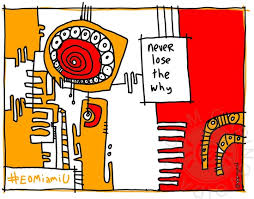
We pastors work with many people who spend most of their time in a variety of other cultures:  Never Lose the Why

  • Corporate people
  • Secular non-profit people
  • Government people
  • Blue Collar people
  • Academic people

All of us have experienced being in a church leadership discussion and someone has said,

  • “In the corporate world, we do it this way . . .”
  • “That’s how we do it at the Red Cross/PTA/ESL Office/Shelter . . .”
  • “If we were a doctor’s office, we’d . . .”
  • I know that my gym/salon/school/shop always . . .”

We in the church are informed by everybody’s culture, and the dominant culture depends upon the context and DNA of the congregation.  Sanctuaries surrounded by the 1% take on a corporate culture.  Sanctuaries surrounded by corn fields taken on a farm culture (which means – in 2014 – people are in survival mode . . . unless the farming in their community has become corporate.)

Sometimes secular culture helps spark necessary shifts in Church World. Sometimes it makes us coarse and modeling little resemblance to Christ.

What if we tried to shift the culture of our congregations, regardless of what that culture might be?

Helpful Elder:  “In terms of letting the church secretary go, I know that in the corporate world, we hand her a pick slip and tell her to pack their things and be out of the office in an hour.”

Pastor:  “But do we want our church to model a corporate culture or something that looks more like the kingdom of God?”  

***

Church Personnel Chair:  “It’s not our problem if the pastor’s child is sick.  He needs to be in the office for regular office hours.  This would never fly at the bank where I work.”

Personnel Committee Member:  “But we are not a bank.  We are a church.  How can we help our pastor in this difficult time?”

See what I mean?  I’m not saying that we in the church need to become ooey gooey Nice Machines without expecting professionalism and accountability. But people expect more from the church.  There is a hope-against-hope that people who self-identify as followers of Jesus would display characteristics that are more Christlike and less Trump-like.

What is the dominant culture in your spiritual community?  Corporate? Academic?  Individualistic?  Family-centered? Political? Macho? Kingdom of God?  And how would you like your church’s culture to change?  (Not rhetorical questions.  I’d really like to know.)

Image source.

What I Learn From New Pastors

imageOne of the most gratifying privileges in my ministry is spending time with new pastors. Specifically CL and I spend time with the 23rd New Pastors Cohort in our Synod. Two retreats per year for three years plus a twice/year gathering of “Jan’s Group” – our cohort-within-the-cohort.

I love these new pastors – not just because they are smart and passionate and interesting, but also because they allow me to learn from them as surely as they learn from each other. It’s better than Easter dessert.

We just returned from retreating for three days and here are some of the things I learned that I hope – in particular – my more seasoned colleagues will consider as we are all attempt to expand the reign of God as The Church:

  • Associate Pastors have not been called to “help the Head of Staff” as if their purpose is to be Robin to the church’s Batman/Batwoman. They have their own calling, and their gifts are best used when collaboration is the cultural norm.
  • If the future of professional ministry is bi-vocational, we’ve got to help these colleagues figure out how to balance life and (at least) two separate vocations. Working seven days/week is not sustainable. Connectional denominations – by virtue of our DNA – must help out our bi-vocational colleagues. Offer to preach one Sunday, to teach a class, to cover for emergencies when our colleague needs a break.
  • It takes a while to figure out a work/life rhythm for any pastor. Church members can help by remembering that most of what pastors do is never observed by church members. Church Personnel Committees: talk with your pastors about what feeds them, what frustrates them, what they are doing that is not on their job description. Don’t try to check out their every move as if you don’t trust them.
  • Any church member committed to Being the Church (as opposed to belonging to some kind of spiritual club) needs basic training in How to Talk to Strangers, How to Welcome People Who Don’t Look Like We Look, How to Pray Out Loud, How to Imagine a Church Beyond Attendance, Building, and Cash.

That’s just the beginning of what I learned or re-learned this week from my young colleagues. We are a better church because of the ministry of new pastors who never grew up in the heyday of the Mainline.

Everyday Racism

no-racism-marc-lanclusThe posts this week will be limited until Thursday because I’m headed to a retreat of New Pastors. In preparing for the longish drive, I took my car for an oil change Friday.

There were three of us in the waiting room: two Black women and one White woman. (That would be me.)

I was called by the mechanic to chat about my car needs:

Mechanic (to me, The White Woman): Ma’am, I’d like to talk to you about your Volvo.

Me: Actually, I’m the 2006 Honda with no grill.*

Mechanic: You aren’t driving the Volvo?

Me: Nope. One of those other ladies must drive the Volvo.

I was wearing yoga pants and my Cindy Bolbach for Moderator t-shirt. The Volvo lady was wearing a really nice suit. So, why in the world would someone think I was the owner of the Volvo, unless it was because ______?

Image source.

*Someone took my car grill a couple weeks ago. Really.


Things I Don’t Get

The length of these posts is proportionate to the level of my exhaustion.  So this will be brief.Bacon-Starry-Night

I like for things to make sense and sometimes they just don’t.  Perhaps you can help.

Here are three things I simply do not understand:

  1. Lardo.  It might be a hipster food, but we know it’s just Italian lard, right?  I don’t care if you put rosemary on it.  It’s. Still. Fatback.
  2. Pork Weaponry.  Bacon is also a hipster food and – for that and other reasons – it doesn’t belong in the shoes of unsuspecting Muslims.  Honestly, who does that?  This guy.
  3. Maniacal Compartmentalising.  How can someone preach such an exquisite sermon that the deepest parts of a human being’s soul are lifted beyond measure, while secretly eating human babies in dark alleys when the sun goes down?  Okay, maybe this dichotomy is extreme.  But how do we get our heads around human contradictions?  The brilliant doctor who self-medicates with MDMA.  The conservative politician who secretly hangs out at bath houses.  All of us are a bundle of secret contradictions, but some of us have taken it to a new level that requires special attention.

Helpful readers (and especially you lurkers out there):  feel free to impart your wisdom.

Image:  Yes, that’s Starry Night created out of bacon.

How Do We Tell People “This Isn’t Your Gift”? (When They Believe It Is)

Easter Sunday offered multitudinous opportunities to share kudos with people:flannery-o-connor-4-297x300

  • You look awesome in those pink and green pants.
  • You blew the roof off with that sermon.
  • Your choral anthem was better than Prozac.
  • You totally know how to corral overly-sugared kids.
  • Your leg of lamb is to die for. (Get it?)
  • Your mousse is amazing.
  • Your prayers were so soothing.
  • You play a mean trumpet.
  • Nobody can arrange flowers like you.

It’s much harder to share more difficult news with friends: that they will never sing like Aretha, they will never write like Flannery, they will never preach like Nadia.

Especially when someone believes that he or she is gifted and called to serve as a pastor, receiving constructive criticism about pastoral competencies can feel crushing.  But the truth is that there are almost countless competencies that a professional pastor needs.  (The PCUSA has identified only 33.)  And while someone might be enormously gifted in pastoral care, that same Bedside Manor Rock Star might be an uninspiring preacher.  No pastor has it all.

So, how do we lovingly share with someone that “this isn’t your gift” especially when he or she believes it is?

Yesterday’s post was about failure and the importance of taking risks in life and ministry – even when we fail.  We learn more from our failures than our successes.  But certain circumstances are necessary to learn through, rather than being devastated by, our failures:

  • We need to trust each other.  If I trust you, you can tell me anything and I will take it very seriously, even if it hurts.
  • Ministry is not about us and what we want.  It’s essential to ask, “What’s best for the community?” instead of “What’s good for me?”   I might want to be a celebrity preacher, but if people are not transformed by my preaching, then maybe it’s not my gift.
  • Knowing what are not our gifts is just as crucial as knowing what our gifts indeed are.  I am not a money person.  Don’t make me your treasurer.  There are quite a few other  not-my-gifts but I’ll keep those to myself.
  • We can work on those things that are not our gifts and improve in our areas of incompetency, but honestly, God loves us even if we aren’t perfect.  Who knows? Maybe Jesus couldn’t carry a tune.   (But it’s fun to imagine him singing like a Middle Eastern Rufus Wainwright.  Really.  Picture it.)

It’s a good friend who can look us in the eye and say:  “This is not your gift, but it’s okay.”  “You are great at ___ but you really do suck at ___.”  “Maybe this is just not a good match.”  “You don’t seem happy doing ____.”  

Everybody is called to ministry.  But everybody is not called to every ministry.


Image source.

Let’s Get Together & Fail at Something

So imagine that you and a group of friends feel a gnawing tug to try somethingEpic Fail new in your church community:

  • Bible study in the bakery
  • Steel drums in worship
  • Women’s retreat on a sailboat
  • VBS in a nature preserve
  • New church in the bowling alley

What would keep us from doing it?

  • No money?
  • No back up?
  • No guts?
  • No imagination?

This article asks a great question for churches: Are We Failing at Failing? I believe the answer would be a resounding Yes. We seem to be so afraid of failure that we don’t dare try something new, even if it would make disciples and love our neighbors.

Are we so paralyzed by fear of failure that we would continue to choose easy but stale over difficult but inspiring? Are our own congregations (ostensibly “Communities of Grace”) the first to savage us when our plans fizzle? Are we more afraid of displeasing church bullies than displeasing God?

In these days of financial strains for many of our congregations, the fear of “wasting money” is overwhelming. It’s not uncommon for higher judicatories to frown upon creative projects – even well thought-out and fiscally responsible projects – for fear of an epic fail.

Jesus, for one, was considered a human failure in the eyes of both his enemies and his followers, at least until something amazing happened on that first Easter. The Pentecostal coming of the Holy Spirit sealed the deal. And we who sang resurrection songs just a couple days ago have already forgotten that God works through unlikely people and situations.

Also God seems to be a big fan of risk. Sometimes the risks seem foolish, but occasionally they have an amazing impact in terms of making earth a bit like heaven.

What if we started pondering now – in this season of Easter – some new ministry that might be planted and nurtured when the season of Pentecost rolls around?Who’s up for a creative launch?

Image source.


Debriefing Easter Sunday

And now we rest.

Pastors, church musicians, and other congregational leaders find themselves with that shot-out-of-a-cannon feeling this morning – Easter Monday.  While regular people are overcoming a Peeps hangover or planting pansies, church people are discerning “what worked?” and “what didn’t work?”

Here are a couple questions to ask in the post-Resurrection Sunday Debrief:Memorial-Boston-bombing

  • Were questions asked that real people are asking?  I know a pastor whose Easter message – several years ago – asked the question: “Did Jesus really rise from the dead on a Wednesday instead of a Sunday?”  Honestly, who cares about that?  What about questions like:  “How do I find resurrection if my life feels inconsolably broken?”
  • Did you address the world beyond your congregation?  250 souls are still missing from the April 16 of a ferry accident in South Korean, most of whom were high school students.  On April 15, about 100 Nigerian girls were kidnapped from their school, and although most of them were freed on Wednesday, the experience has left them traumatized.
  • Did you address where resurrection is needed in your own neighborhood?  Are your police officers tracking down heroin traffickers in your town?  Are your school teachers working with students who experience tenuous home situations?  What are the unemployment figures for your suburb?
  • Was the church real?  Were life problems glossed over in favor of a “Happy Easter”?  Was everybody about smiles and candy without noticing the people for whom Easter is a difficult holiday?
  • Was the church more than merely friendly?  Did guests experience authentic hospitality during which they felt genuinely welcomed, and not just become they could add to the offering plate? Were announcements, liturgy, and Easter activities shared with an eye on those who have never been in church before?

Many of our congregations do not debrief at all.  Many others debrief on topics such as this:  “Did we have enough Easter Eggs for the hunt?”  “Was the sermon too long?”  “Were the lilies arranged well?”   While these questions might be helpful in terms of cursory issues, the bigger issues involve whether or not the broken were invited to find wholeness and the dead-inside glimpsed resurrection.   The bigger questions for the debrief involve whether or not our efforts revealed something transformational and holy, as opposed to something entertaining and self-serving.

Perhaps the biggest question:  Did we help people see Jesus?

Mary Magdalene went and announced to the disciples, ‘I have seen the Lord.’  John 20:18

Image from our United Methodist sisters and brothers in Boston.