Author Archives: jledmiston

Brutal Hits

Everything is looking pretty great.  We feel like we are on track.  God seems to be speaking so clearly.  And then . . . boom.

  • You’ve reached a point of security and satisfaction in your work, but then a new boss comes along and gaslights you.
  • You’ve been told you are “our first choice” but then the job goes to someone else.
  • One day your house is your home.  And then water comes creeping through your doors and windows.
  • Kids and spouse are healthy.  And then they aren’t.
  • Life looks like a fairy tale.  And then it doesn’t.

Kate Bowler helps. But she can’t take away that terrible “I can’t breathe” feeling.

This is where community comes in.

I have often said that there are two signs of true friendship:

  1. I can make dying animal sounds all night and you sit with me and never try to Eliphaz me. (Biblical reference here.)
  2. I can call you at 2 am and say, ‘There’s a naked dead man on my kitchen floor‘ and you say, ‘I’ll be right over.’

Good community just sits with us when we’ve received a hit.  Really good community knows our most helpful Sooth Me Language (much like love language but with more intoxicants):  fragrant flowers, coffee, ice cream, wine, sunshine, candles, ocean.

Note: Intoxicants soothe only temporarily.  True recovery takes the rest of our lives.  Yes, we want to die.  We feel like we are going to die.  But please don’t die before your time. (I’ve had to repeat this advice to myself too.)

Good community doesn’t always come from the obvious people.  Sometimes the perfect stranger comes along.  And we cannot make ourselves be someone else’s community if they don’t want us in that role.

It’s about having each other’s back.  Have somebody’s back today.

Image source.

Working So Hard

What will be the most important thing you will do today?  (We may not know until the day has ended.)

I asked this question at a Meaning of Life class for adults years ago and it was interesting what people said:

  • Read my child a bedtime story.
  • Cleared out my Inbox.
  • Cooked a healthy dinner.
  • Negotiated a contract.
  • Wrote a bunch of Thank You notes. (Who was that person?)
  • Finished planning for a conference.

At the end of the day, I try to name one thing that tranformed me or my Presbytery (where I work.) I’m pretty good at naming the transformations at work.  Not so great at self-transformation, but trying to focus on this a bit more.

The best use of my time at work is culture-shifting work:

  • A congregation realized that the Presbytery indeed wants them to thrive.
  • Relationships between congregations are bolstered.
  • Another pastor gets our new organizational structure.
  • Connections were made between people, congregations, community organizations.

I’m trying to shift my personal culture as well:

  • Read more novels. (Note: The Testaments is excellent.)
  • Write more Thank You notes – not because I have to but because I want to.
  • Exercise way more.
  • Eat less sugar.  (This would be a huge genetic shift.)
  • Stop working so much.

That last one is the trickiest.  With HH still living several states away it’s so tempting to work All The Time.  The truth is that I don’t have to prove myself at this point in my life (although I still try to do that.)  How about you?

I can tell you all day long that you are worthy of relaxation and staring-into-space time.  But many of us work to show how hard we are working – even if our calendars are filled with activities with little impact.

What’s the most important thing you will do today?  I hope it will be transformative and not just for your office/workplace.

Image of one of my favorite places to stare into space.

This Will Forever Change the Way We Preach, Teach, & Lead

Do you have 4 minutes?  Watch this. (Password: inlighten)

Remember Nooma?  (This is different.)

Scott Galloway is the Founder and Executive Producer of InLighten Films which warms this Presbyterian’s heart because:

  • These short films are based on The Revised Common Lectionary.  (Tip of the hat to Protestant Mainliners.)
  • They are indeed short – 3 to 5 minutes long.
  • They are professionally produced and fresh.
  • They can be used for sermon openings, Sunday School, youth/young adult groups, and Bible studies.

Scott also happens to be a Presbyterian from Davidson, N.C. and he totally gets that without stories it’s very difficult to capture the imagination and hearts of busy 21st Century humans.

Most of our churches – especially our beloved Mainline congregations – need a jolt that reminds us who we are and why we were created.  I believe that these short films might just be that jolt that moves us from tired preaching and teaching to something more spiritually moving. Check them out.

This one is my favorite.

Top image from the InLighten short film Lost and Found based on Luke 15:1-10. Bottom image from the InLighten short film Brunch.

There’s No Such Thing as Fake News

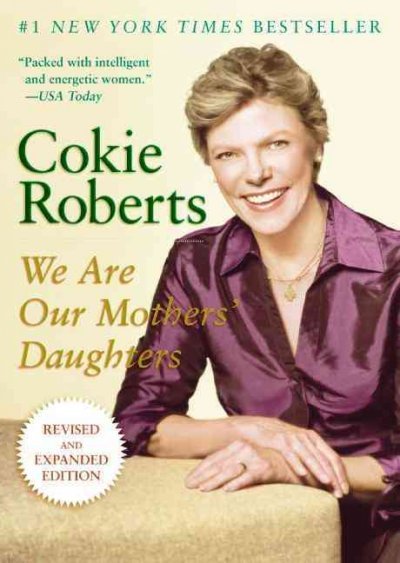
“There’s no such thing as ‘fake news.’  It’s either news or it’s fake.  There are no alternative facts.  They’re facts or they’re not.”  Cokie Roberts*

Pontius Pilate famously asked, “What is truth?” at the trial of Jesus.  And it’s an excellent question. We tend to believe that truth is factual.

These are facts: The sun is a star.  It reached 90 degrees in Charlotte yesterday.  DJT is President of the United States.

There are also incomplete facts:  There is a new allegation against Supreme Court Justice Brett Kavanaugh reported over the weekend by The New York Times.  But the writers omitted that the woman who was allegedly assaulted doesn’t remember the event.  Just because she doesn’t remember doesn’t mean that she wasn’t assaulted.  But it’s important to report all the facts.

There are lies reported as facts: Although the President declared that he was exonerated by The Mueller Report, that was actually not factual according to actual The Mueller Report.

Truth is essential.  Sometimes truth can shift as new facts are revealed.

But this post is about honoring journalists who share the news based on fact-checking.  And I’m talking about real journalists – not television personalities who expound on politics and other world news without benefit of facts and training as a journalist.

I had no idea how much I would miss Cokie Roberts until I heard she has died yesterday from breast cancer complications.  Between the breast cancer – my special enemy – and the fact that she lived 22 fewer years than her mother, it felt especially heavy.  But what a great life.  And now – I trust that she knows what happened to her father long ago.

It’s a fact that Cokie Roberts was a national treasure.  Or at least that’s what I will always believe to be true.

Image of one of Cokie Roberts’ books where she first mentioned being treated for breast cancer.  It was 1998.  Thanks be to God for allowing her to be with us an additional 21 years. *Quote from an interview with Kentucky Educational Television in 2017.

Hashtag Lucky?

Hashtag Blessed is sometimes used to humblebrag as in:

  • Had a great time at our condo in Hawaii #Blessed
  • Can’t believe I’ve been promoted to Senior Vice President! #Blessed

Blessings are undeserved experiences of grace and the truth is that many of us secretly believe that – actually – we deserve our “blessings.”  In this TED Talk by Mark Sutcliffe, he suggests that:

  • Our culture’s “I worked hard for all this” narrative is often self-deception.
  • On the day we are born, either we won the ovarian lottery or we didn’t.
  • The luckier we are at birth, the luckier we continue to be in life.
  • Life success is not a zero sum game.  We don’t lose if more people have a change to win in life.

If we see our successes as a result of being #Blessed then we might make the false assumption that those who are not #Blessed are lazy and irresponsible.

It’s true that:

  1. Most of us have worked hard for what we have.  (Also I know many people who work twice as hard and will never climb out of poverty because some of us started on third base and some of us started in the pit behind the dugout.)
  2. Some people have great opportunities they don’t take and therefore life is harder.
  3. God indeed blesses us. Every day.  Beyond measure. Even if we struggle in life.

But here’s the reality:  The federal minimum wage is $7.25.  This is okay if you are sixteen years old working at Burger King while living with your parents who pay for your housing, food, clothing, transportation and phone.

If you are a single adult trying to support yourself, $7.25 for 40 hours a week is $13,638.38 annually after taxes.  There is most likely no health insurance and no paid vacations or paid sick days with that job.

Pitiful Fact –  The following states pay the federal minimum wage/they do not have a higher state minimum wage:  Alabama, Georgia, Idaho, Indiana, Iowa, Kansas, Kentucky, Louisiana, Mississippi, Nevada, New Hampshire, North Carolina, North Dakota, Oklahoma, Pennsylvania, South Carolina, Tennessee, Texas, Utah, Virginia, Wisconsin, and Wyoming.

And too many of us believe that the working poor are merely not #Blessed.  Actually, they simply didn’t win the genetic lottery at birth.  They are not #Lucky.

I have a friend who was sold for drugs by her mother from the age of five through age 8 which is when she was put in foster care.  Upon aging out of foster care, she lived with a boyfriend and she got pregnant.

So far – if you are adding up the traumas: 1) she was assaulted as a child, 2)raised without loving parents until age 8 and 3) pregnant before she was ready.  She had no education higher than high school.  She had no health insurance.  She had no birth control.  (For the love of God please support Planned Parenthood – the only option my friend has had for health care her entire life.)

By age 30, she had two more children but she was a hard worker.  She found employment in an older woman’s home taking care of that woman, cooking, and cleaning.  She and her children could live rent-free in that woman’s safe home in a good school district.  And she received a small salary.

My friend worked seven days a week/365 days a year for that woman.  She was always on call and still she was grateful for the work.

The older woman died in June 2019.  The older woman’s adult children understandably wanted the house.  My friend took her children to live with their father in another state.  (His job is selling drugs.)  She was living in a friend’s abandoned car, working at minimum wage she found within walking distance of the abandoned care, but for only four hours a day – the only job she could find.  Several congregations have been helping her find employment and housing.  She is afraid to go to homeless shelters.

She is afraid for her children, especially her daughter who is – almost certainly – being sold for drugs by her father. She is afraid of getting sick with no insurance.  Sometimes she thinks she’s having a heart attack.

This friend of mine is grateful for the help that churches have given her.  She is grateful for the short-term jobs she has found.  But she has no money and no chance of getting her children back without a safe place to live.  And – because she hasn’t had great choices, she’s been selling herself for money to a group of sex traffickers in the area (who just got arrested actually.)  But she is still homeless, still terrified for her children.

She wants to do the right thing, but she is desperate.  She works much harder than I have ever worked.  But it will take a miracle for her to feel safe and secure with her children.

She feels blessed in some ways, but she has never felt lucky.

I believe that God uses everything – including abject poverty, sexual assault, physical hunger, monumental stress, and homelessness – but mostly God uses those of us who have been #lucky to help those who have not been.

A word to all Christians who might be reading this:  if we – in our enormous fortune – are not helping at least one person who is poor every day, we are failing as followers of Jesus.  I’m speaking to myself here as well.

Please never again put a #Blessed comment on Instagram unless you are also blessing someone else in a comparable way that day.  Yes we are blessed.  Everyone is blessed in some huge or infinitesimal way.

But only some of us are lucky enough to have hit the ovarian lottery.

What’s Our Next Big Thing?

There was a time when the Mainline Church was a powerhouse in terms of cultural significance and impact.  We did a lot of Big Things.

In Charlotte, where I now live . . .

  • The Charlotte Female Institute (now Queens University) was founded in 1857 by Presbyterians to educate (white) women.
  • The Freedmen’s College of North Carolina (now Johnson C. Smith University) was founded in 1867 by two Presbyterian pastors to educate formerly enslaved men.
  • The Presbyterian Orphans’ Home (now Children’s Hope Alliance) was founded in 1883.
  • Presbyterian Hospital (now Novant Health Presbyterian Center) was founded in 1903.

Today, few people know how to spell Presbyterian much less identify as one.  Gone are the days when The Presbyterians built new colleges, seminaries, hospitals, and orphanages throughout the United States and the world.

In the 19th Century, educating white women and men of color was considered foolish by many powerful people. Why would anyone do that?

Creating institutions to care for children and the sick was much needed but often decried as too expensive.  But many congregations did the risky thing because it was the right thing.

What risky endeavors are we about now?  What are the much needed – and yet expensive- projects our congregations might offer today?

I believe that the Next Big Thing – at least in the Charlotte area – is  affordable housing.  As wages remain stagnant and low/middle income housing is being replaced by more expensive homes, the United States is facing a crisis.  Some of the reasons are spelled out here.

There are very few new hospitals or colleges being established these days.  The ones we already have have expanded into medical centers and universities.  But if low to middle income citizens have no place they can afford to live, they won’t be able to benefit from those medical centers and universities and the economic divide will continue to expand.

What’s the next Big Thing for your congregation?  A shelter for trafficked women? Affordable day care? A free clinic?

God moved ordinary people to take risks for the sake of the vulnerable in the 19th and 20th centuries.  What risks are we taking to serve the vulnerable today?

Images of Johnston C. Smith University (founded in 1867, just two years after the Civil War) and the Freedom Drive Affordable Housing Project model expected to open in 2020, funded in part by Covenant Presbyterian Church in Charlotte.

Who Gets More of My Time? (And How Do I Figure That Out?)

I am a Presbyterian Mid-Council Leader which means I am the administrator of Presbyterian congregations in a specific geographic area.  In my case, there are 96 churches stretching across seven counties.  I need to work smart in terms of my time.

In Mid-Council Ministry, I’ve seen some Presbyteries that give most of the attention to troubled or conflicted or dying congregations.  Maybe the churches are grieving the loss of a leader or maybe they are in conflict over theological issues or maybe there are less than ten members left.  (Note: many dying churches are in denial about what’s happening. And some think they’re dying but they aren’t.)

Most of my time is going to the churches who are thriving, experimenting, willing to learn and try new things.  I am obsessed with the churches who take leaps, risk failure, and think big.  These are also – without exception – the congregations who are certain that the Holy Spirit is with them – prompting them, challenging them, making them less comfortable.

The thriving churches are small, large, rural, urban, theologically conservative and theologically progressive.  They are clear about their purpose and reason for existing.  They value transparency.  They may not universally like each other but they definitely love each other and they love the people outside their walls.

It’s basically more fun to be with people who take risks for the sake of sharing God’s love.  I know congregations who have taken YEARS to change their worship times, start a new support group, or replace their powdered creamer with half and half.  Those congregations wear me out.

And I know congregations who do things without hand wringing.  If it falls within their core values and budget, leaders have permission to create a team and do it.

Where’s the spark?  That’s where I want to be.  I’m drawn to seminarians with spark, church staffers with spark, volunteers with spark, congregations with spark.  (Note: Introverts sparkle too.)

This doesn’t mean that I ignore congregations who struggle.  But there is a difference between struggling and grappling.  Congregations who grapple with what God is calling them to be are moving – guided by the Spirit.

Congregations guided by bullies or divas or death eaters (instead of the Spirit) are not as pleasant – although I kind of love dealing with conflict because God does especially great things when life is twisted.  Check out how the bullies, divas, and death eaters fare in the Bible. Note that God always wins.

So – Church – I want to spend time with you.  In fact, I’m obsessed with knowing how God is working among you.  You will get more of my and the Presbytery’s time and energy if you allow the Spirit to spark something life-changing.

PS Even the most extraordinary church or church leader doesn’t get all my time.  I have other things going on too. #Commandment4 #StaringIntoSpace #TheFamily

Church Homecomings (It’s a Southern Thing)

O God, our help in ages past, our hope for years to come.  Our shelter from the stormy blast and our eternal home.  Isaac Watts (1719)

I’m back in the South now where the late summer/early fall is Homecoming season in the Church.  Homecoming in Church is not like Homecoming in High School.

In high school, there’s a King and Queen and a football game.  In church there’s a guest preacher and congealed salads – if you are lucky.

I’m preaching at two different Homecoming Services in the next two weeks.  The first will be among family members in the church where I was baptized and where my parents, grandparents, and great-grandparents are all buried.  Because I know that congregation I can take some risks and challenge them in ways I cannot challenge strangers.

The second will be at an historically African American Church where I did not grow up (Note: I’m a white lady) and it’s humbling to be asked to share God’s Word when I actually need for that congregation to preach a word to me.  The ancestors of those members were once enslaved by the ancestors of the white church down the road.

We look back and remember the former days at Church Homecomings.  But my hope is that – while everybody’s “home” – we take this opportunity to look forward to where God is leading us forward.  The future is not about the cemetery.  It’s not about past chains.  It’s about what God is calling us to be next.

What do you imagine your congregation will be like in 20 years?  Will it be limping along?  Will it be making a difference in the community?  Will it be tired and irrelevant?  Will it be a vital part of the city or town?

The best preachers I know – who have been invited to preach at Homecoming services – are looking at the future.  Yes, there will be congealed salads – if we are lucky – but if there is a vision cast, we will be blessed.

Note: It’s 9-11 today and we can’t help but remember.  May there be peace on this earth.

Dear God, Not the Dairy Queen

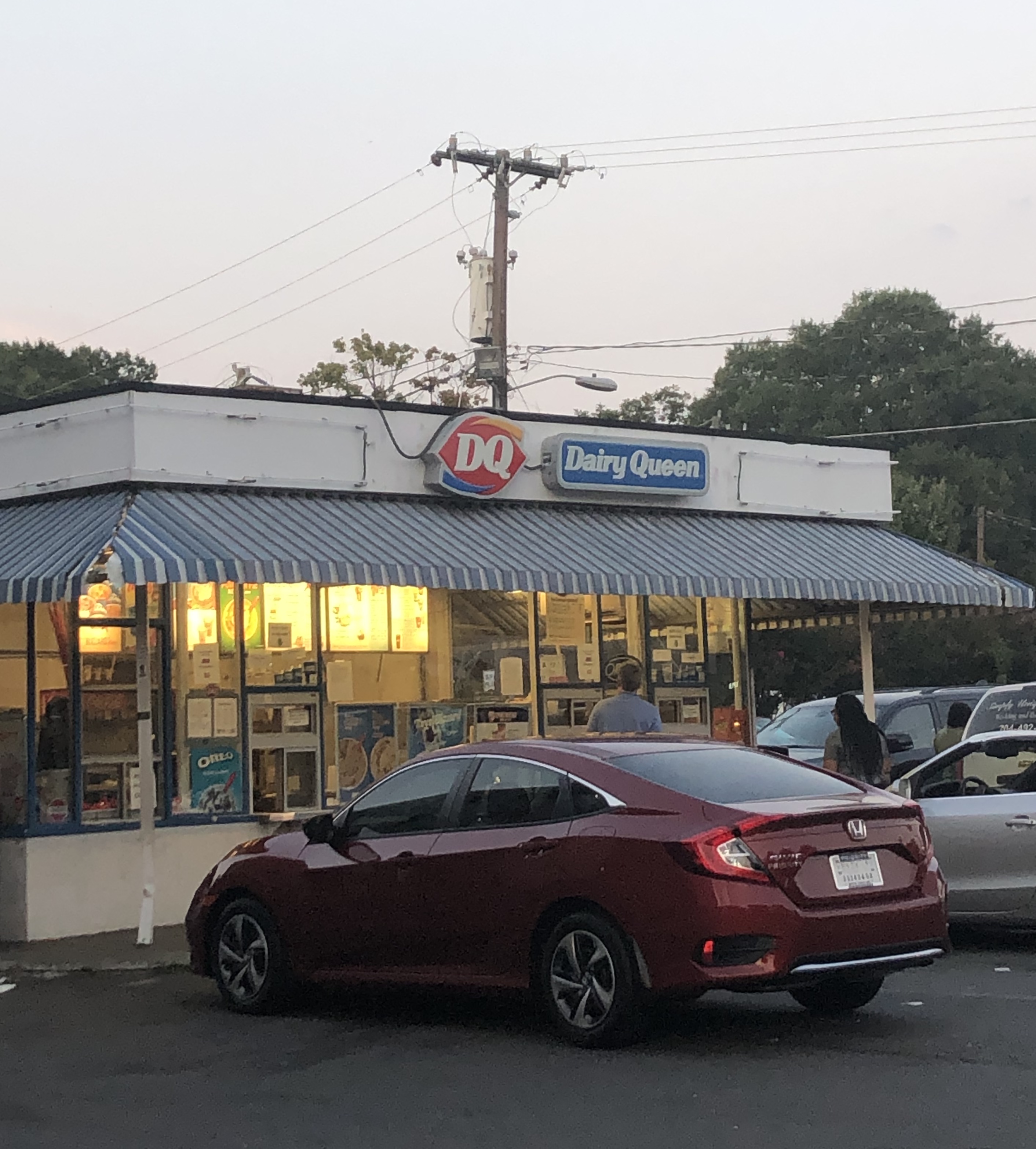
The Dairy Queen in my neighborhood is closing.  

This is not a tragedy of epic proportions – except for my neighborhood where everybody gathers year round for a soft serve.  And I mean everybody: every age, color, language, and economic class.  There’s even a homeless man who sits just off the property who depends on neighbors to ply him with DQ hotdogs and Blizzards.

The truth of the matter is that:

  • DQ is not even real ice cream.  It contains milkfat, sugar, corn syrup, whey, mono and diglycerides, artificial flavor, guar gum, polysorbate 80, carrageenan, and vitamin A palmitate which is a retinoid.  Retinoids are in the creams that reduce wrinkles, so the good news is that a cone of vanilla soft serve could be good for your skin. (Every day’s a school day.)
  • Our particular DQ hasn’t served chocolate for a while because the chocolate machine is irreparably broken.
  • The building – though classic – looks like it could collapse at any moment.  The property tends to have multiple napkins and cups littering the parking lot.

But it’s our Dairy Queen.  And it hurts.  I’ve only lived here for 16 months but I am in shock.  It’s not that I event went to DQ more than a handful of times.  But I always knew it was there just in case.

My Dairy Queen’s demise comes down to money.  The actual land – just 0.3 acres – was sold less than a year ago for $1.05 million.  There’s a cute new wine bar just behind it which is already packed every night.  Chances are this DQ will be replaced by something cooler and more expensive. But it’s been important because it’s one of the increasingly few non-hipster spots in the neighborhood.

This is what it should feel like to lose a neighborhood church.  Maybe we’ve participated just a handful of times.  But we knew it would be there if we ever needed it.  “Everybody” was there at one time or another.

Unfortunately, many people see our neighborhood churches as disposable – sometimes for good reasons:

  • Some of the ingredients of our churches are fake.  We say we love everybody, but only if they fall within our norms for what is moral/appropriate/Christian.  We say we want to love our neighbors.  But our love is often transactional.
  • We refuse to invest in what will serve our community.
  • We have so much deferred maintenance on our properties that the classrooms are not safe and the roof might actually cave in.

It’s often asked by church consultants: who would notice if your church disappeared – beyond your members?  Most of our congregations are invisible in the community and not because their buildings don’t have good signage.

This DQ will be terribly missed because it’s where all kinds of folks gathered and enjoyed each others company and were fed something timeless.  How many of our churches can say this?

I hope that – increasingly – all our congregations can say this.

Image of my Dairy Queen in East Charlotte, NC.

A Church in the Middle of Nowhere

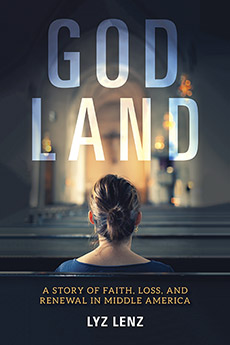
“No one really thinks they are going to be called to pastor in the middle of nowhere.”*

The “middle of nowhere” is relative.  For some people, it’s a place with no Starbucks.  For others it’s a place with no Ethiopian restaurants.  And for others, it’s a place where you can stand on your front porch and yell, and nobody can hear you.

I’ve been a rural pastor and I’ve been an urban/suburban pastor – and urban/suburban is much easier.  There are more people and dogs in larger towns and cities.

Now I work with rural, suburban and urban pastors all at once, and each of these ministries is different.  Professional ministry can be lonely, but the loneliness of rural pastors is different.  It’s possible that you don’t even have wifi or cell phone service.  And you have to order your Starbucks and your injera from Amazon.

Lyz Lenz’ book is an excellent read about this. She marks the importance of and the diminishing of Church in rural areas and small towns – especially in the Midwest.  Please read it.

She quotes Milan Kundera who writes:

The Greek word for ‘return’ is nostos.  Algos means ‘suffering.’ So nostalgia is the suffering caused by an unappeased yearning to return.

Lyz Lenz knows something about nostalgia and maybe you do too. 

Nostalgia is why MAGA is a thing.  Some folks want to return to a time when “American was great” not realizing that it was never as great as they remember – especially for women, children, and people of color.  In fact, nostalgia can be:

  • Toxic
  • Deceptive
  • Myth-making

I am part of a large extended family with deep roots in the Church in North Carolina.  We lovingly remember our ancestors for being Good Christians, Hard Workers, Family People.  As I dig into our family tree, it’s clear that what we remember are the good parts.

Every once in a while a relative will share the story of an uncle or cousin who was not a hardworking, Christian family person.  I won’t get into that here, but I’ve noticed that some of my family would rather erase those parts and move on.

Lyz Lenz writes about how the Church has been the center of community in rural areas of the United States, venturing out into the prairie, for example, like the bravest of pioneers and settling there to build farms and businesses.  The truth – of course – is that people already lived there with their farms and businesses and families.  And those native people were moved or killed by government-sanctioned decree.  Some of our forebearers enslaved people and then they built the farms and businesses on that stolen land.

Nostalgia is complicated.

Our rural areas today are besieged by unemployment and addiction and poverty – which is different from those issues in the city.  And unemployment, addiction, and poverty have always been there, even if we remember full pews on Sunday morning.

If we could just get back to the good old days.

If people just came back to church.

If the young people just loved the LORD.

The Rural Church is indeed a center of a community – if we are doing it right.  The small congregation with 20 people all related to each other is tempted to lose its purpose:  Do we exist to please Grandma whose parents donated the pipe organ?  Or do we exist to serve our neighbors, including the ones condemned by those wearing MAGA caps? (Or to serve our neighbors who happen to be wearing MAGA caps?)

Some will call it “fake news” but it’s statistically true that this is the best time to be alive in terms of being a child, a migrant, a woman, or a person of color is now.  Children are safer, migrants have a chance (albeit a small chance in this administration), women have more opportunities, and Thank God most police officers have body cams.  And there are laws to protect the vulnerable that we didn’t have a hundred years ago.  And yet we have a long way to go.  We need to do better.

We need churches in the middle of nowhere and we need pastors who will serve them.  We need leaders who will walk with those who grieve their institutional losses.  We need leaders who will serve  the most vulnerable and remind anyone who will listen that this is What Jesus Teaches Us to Do.

Who is called to serve God in the middle of nowhere?  All of us.

Find your “nowhere” this week – even if it’s on a loud city street, and be the Church.

*Quote and image from God Land: A Story of Faith, Loss, and Renewal in Middle America by Lyz Lenz.  So good.