Category Archives: Uncategorized

Scotland and The Next Church

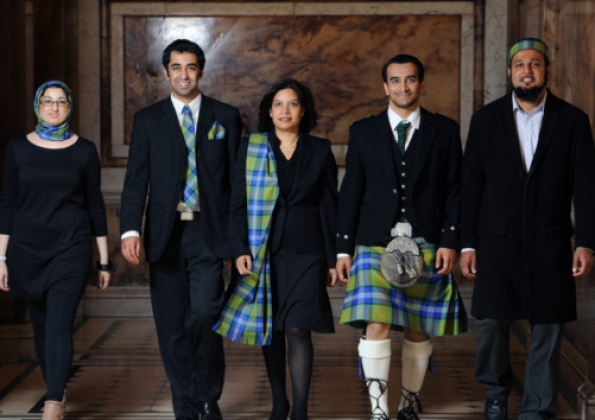
muslim-tartanYou know those Presbyterian Churches who celebrate a “Kirkin-of-the-Tartan” each October in the United States to honor their Scottish roots? Actually that ‘tradition’ was created by Peter Marshall after World War 2. We Presbyterians in the United States are hardly Scottish anymore. Our congregations are comprised of every heritage and ethnicity on the planet.

Nevertheless, the land of The Mother Church, intrigues me, if for no other reason than JK Rowling wrote Harry Potter books there.

I don’t pretend to know all the ins and outs of the Scottish Independence movement, but what I do know is that – just as the culture of Scotland has changed, the Church of Scotland has changed dramatically. Or at least it needs to change.

– While the national church of Scotland is Presbyterian, only 9% of the current Scottish population pledges allegiance to the Kirk. The Church of Scotland is not an established church and citizens are free to choose their own personal faith.

Only 53.8% of the population of Scotland self-identifies as Christian, according to the 2011 census. This is down from over 65% ten years before.

The newest registered tartan in accordance with the Scottish Register of Tartans Act of 2008 is The Islamic Tartan, established officially as Tartan #10644. This is not your grandfather’s Hunting Stewart.

We who love history and we who (try to) love Jesus even more than history find ourselves in conflict with some of our brothers and sisters. Imagine trying to convince long-time members with names like Campbell and McDonald to cease and desist on the whole Scottish rites business for the sake of members with zero connection to Scotland. I’m thinking about all those with last names like Okoro and Kang and Bishara and Saaed and Golovkin and Babaighian and Estevez who sit on our boards and in our pews.

The Rt Rev Lorna Hood, Moderator of the Church of Scotland, has stated that the Church is neutral on Scottish independence. She is trying to steer the conversation away from money and towards social justice. (Thank you, sister.) And we U.S. Presbyterians would do well to follow her lead.

The U.S. considers Church and State issues on a regular basis, and it’s often more about money than social justice. No wonder people reject the institutional church.

But a new time is coming when pastors might lose our tax free housing allowance and pastors might lose our ability to be agents of the state in terms of officiating at weddings. These things don’t freak me out. How about you?

Image of models wearing the Muslim Tartan. I’m pretty certain there is no ‘kirkin-o-the-tartan’ in their local mosque.
There’s a Half-Naked Slave in My Living Room

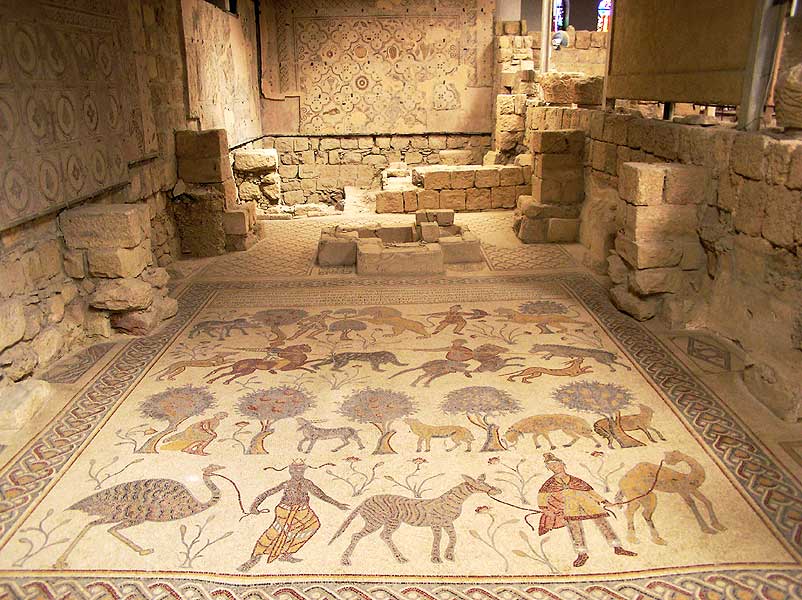
Mount Nebo ChapelI love this mosaic on the floor of the baptistry under the North Hall of the Memorial of Moses on Mount Nebo (Khirbet el-Mukhayyet) in Jordan.  In fact, I love it so much that I have a coffee table with a reproduction of part of the mosaic on a table in our living room.  I love the animal images.  I love the handy work.  I really love Jordan and hope to visit again.  I love the human figures.

But as I was looking at it again, recently, it occurred to me that one of the figures is a slave.  My white guilt sensibilities went into freak-out mode.  There is a slave image in our living room.

Lord have mercy.  Christ have mercy. Lord have mercy.

The slave figure is half-clothed and has darker skin than the fully-dressed lighter skinned figure.  Okay, maybe Elias, Soelus, and Kaiomus – the men credited with creating this mosaic between 530 BCE and 1 CE – did not intend for this figure to portray a slave, but it sure looks like it as I stare and re-stare at the mosaic I’ve loved for many years.

Ever since 12 Years a Slave won the Oscar, I’ve been reading more about slavery in this country.  (Here’s a good read by the great John Hope Franklin.)  Although slaves in the United States were clothed in sturdy-ish work clothes, they came to the States naked, according to research done for the movie.  Slaves in ancient Mesopotamia and in other cultures and ages worked in servitude wearing few or no clothing.

Remember Dobby the House Elf in Harry Potter?  Dobby became free only when he was given clothes by his master.

And this got me thinking about this:

So you are no longer a slave but a child, and if a child then also an heir, through God. (Galatians 4:7)

And this:

As God’s chosen ones, holy and beloved, clothe yourselves with compassion, kindness, humility, meekness, and patience. (Colossians 3:12)

And I realized that we who are not slaves get to pick our own clothes. Our clothing can be Louboutins or flip flops, Ann Taylor or Italian tailored. Salvation Army or Goodwill.  None of that really matters.  What matters are the human characteristics we choose to wear each day.

These are the things a pastor ponders while driving randomly in a car on Palm Sunday.

Now, what am I going to do with this mosaic?  Is it okay to have the image of an ancient slave in my living room? Discuss.

The image is from The Moses Memorial, built over ancient archaeological ruins near Madaba, Jordan.  Go.


Good News for Liberal Arts Majors

school_of_athens2

Three good guys got new jobs this week. Two of them are related to me.

HH and I are the parents of a Film Major, a Linguistics Major, and an Urban Design Major. Yep. They will probably never get signing bonuses. Some would say they are destined to work at Starbucks forever.

But by grace and determination, our two college graduates have landed jobs in their Liberal Arts fields. TBC is still pondering her future but she has options.

Thanks be to the God who made some of us love words more than numbers and art more than technology – although increasingly there are ties all around.

FBC moved to NYC last summer in hopes that if he could make it there, he could make it anywhere. SBC moved to NYC two summers ago in hopes of breaking into a very tough field. We are beyond grateful to report that they have new jobs. In their fields. With benefits. And paid vacations.

A third good guy – a theatre major – got a new job this week too. All is well in my own small little world.

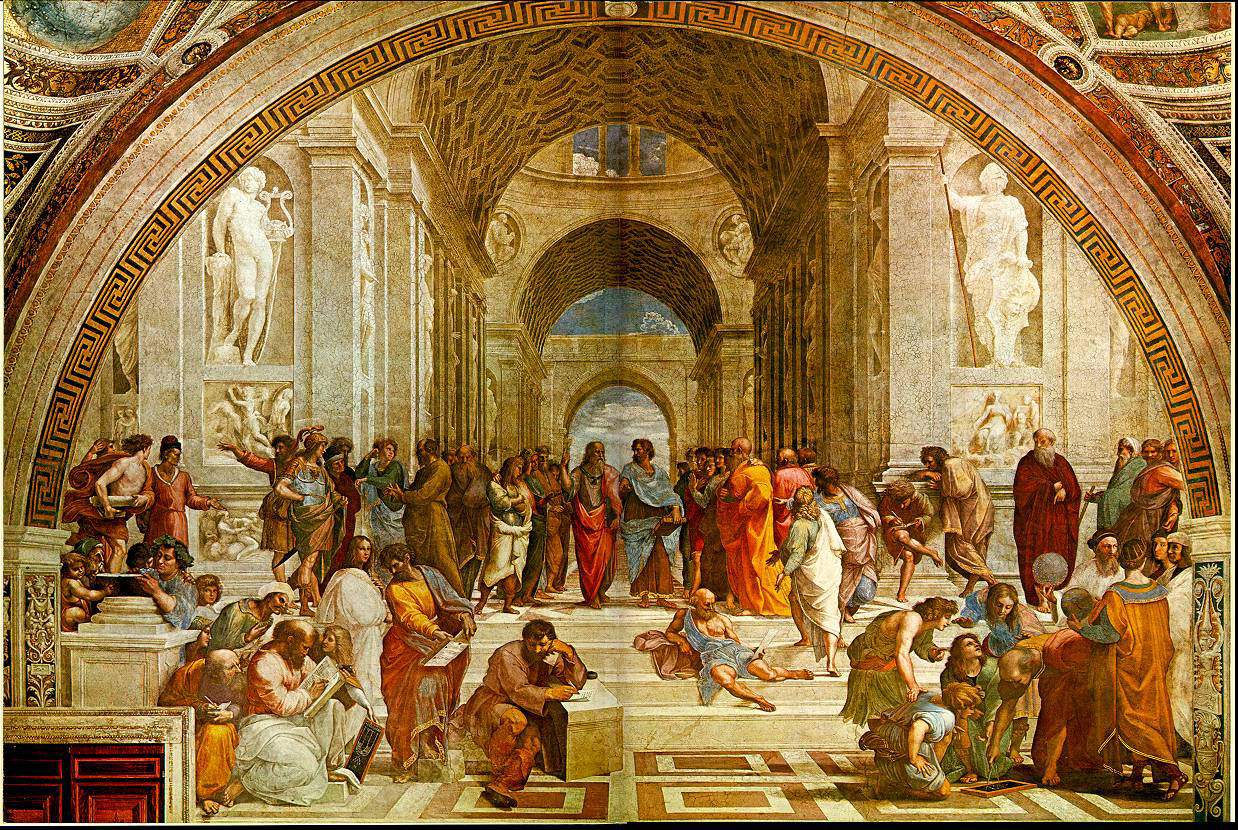
Please tell me you already know what the image is. If not.

What About An Associate Pastor for Neighborhood Ministries?

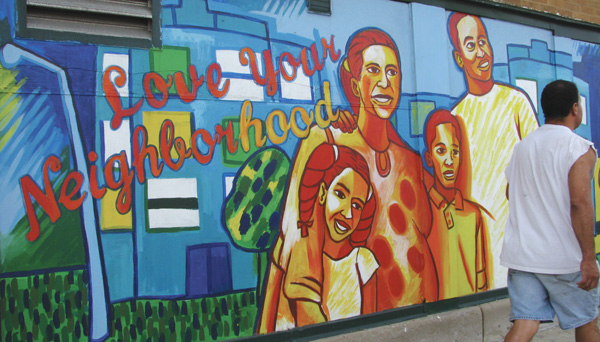
How do we plant new churches? Or a better question: how do we make lawndale-Murals-4disciples and love our neighbors in 2014?

For Mainline Denominations, the options have been:

  • The Parachute Drop Model – Stick an energetic pastor into a new subdivision and watch the people come join in droves. Effectiveness in 2014: not so much.
  • The Established-Church-Sending-People-to-Start-Something-On-The-Other-End-of-the-County Model – Church members who live more than 10 miles away agree to break off and start something new in an under-churched corner of town or in a neighboring county. Effectiveness in 2014: meh.
  • The Immigrant Start-Up Meeting in an Established Church’s Building – Two congregations partner to share space and maybe even staff. Effective in 2014: excellent IF the established church does not interpret “partnership” to mean “owner-tenant relationship to help us pay our bills.”

But we don’t need any more traditional, established churches with buildings and stuff – at least for now.

We need communities of faith for those who are spiritually curious, who would never “go to church” in a traditional setting.

We need established churches to call Neighborhood Pastors. Here’s my Big Plan to shift the paradigm:

  • For churches who can afford to call an additional associate pastor, encourage them to call a “Neighborhood Pastor” who serves only outside the church building. Seriously. No church office. No responsibilities to preach on Sunday from a pulpit (unless he/she is interpreting what a Neighborhood Ministry is all about.) Okay, she/he could come into the church building for staff meetings.
  • The Neighborhood Pastor would offer God Talk on Tap events in local bars, communion in parks, and clandestine prayer in coffee shops. That kind of thing.
  • The Neighborhood Pastor would befriend and talk with school guidance counselors, police officers, fire fighters, political officials, community health clinic staffers, etc. to figure out a) what the neighborhood needs and b) how we can pray for community leaders.
  • The Neighborhood Pastor would report back to the Established Church to discern what breaks God’s heart in the community and then act accordingly offering support, educational classes, and other ministries through the Established Congregation.
  • There would be no assumption that the spiritually curious folks who might gather would eventually join the Established Church – unless they decide to make that choice themselves.

This is a huge paradigm shifter because the Lead Pastor and Leaders of the Established Church would have to answer all those questions from members like:

  • Why are we paying for an Associate Pastor who’s not serving us and our needs? (Answer with another question: Does our church exist for us or for those who are not with us?)
  • What if these people never “join” and help contribute financially? (Answer with another question: Do you contribute financially to this church because it’s personally transactional? You make a pledge and then you get to have your wedding or funeral here? Or do you support the ministry of your church to make disciples and love neighbors?)
  • What if this so-called Neighborhood Pastor takes people away from our pews? (Answer with another question: Would you rather have people leave the church and go nowhere? Or leave something traditional to go to a different community where they could connect with Jesus in a new way?)

Thoughts? So many of our churches are (perhaps unconsciously) about perpetuating our institutions. Can you think of any Established Churches ready to make their ministry primarily about the neighborhood?


Image is a street mural in the neighborhood of Lawndale, Chicago.

Do Experienced Pastors Need Coaches?

Yes. Yes, we do.Coach Smith

Young pastors are encouraged to partner with mentors as they begin professional ministry.

But most of our churches are staffed by pastors over the age of 50. I’m talking about all churches from Roman Catholic to Baptist to non-denominational congregations. And we over-50 pastors feel shocked, offended, and threatened when The Personnel Committee recommends that we take a preaching course or get leadership training.

But everybody needs a coach. Everybody.

Yesterday was Equal Pay Day and many clergy women of every age could use coaching in salary negotiation.  As well . . .

  • Former Associate Pastors often need coaching on managing as a solo Pastor or Head of Staff.
  • Most professional ministers need coaching on how to supervise and evaluate a staff.
  • Tired preachers need coaching on fresh ways to present The Word.
  • Pastors on the spectrum need to be coached on social skills that build community.

If our work is really about making disciples and loving our neighbors (and not about us and defending our own egos) then even the biggest deal pastor in the tallest steeple church will realize that we all need to be better at what we do.  Get a coach.  Be a coach.  Partner with somebody who is very different and coach each other.

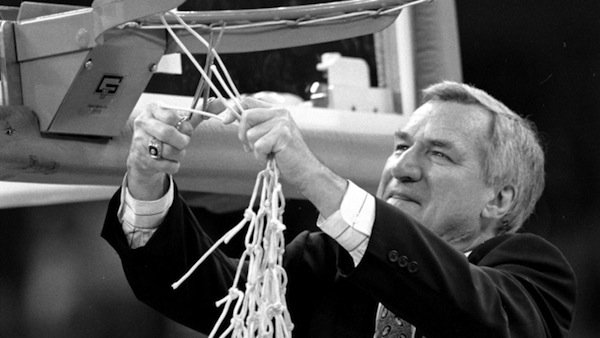
Image of a great coach. My last nod to March Madness – at least for 2014.


30 Years of Trying

Will you serve the people with energy, intelligence, imagination, and love? PCUSA Ordination Question #8

laying-on-of-hands-01I answered that question – plus eight other questions –  30 years ago today when the Presbytery of Boston ordained me to the Ministry of Word and Sacrament.  Also present that day were my parents, grandmother, and Aunt Jane  (who have all passed away), two former fiancés (who make me appreciate HH more than I can say), my siblings, and several friends.  At that point, I’d not even met my HH or imagined that we’d have three such exceptional children.

Since that date, I’ve been blessed to serve two congregations as their pastor, and now I serve one Presbytery of about 100 congregations.  I have been ridiculously blessed in ministry.

In 30 years of trying to keep my ordination vows, there are countless stories I could share, but if I had to offer basic advice to a person considering professional ministry, I’d start here:

  1. Professional ministry is profoundly easier if you have high levels of physical and psychic energy.  The pinball-like shifts from pastoral visiting to sermon writing to meeting planning to intensive attention-paying are exhausting.  The reality of shifting God’s people from a 1950s model of ministry to a 21st Century model of ministry means we serve two congregations at once:  the congregation that cannot/will not change and the congregation that is willing to allow the Spirit to move in fresh ways.  Good news:  Sabbath is required.
  2. A high emotional intelligence score helps.  I know many brilliant pastors who are top notch theologians and historians, but their personalities are abrasive or snarky or cold.  Pastors who need to know-it-all, pastors who are threatened by other talented people, pastors who are not self-aware will not be successful in professional ministry.  Good News: Emotional intelligence can be learned.
  3. The best professional ministers are relentlessly imaginative – and not merely in terms of liturgical arts.  They imagine A New Church – or The Next Church, if you will.  They do not settle for a tired narrative.  They can see it – that thriving church which is possible if the people will be led.  Good News:  Social media makes it increasingly easy to connect with other imaginative people.
  4. Loving your people is essential.  Sometimes we will not like our parishioners very much at all, but if we don’t love them, we’re doomed.  Even the really hard-to-love ones are God’s children and they are probably nasty because they need love. Authentic, I-honestly-don’t-care-if-you-aren’t-perfect love. Good news:  If they won’t let us love them, we can always leave and find a people who will let us love them.

I’ve always thought that the best way to answer the ordination questions was “I’ll really try” – especially that outrageous question about working for the reconciliation of the world.  Good luck with that, is all I can say.

When I went to seminary, I had never seen or heard a clergywoman.  Seriously – I met my first clergywomen on the first day of seminary.  And now there are quite a few of us.  It never occurred to me on that Sunday in April 30 years ago that I would do this for the next three decades.  I hadn’t even been alive for three decades.

So far, it’s been pretty great.  But nevertheless, I covet your prayers as I continue trying to be energetic, intelligent, imaginative, and loving for as long as God will use me.  So grateful.


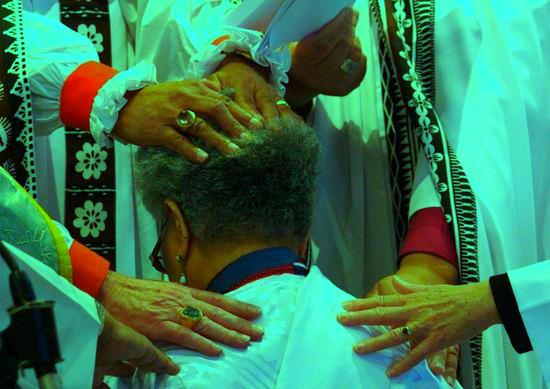
Image of an anonymous sister in ministry on the day of her ordination.

So, How Much Do You Earn As a Pastor?

Pastor_Salary_INMy favorite office neighbor and I have an ongoing conversation about pastoral salaries and I value his wisdom because 1) he is theologically solid and 2) he’s good with numbers.

Pastors’ salaries are supposed to be a matter of public record in Church World. They are often published in newsletters and they are almost always published in congregational meeting minutes – at least in my denomination.  But increasingly corporate-size churches do not disclose what their pastors earn annually.  If a church is staffed by multiple professional ministers, reports might state the combined salaries of all the pastors but not spell out who makes what.  I’d love to hear from some tall steeple heads of staff about their thoughts on this.

There are other pastors who do not want their salaries revealed because they do not want to embarrass colleagues who do not make as much as they do, only because their contexts are so economically different.  A hard-working pastor in a church of 200 in a poor neighborhood is going to make less than a hard-working pastor in a church of 200 in a rich neighborhood.

We are free to accept or not to accept the Terms of Call (salary and benefits) that a church offers to pay us.  Nobody is forcing us to work for $40,000/year. Most of us would love to make six figures which is why larger churches are considered plum positions.

But salaries are tender topics.

A church member shared with our Board of Elders a few years ago that the pastor (that would be me) was earning too much money. He was a friend of mine, actually, and he had no complaint about my ministry. I was happy to have this conversation as I was sitting at the table that night, and I get that I was making more than he was as a high school graduate with a low level job.  But I was making the Presbytery minimum and had three kids and two graduate school degrees.  And I was working really hard.  Did I deserve more money based on my education and experience than this church member?  Was my job more important than his?  Were my responsibilities more complicated?

We can ask for “what we believe we are worth” or for “what we need to live financially comfortably” but what if our congregations simply cannot pay that amount?  Churches depend on the voluntarily given donations of members and friends.  I can ask for more money, but if the non-profit organization I serve doesn’t have the money, then that’s that.

I have enormous respect for pastors of tiny churches that can only pay a few thousand dollars a year.  I do not believe that pastors of tiny congregations are necessarily less gifted than the pastors of large congregations.  But we all have to make choices.  HH and I shared a single position when our children were little.  We’ll pay for it for the rest of our lives – financially – but we got to spend a lot of time with our kids.  To me, it was worth it, but paying for all those braces was kind of a nightmare.

What’s your wisdom on clergy salaries?  Are we simply destined (intentional word choice) to have such a wide gap in salaries between Senior Pastors and Associate Pastors, between tall steeple churches and tiny churches, between male and female clergy?

Image source.

How I Met Your Pastor

ImageIn the Presbyterian denomination, pastors are never appointed to their congregations.  There’s a huge open, messy system that resembles computer dating.  And then the congregation votes on the choice of a search committee.  Sort of like a political election without the Super PAC money.

Actually it’s not at all like a political election, except when it is.

Nevertheless, there are a couple of circumstances that involve somebody like me giving Pastor Nominating Committees a select file of candidates who might be Your Next Pastor.  Committees or elders or congregations still vote but I wield some power in these situations.  It’s a bit daunting actually.

Instead of computer dating, I become the yenta, matchmaking my way through my contacts to try and offer 4-5 possibilities.

This is what I’ve learned in my role as matchmaker-counselor-denominational person:

  • I used to give about 4 excellent choices with one not-so-great choice, at the advice of a HR person who explained that it’s important to show people the stark differences.  The problem was that committees often chose the not-so-great candidate – not because  they weren’t smart or savvy.  It’s just that they were really busy and often didn’t look past the paper or first impressions (i.e. Pulpit Candy.)
  • Good matches are not about gender or race or age, although churches tend to have a Dream Candidate in mind who often looks like their childhood pastor or a young man with a pretty wife or a guy with a cape and super powers.
  • There’s a spark.  Maybe Probably, it’s a slowish process to move from Introductions to The Spark.  But it’s a holy moment when a Search Committee and a Candidate for Pastor start seeing each other in a new way.  “She could be our pastor,” they start to think.  “I could be their pastor,” she realizes. Sweet.
  • This is not about us.  I might want my best friend to be a pastor in this Presbytery.  I might have always aspired to be the Head of Staff at Big Church on the Corner.  But none of that matters.  This is a God thing.
  • If we take it away from God and try to force something, disaster will ensue.  No exceptions.  (Same is true for dating and marriage, people.)
  • Sometimes your new pastor will not be an obvious choice at first. Those are especially fun matches.

For the record, I’m always looking for exceptional human beings to serve congregations here in Chicagoland, especially if those pastors like challenges.  How do I meet your future pastor?  Not via computer matching sites, most likely.  We meet via connections or conferences or random encounters.  I’m always looking.

Image from HIMYM.

Just Say No to Church Programming (Unless . . .)

Can We Be The Church Without These Programs?

Can We Be The Church Without These Programs?

Program Size Churches” were all the rage from the 1970s and beyond, and some congregations continue to self-identify as Program Size Churches. Bless them.

Many more congregations seem to be lamenting that they were once Program Size Churches (worship attendance over 150) but now their numbers reveal that they are (merely?) Pastoral Size Churches (worship participation of 51-150) or even Family Size Churches (worship participation of 0-50.)  I have a couple of problems with all this:

  • Counting heads in worship is no longer the best indicator of congregational health.  I know a congregation with a tiny Sunday morning worshiping community but over 100 show up for a community dinner each weekend.  I know another congregation with about 400 in worship but they struggle in terms of financial commitment in spite of being part of a wealthy suburb.
  • A Busy Church Calendar is not necessarily indicative of spiritual vitality and growth.  Very often they are self-congratulatory events to show that we are “active.”

Let me explain.

We Church People like programs.  You know what I’m talking about if you’ve ever been part of Church World:

Book Groups.  Speaker Series.  Chili Dinners.  Pancake Suppers.  Movie Nights.  Parents’ Day Out.  Mission Fairs.  Yard Sales.  Bake Sales.  Plant Sales.  Car Washes.  Pot Luck Dinners.  Strawberry Festivals.  Panel Discussions.  Music Programs.  Quilting Bees.  Bell Choirs.  Vacation Bible School.  Silent Auctions.  Cake Walks.  School Supply Collections.  Health Kit Collections.  Mitten & Glove Collections.  Blessing of the Animals.  Easter Egg Hunts.  Congregational Picnics.  Carol Sings.  Mission Trips.  Yard Raking.  Wednesday Night Live.  Sunday Night Suppers.  Flamingo Flockings. Wine Tastings.  Circle Meetings.  Brown Bag Lunches.  Confirmation Classes.  Film Series.  Parenting Classes. Barbecue Chicken Dinners.  Youth Sundays.  Christmas in April.  Tutoring Teams.  Men’s Fellowship.  Contra Dances.  Ice Cream Socials.  Youth Choirs.  Puppetry Teams.  Christmas Pageants.  Holy Land Trips.  Interfaith Conversation Groups.  Mothers’ Groups.  Fathers’ Groups.  Kids’ Club.  And – of course – Bible Studies.

When I read a Church’s Annual Report, it seems as if congregations rate themselves based on how many of these programs happen each year.  More = better.  But why do we schedule, plan, promote, and implement church programs?

I know a church that debriefs after each big event, asking themselves:

  • Who was transformed?
  • Whose life was changed?
  • Were relationships strengthened?
  • Was it joyful making it happen?
  • Was new leadership equipped?

Sometimes the last thing we need is another program.

A church colleague who works with the youth recently shared that the parents of those youth want More Programming.  They want to see a schedule of activities. They remember their own Youth Groups fondly with weekly programming and events.

The problem is that 1) she only has six kids in her youth group and they all live in different suburbs and go to different schools and 2) they are already over-scheduled and 3) they really just want to connect with an adult who is authentically interested in them and will help them figure out The Meaning of Life – or simply if it’s okay to be who they are.

The worst kind of programming – in my estimation –  involves going, sitting, hearing, and leaving with new information.  But nothing changes.  No souls have been transformed.  No cultures have been shifted.  No vision has been cast.

The Program Church is Over.  The Relational Church is Essential in 21st Century ministry.

For the record, some of the best ministers I know do what they do best via programs.  But the difference is that the purpose of their program planning is about building relationships between each other and God.  It’s not about college-application-resume-building or making the elders feel like the staff is earning its money because the calendar is so full of stuff to do.

Especially during Lent, you’d think we would slow down a little.  But alas . . .

Take Westboro Baptist For Example . . .

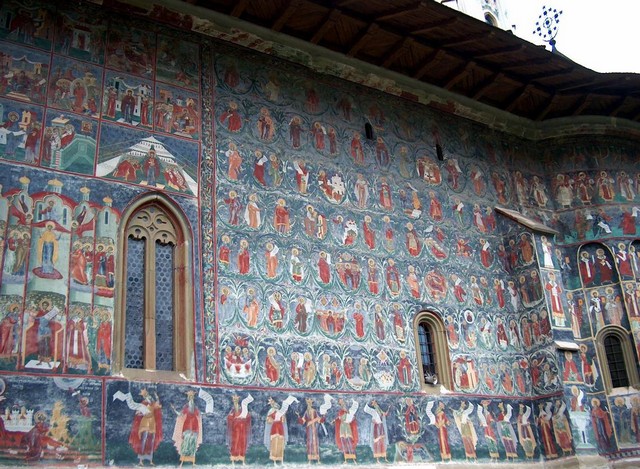
sucevita-2I don’t mean to pick on Westboro Baptist Church, but they seem to be an easy
example to use in making my point today.

Why does Westboro Baptist Church exist?

  • To serve as “the mouth of God” (their website) and to be a prophetic voice to a culture of increasingly “soul-damning, nation-destroying filth“?
  • To attract international attention for the sake of celebrity?
  • To fulfill a single family’s spiritual needs?

Again, this post is not about WBC or their mission statement.  The question is essential for any church:

Why does our congregation exist?

  • Because we are friends and we like to hang out together?
  • Because the Presbytery/Diocese/Association/Conference thought there should be a church here?
  • Because there are broken people in the neighborhood and we’ve been called to serve them?
  • Because we need this community to nurture our own spiritual lives?
  • Because we are an historical institution that deserves saving?
  • Because our pastor needs a job?

As congregations discern how to be the church in these days of Spiritual Climate Change, many of us are trying to both determine why we became a congregation in the first place (i.e. consider our roots) and what the future holds (i.e. rethink our mission for these days).

I was admiring the gorgeous windows of a church building recently and when a member asked me what I was thinking about (my facial expression apparently expressed awe), this conversation ensued:

Awestruck Me:  I was just thinking that someone must have really loved Jesus to have given these windows  to the church.

Church Lady:  Oh it wasn’t about that at all.  Rich industrialists were competing with each other to show off how many windows they could buy and have installed with their names on them.

AM:  (sigh)

The churches that will thrive in the 21st Century and beyond with the the congregations that 1) know why they exist and 2) exist for holy purposes.


Image is from the Sucevita Monastery – one of the painted monasteries of Romania.  According to this websiteThe churches were founded, in most cases, as family burial places of princes and high nobles.”  We can’t assume our churches were ever about God.