Pastor Shape Up

Quick question for clergy:  What was your last Continuing Education event and how did it positively impact your ministry?

Quick question for parishioners: What would you suggest to your pastors for their next Continuing Education event in hopes of positively impacting their ministry?

Warning: These could be fighting words.

Continuing education can be a flash point for some congregations and their leaders.  If the pastor never takes classes to refresh and keep up with new ideas or if the pastor takes classes in theology and poetry writing but the parishioners wish the pastor would take classes in preaching and pastoral care, feelings will be hurt and shame storms might ensue.

It’s painful when church leaders tell me that their pastor has no idea how to visit someone in the hospital, run a meeting, or preach a sermon – and they’ve been out of seminary for decades.  Ouch.

Who’s going to be the person who tells the 50 year old pastor that she could use a homiletics refresher course?  Who’s going to tell the 61 year old pastor that his home visits are offensive?

Every day’s a school day, as one of my favorite pastors often says, and this is true for every single one of us.  Tenured teachers need to continue to learn how to teach.  Seasoned physicians need to know the latest treatments.  And experienced pastors need to improve our preaching/teaching/pastoral care/administration skills.  God deserves our very best efforts.

If pastors and congregations have a trusting, loving relationship, people can say to each other:  “How can I be a more effective leader?” and the feedback will be honest.  This goes for pastors, educators, elders, deacons, musicians, and choir members.  “How can I be a more effective follower of Jesus?” is the most important question – but that’s for another post.

Today I wonder about seeing Continuing Education through a Shaping Up lens.  What do we need to work on?

  • Are we leading meetings the ways we’ve always led meetings?  (Please don’t.  No church meeting should be more than two hours long – EVER – and most meetings can be done in an hour and a half which includes 45 minutes of spiritual reflection and vision casting. Here’s a post about what meetings are for.  Here’s another about killing meetings.)
  • Are we bored with our own preaching? (Not a good sign.  It’s possible that – if you are bored – your people have been bored for a while now.)
  • Are administrative tasks running smoothly?  (I’m not even talking about all the trains running on time.  I’m asking: do you have any idea where the trains are? Do you have any trains?)
  • Are Bible studies a mere shadow of what they could be? (When was the last time you did a Bible study – much less preach a sermon – on the unnamed concubine who was chopped into pieces in Judges or the story of Esther?  Better than Game of Thrones and with more theological grappling. And all those familiar stories are usually shocking if we pretend we are hearing them for the first time.)
  • Are we training our elders and deacons the same way we did it a decade ago – or not at all?  (Our Biblical job description instructs us to Do. One. Thing. Here it is.)
  • Are we consistently exhausted, cynical, crabby, mean, selfish, greedy, passive-aggressive, hateful, obnoxious, impatient, difficult, unthinking, cruel, deceitful, emotionally bleeding, indecisive, hypocritical, sleazy, needy, vindictive, ungrateful, moody, and/or irresponsible?  (We need therapy and spiritual direction. Most days I agree with Gaga, but we were not born this way.)

Maybe we need to shape up a little in terms of our professional and interpersonal skills.  If we are too tired to consider this, listen to your soul.  God might be telling us something.

Image of Dr. Gladys Ganiel running by St. Patrick’s Church in Downpatrick, Northern Ireland. She blogs at A Church Without Walls.


“We Are a Warm and Welcoming Congregation”

I conducted a non-scientific study of all the Presbyterian churches in my state who are seeking a pastor to note how many of them self-identified as some version of warm, welcoming and/or friendly. Almost 66% indeed pitched themselves with at least one of those positive descriptors in their pastoral search papers.  (Being “vibrant” is also very popular.)***

It’s old news to say that all congregations see themselves as “friendly.”  Churches believe they are friendly . . .

  • Even if there is a high stink eye quotient among the older members,
  • Even if there is a sign on the playground that says “Keep Out!”
  • Even if all the doors are locked on Sunday mornings except the one secret door that members know to use.

I regularly read lots of materials written by church search committees looking for new leadership and have come to the conclusion that saying we are “friendly” and “welcoming” may be aspirational but it’s not really true.  When I hear a church tell me they are “friendly” I immediately want to ask them:

  • Tell me about the people you have welcomed who are not very lovable.
  • Who in church have you gotten to know better in the last month and how has that happened?
  • What are the intentional practices of your congregation to make guests feel at home?

I know several congregations who indeed welcome unlovable people, who offer multiple opportunities to build relationships, who train all leaders in intentional hospitality practices – and they rarely self-identify as “friendly.”  They don’t have to because they are friendly.  It’s like a lovely secret they all know about.

They know to walk people without umbrellas to their cars on rainy days.  They know to walk visitors to the nursery or the rest room – not just to point and say “It’s down there.”  If they are headed out to brunch and there’s a person standing alone, they ask that person to join them.  If they see someone new, they say “excuse me” to the old friends they’ve been talking with and go to that new person to introduce themselves.  They know to share their hymnal.  They know to invite the grieving person out to lunch many months after the funeral.  They know to call and check in.

And why do we do these things?  Not to “get new members” – for the love of God.

No, we practice warmth and authentic kindness because we are human beings called to love other human beings.  That’s it.

It’s dangerous to advertise that we are warm, welcoming, and friendly (because what if we really aren’t?)  It’s much safer to work on being warm, welcoming, and friendly and see what happens next.

***I wonder what would happen if a church seeking a new pastor introduced themselves with something like this:

We are an anxious, quirky, ridiculously imperfect group of people who are trying to follow Jesus but we miss the mark on most days.  Nevertheless we hope to call a new pastor who will love us, lead us, challenge us, tell us when we are being unfaithful, and cheer us on when we get it right.  We can be cranky and fearful.  But we can also be miraculously generous and loving because we have seen glimpses of God working in the world.  We’d like to see more of that with the right leader’s guidance.  We could use some encouragement as well as a kick in the pants to figure out how God wants us to be the Church here in Little Valley, USA.

I predict that a church like this would be inundated with creative pastors lining up to hear more.  Thanks be to God for churches who know who they are and for churches who know who God is.

Channeling Felicity Huffman

Yes, it’s rotten what those wealthy parents did to get their kids into college. 

Paying for people to fake sports talent, change SAT answers, and blatantly buy spots in The Class of 2023 at Stanford, Yale, and the University of Southern California is outrageous and screams White Privilege if anything ever did.  Those of us without an extra millions dollars to throw around are shocked – shocked! – to hear about such entitlement.

But the truth is that many of us have channeled Felicity Huffman.  Yes, she paid $15,000 to an SAT proctor to tinker with Sophia’s answers but many of us have expected entitlements too.  Maybe we didn’t bribe someone with money.  Maybe we simply have relationships that have benefited us and our families.

Everyday privilege is something that many of us have enjoyed for years without thinking much about it.  For example:

  • Have you ever requested a certain teacher for your children because that teacher was known to be “the best”? 
  • Have you ever asked a friend to get your child an internship at his/her company?
  • Have you ever had a friend or family member with an extra bedroom or – how great would this be – an extra apartment where your child could live rent-free while taking a summer internship in the city?
  • Have you ever been a member of a club or a pool where your children could make connections with people whose parents could help them get a job one day?

For the record, I’ve done all those things.  We want the best for our kids.  We want to make the way clear for them to succeed.  Why not use our relationships to help our children score a good opportunity?

White Privilege – specifically – is hard to relinquish.  Why would we give up our advantages?  Some would say that the reason why we join clubs in the first place – and live in specific neighborhoods, and maybe even belong to certain churches or synagogues is because of the helpful connections we can make.  And I get that.

But imagine a world in which we offer such advantages to other people’s children as well.  Imagine sharing our privilege with others.

Maybe you heard the story about Tani Adewumi – the eight year old Nigerian refugee who became a chess champion in New York recently.  He lives in a shelter with his mother, but he attends an excellent public school with a chess club.  In Garry Kasparov’s article about Tani, he wrote:

“Talent is universal, but opportunity is not.”

Using our privilege is understandable.  We can relate to parents like Felicity Huffman – albeit without committing a crime.  But when we share our privilege, the opportunities get spread around more fairly.  It’s the right thing to do.

I know a public school teacher who has connections in the film world near where he teaches.  Part of his “ministry” (although he wouldn’t use that term) involves looking for internships for his most talented students. Often his hardest working high schoolers are poor or undocumented.

Over the years, this young teacher has helped over a dozen students find well-paying internships that also open other doors to future opportunities.  He uses his own privilege/his own connections to help somebody else’s children thrive.

Where can we share our own privilege?  Who can we open doors for?  How can we offer opportunities to people who need a break?

Yes, we who are privileged will continue to channel Felicity Huffman.  But are we so desperate that we won’t help other people’s children too? 

Do we even notice other people’s children?  Do we ever think about other people’s children?  Today, let’s try to notice.  And think.

Image of the actor Felicity Huffman in Desperate Housewives (2004-2012)

Ten Things I Know for Sure (Jan’s Version)

Two years ago, Anne Lamott did a TED Talk called 12 Things I Know for Sure Because people seem to be very anxious these days, here are a few things I know for sure.  I hope it helps.

  1. God always wins. It might not be apparent in this life, but eventually God will win.  (I don’t want to give away the end of the story but #Easter.)
  2. Loving mean people is really hard, but it makes you feel better in the long run.  Hateful human beings don’t know what it feels like to be loved.  We get to show them if we can possibly do it.  And maybe if I can’t do it today, you can.  And I can try again tomorrow.
  3. Terrible things happen.
  4. God uses terrible things. (Note: God does not make those terrible things happen.  God doesn’t pull triggers or mutate cells or sharply turn steering wheels.  But God sends help when those things happen.)
  5. Sometimes we get to be those helpers. And it will change our lives for good.
  6. We cannot fix people.  We can love them.  We can listen to them.  But we cannot make them stop drinking, quit drugs, exercise, clean the house, lose weight, or stop being selfish.  They (with the help of  their Maker) need to do it.  We can cheer them on and that helps a little bit.
  7. Dogs are miracle animals.  I know there are cat people out there, but I have two words for you:  Service Cats.  (I don’t think so.)
  8. Our lives will not be changed by The Mueller Report.  (See #1)
  9. Each of us needs a friend who will say, “Everything’s going to be okay” at just the right time.
  10. Boredom is a sin.

Have a great Monday.  Smile at a dog.  Be authentically kind to a cranky person.  Notice something beautiful. Resurrection is coming.

Images of Anne Lamott speaking at the TED national gathering on April 28, 2017, Vancouver, BC, Canada and Spense – the best dog ever.

Why I Took the Chick-Fil-A Article Off FB Yesterday

I have opinions and most of them are strong.  I also like it when you have opinions even if they are different from mine.  Critical thinking is our friend and respectful grappling back and forth is good.  I haven’t cornered the market on truth and neither have you.

I love Chick-Fil-A sandwiches and I love my LGBTQA+ siblings.  I had read that Chick-Fil-A had changed their policies against LGBTQA+ neighbors and yet I saw an article yesterday that said Chick-Fil-A donated $180,000 to organizations that discriminate against LGBTQA+ folks in 2017.  This means no more Chick-Fil-A for me – at least for now.

It’s a disappointment and I don’t kid myself into thinking that my boycotting any organization for whatever reason will alter their profit margins much.  It’s more of a spiritual decision for me.

I re-read the article from Fox Reno and decided that it actually wasn’t very good.  It triggered me and I posted it and I’m grateful to a friend for pushing back.  But the reason I deleted it is because some of the subsequent comments felt too sharp.  I wish we could grapple respectfully without name-calling and snarkitude.  I wish we could disagree without demonizing each other.

Even  – and especially – when we make our political and social stands based on our interpretation of Scripture, feelings run deep.  When we equate our opinions with what we believe God is calling us to be and do, the stakes are high. And yet there is no need to convey hate when we disagree – even about something as essential to me as supporting people who identify as LGBTQA+.

This article from last week is another reason why I removed the article about Chick-Fil-A from Facebook.  Among the most disturbing lines:

 48.8 million voters out of the 136.7 million who cast ballots in 2016 believe that members of opposition party are in league with the devil.

In. League. With. The. Devil.

The everyday animosity towards those with whom we disagree is chipping away at our souls.  And so I’ll say it again:

I have opinions and most of them are strong.  I also like it when you have opinions even if they are different from mine.  Critical thinking is our friend and respectful grappling back and forth is good.  I haven’t cornered the market on truth and neither have you.

If we can’t wrestle together without hatred, we will become poorer citizens and more shallow human beings.  But there is a lot of hate out there.  We can do better.


Where to Rapport?

I misread a notice for jury duty recently and saw instructions on “where to rapport” instead of “where to report.

We “report” to countless offices:  the principal’s office, the boss’ office, etc.  Where we “rapport” is different.

Rapport isn’t even a verb, although we make “adult” a verb, so why not?  We certainly spend a lot of time building rapport with people – sharing interests, creating bonds, generating harmony.  Rapporting is active work.

I will not be rapporting to jury duty in Illinois because I no longer live there.  But I’ve been rapporting quite a bit over the past two weeks.

Lent is a good time to process where we have worked hard to (build) rapport.

  • Are we trying to please people we don’t need to please?
  • Are we making even nominal efforts to please God?
  • Are we spending our time in life-giving pursuits?

Where are we rapporting these days? Have a happy Thursday.

Image of a lovely spot where I recently rapported.


Measuring Community

I used to think that community was as simple as having friends who bring a lasagna when things fall apart and champagne when things go well. Who pick up your kids from school when you can’t. But I think community is also an insurance policy against life’s cruelty; a kind of immunity against loss and disappointment and rage. My community will be here for my family if I cannot be. And if I die, my kids will be surrounded people who know and love them, quirks and warts and oddities and all. Jenny Anderson for Quartz

This article in Quartz is excellent (thank you Marci Glass) and it’s related to my Thank You, Protective Factors post last weekend.  I believe that one of the reasons why institutional church congregations are failing is because people increasingly find holy communities in  places other than church buildings.  And some don’t find community anywhere – including church buildings.

You’ve probably seen the articles about social isolation in spite of our ubiquitous social media connections. The Quartz article says that human beings have statistically fewer confidants today than we had thirty years ago.  One of the reasons why institutional Church is less important culturally is because so many connect Church with:

  1. Hating LGBTQA+ people.
  2. Covering up misconduct.
  3. Irrelevance.

If you still consider yourselves to be part of The Church, I’m wondering how you would answer these questions:

  • Is there a person in your congregation (who is not also in your legal family) who knows about the worst thing you’ve ever done and that person still loves you?  Who is that person?
  • Are there people in your congregation (who are not also in your legal family) whom you can call in an emergency in the middle of the night and they will come right over?  Who are those people?
  • Have your ever shared a personal prayer request for yourself (not prayers for your Uncle Frank or for your boss or for your neighbor but for you) and someone has stopped then and there to actually pray with you? Who was that?
  • Has anyone asked you to pray for them and you did it right then and there?  When was that?
  • Have you ever dropped everything to go to someone who needed you in your congregation?  When was that?

We can actually measure the depth of our congregational community based on the answers to these questions.  How would your congregation fare if you measured community using questions like these?

Image is a stock photo of dinner church. A great way to form community is – of course –  with food.


That Time I Slept in a Plantation House

Bunny Mellon was lovely from what I understand.  She was a horticulturist known in many circles because of Listerine Mouthwash, Gillette Razors, the White House Rose Garden, and horses.

As a young woman, her family lived  in a former plantation home. I got to sleep in her bedroom once – in the same room where she gave birth to her oldest child.  There was a painting by Winston Churchill on the wall.

The fact that all of this is true speaks to the stark fact that I am a person of enormous privilege.

I did not grow up with wealth or fame or parents who were known for anything other than being kind and loving.  My father told me that the day they found out that they were expecting me, they literally had five cents to their names.

Five cents.

But even if I have never been wealthy, even if my parents worked hard for their middle class life, even if we drove used cars and lived in a medium sized house that needed a lot of work – I grew up remarkably privileged because my skin is “white.”

I didn’t grow up with original paintings on the wall, much less paintings by British prime ministers.  I certainly didn’t grow up with a boxwood maze in the back yard or panoramic porch views.  And yet it’s also true that I wasn’t followed around while shopping by clerks concerned that I might steal something.  I could easily hail a cab.  I could eat in any restaurant in town.  People assumed I belonged everywhere I went – from swimming pools to fancy dress shops to ivy-covered universities.  I was judged to be acceptable and safe because of the melanin levels in my epidermis.

Those of us who do not believe that having white skin = privilege need to talk with our brown and black neighbors who deal with implicit racial bias every day. When I’m with a friend with dark skin, it’s often assumed that we couldn’t possibly be together.  I’ve been with black and brown friends who have been questioned about being in certain spaces while I’m welcomed warmly.  I was not even questioned about living – for a brief time – like Bunny Mellon in a former plantation home.

We don’t have to be like Bunny Mellon – or in Bunny Mellon’s home – to experience great privilege.  Our privilege happens every day if we have her same skin tone.

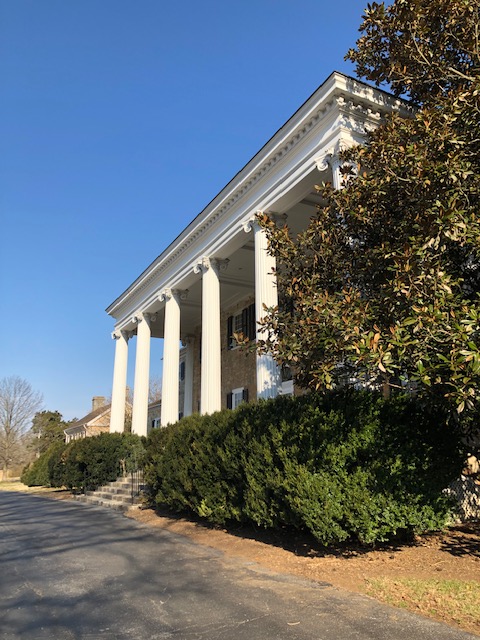
Image of Carter Hall house and grounds, Millwood, VA.

Pinch Points

I wrote last fall about pivot points.  Pinch points are different. They hurt, sometimes just a tiny bit and sometimes like crazy.

Ouch happens in a growing community.  If we are serious about becoming congregations that resemble the reign of God, there will be discomfort and we Christians usually prefer comfort.  We like the comfort food of recognizable music and liturgy.  We like the comfort food of longtime friends and familiar faces.  If the people look, sound, pray, dress like we do, it’s just easier.  Many of us are in church for ourselves.

Yes, church is about service in Jesus’ name, but between the worship and education of us inside and service to those on the outside, one is usually dominant.  And too many times, what’s dominant is not service to those on the outside.

I’ve been in enough church meetings to know that we church people care a lot about our personal comfort.  And so when we feel a pinch because new people are taking leadership positions, or someone threw away the tablecloth I donated, or the new pastor sings the benediction, or that gay couple wants to get married in the sanctuary, or the new church letterhead is orange and I don’t like orange – it hurts.  Sometimes it pinches a tiny bit and sometimes it pinches like crazy.

Imagine the pinch when we decide it’s time to talk about our white privilege.

Image from the Seattle-Tacoma Airport last Friday.

Thank You, Protective Factors

Mental health issues aren’t all in your head according to this interesting article. External issues like trauma can exacerbate mental illness which means that it’s not just about our brains.  It’s also about poverty, abuse, abandonment, and bullying.  (Politically partisan comment: how is our government supporting mental health programs?)

Along the same lines there are “protective factors” that can make things better – like “a strong network of friends and a willingness to engage with therapy.”  Thanks be to God.

I’m home for exactly one day after the NEXT Church National Gathering followed by my clergywomen’s preaching group before heading out again for another work gathering of people who love the Church. I am profoundly and unspeakably blessed.  I just celebrated a birthday which made me feel deeply loved.  Many people do not have this.

Depression is part of my life and I love that there are “protective factors” that can make it better.  I’m speaking to church leaders here:  get a group of people together who love you and want you to thrive in ministry.  It will save your life (and by that I mean that God will save our lives through community.)

To have a church, we need to be the church.  Love God’s people.  Show up.  Tell them – in love – when they need to cut back/make a change/stand up/ stop being a jerk.

We can actually develop Protective Factors which will be very helpful in dealing with day to day mental health issues.  We can also be those Protective Factors.

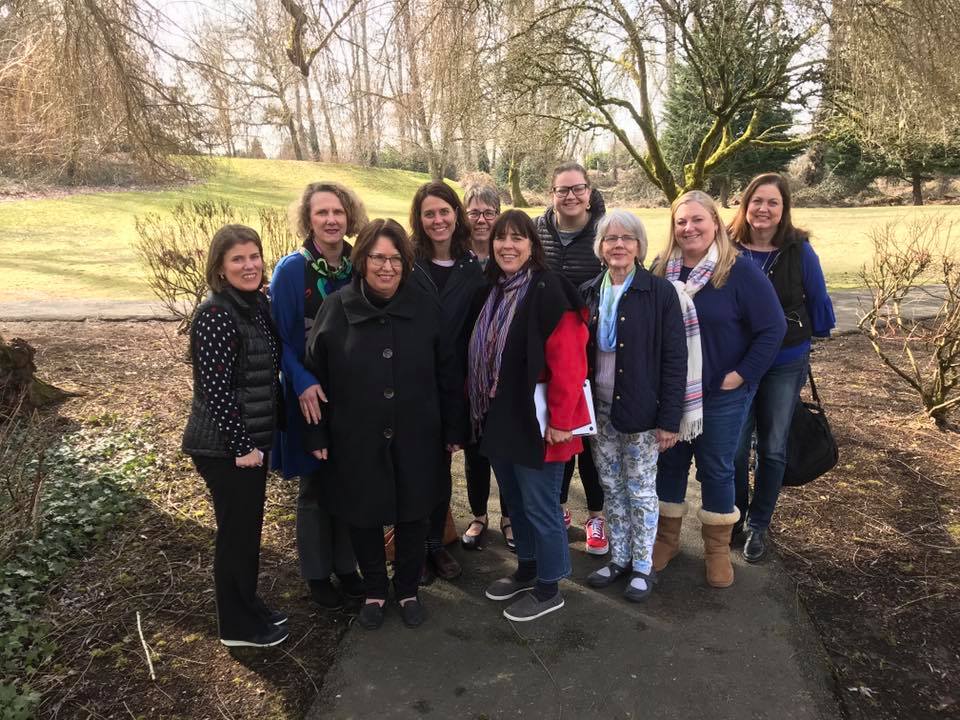
Image of The Preaching Roundtable, established 1999.